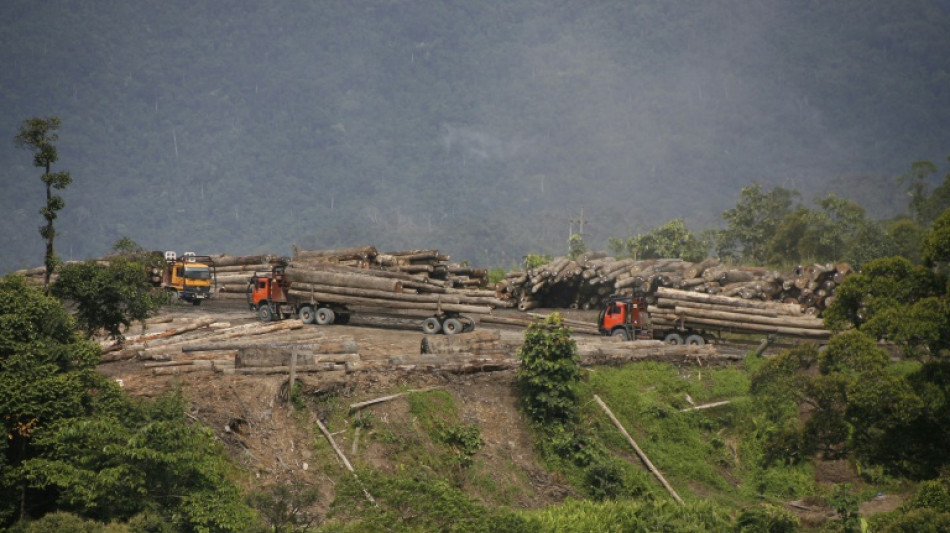
Environmental groups urge EU 'high risk' label for Sarawak / Photo: © AFP/File

 Trump renames AI 'super intelligence' as leaders jostle over dangers

 Oil prices retreat as markets welcome US-Iran talks
 US refusing to give Sudan's de facto leader visa for UN: diplomatic sources, UN
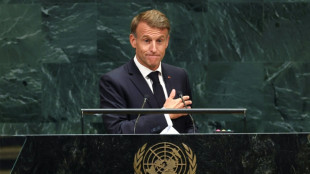 Macron urges world to choose UN over 'law of the jungle'
 All-rounder Jacks stars as England beat Sri Lanka in 1st ODI
 Man City peg back Bayern to start Women's Champions League
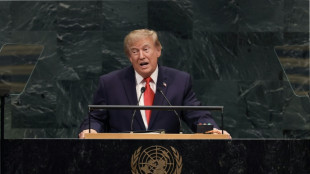 Trump beats 'America first' drum at UN as allies tread carefully

 Snedeker backs Spaun for Ryder Cup after Presidents snub

 French prosecutors probe secret filming of women with smart glasses

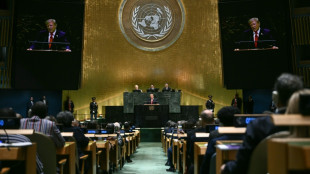 Trump renames AI "super intelligence," rejects international oversight
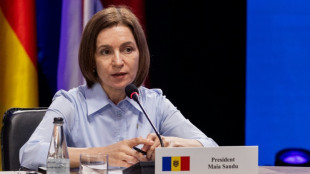
 Trump rejects international regulation of AI

 How is the EU approaching record fuel prices?

 Sri Lanka's Colombage strikes on debut as England dismissed for 265 in first ODI
 Hurricane Polo strengthens to top category 5 off Mexico

 11 hurt as teen opens fire outside school in western Turkey

 UN chief says 'Big Oil' treats atmosphere as open sewer

 Tunisia says 2026 summer hottest on record

 England's Rashid out of Sri Lanka ODIs with hand injury

 Houthis accuse Saudi Arabia of deadly strikes as thousands flee

 Stocks climb as oil slides, AI buzz returns

 India cricketers win in style as Afghan savours 'special' Games silver

 La Liga president hits out at Real Madrid refereeing 'conspiracy' claims

 MEXC Launches “Real Stocks, Real Friends” with Rewards for Bringing Friends to Wall Street

 Mbappe continues media push for Ballon d'Or recognition

 Stocks rise on AI buzz, oil prices cool

Environmental and rights groups urged the European Union Tuesday to label Malaysia's Sarawak region "high risk" under controversial new anti-deforestation rules to be implemented from the end of December.
The EU's deforestation regulation (EUDR) is due to come into force at the end of the year, although Germany and Brazil have recently joined a string of countries urging that implementation be delayed.
Environmentalists and rights groups have, however, called on the EU to move forward with the regulation.
It will bar imports of a vast range of goods -- from coffee to cocoa, soy, timber, palm oil, cattle, printing paper and rubber -- if they are produced on land that was deforested after December 2020.
It also requires exporters to assess the risk of rights violations associated with production of the commodity.
In a joint statement, a group of Malaysian and international organisations said Sarawak in Malaysian Borneo should be considered "high risk" under the new rules.
Such a designation would mean closer scrutiny of timber and palm oil imported from the region -- an unwelcome prospect for Malaysia, which is already pushing back against EUDR.
The NGOs argue Sarawak's government plans to convert hundreds of thousands of hectares of natural forest to timber plantations, and is granting companies operating leases in areas that have not been surveyed for protection purposes.
Earlier this year RimbaWatch, one of the signatory groups, warned that around 15 percent of Malaysia's natural forest is at risk because of concessions granted to companies.
Tuesday's statement also alleges routine violations of Indigenous land rights, including limits on the amount of land that can be legally recognised, and the unilateral revocation of existing land titles.
"Logging companies are still bulldozing Indigenous peoples' forests in Sarawak without consultation or consent from communities, which should translate into a 'high risk' classification," said Celine Lim, managing director of SAVE Rivers, an Indigenous organisation from Sarawak.
- Vocal opponents -
Sarawak's forestry department, and Malaysia's plantation and commodities ministry did not respond to AFP's request for comment on the claims.
Malaysia and Indonesia have been among the most vocal opponents of EUDR, arguing domestic anti-deforestation standards should be sufficient, and warning the rules will disproportionately harm smallholder producers who cannot meet onerous documentation requirements.
Environmental and rights groups have pushed back against these claims, including at talks in Brussels earlier this month between EU, Indonesian and Malaysian officials.
"Calls from EU governments to delay enforcement of the law are a deplorable abdication of leadership in the face of a climate emergency," said Luciana Tellez Chavez, senior environment and human rights researcher at Human Rights Watch.
C.Meier--BTB