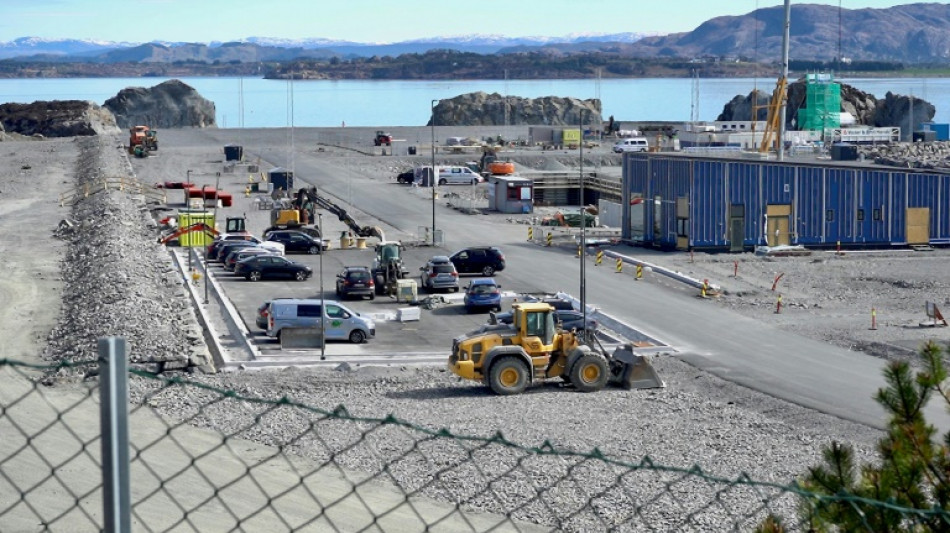
World's first CO2 storage service soon ready in Norway / Photo: © AFP/File

 US consumer inflation hotter than expected as midterms loom

 INmune Bio Inc. and Quantum Computing Inc. Partner to Apply Quantum Optimization and AI to Advance Alzheimer’s Drug Research and Explore New Applications for XPro

 Hot US inflation data dents Wall Street stocks
 India sends 'cockroach' leaders to jail after protest
 'Sinners' director Ryan Coogler to reboot 'X-Files' for Disney
 Lufthansa wins contest for TAP Air Portugal stake
 AI worms, 'major' incident fears spur safety calls at industry summit
 Fuel shortage triggers queues on Indonesia's Bali island

 Evolution Metals & Technologies Corp. Reaffirms $400 Million to $460 Million FY2027 Revenue Guidance, Unveils Eight Sintered Magnet Grades Covering an Estimated 75% of Global NdFeB Revenue, and Moves to Answer U.S. Army Call for Rare Earth Magnets

 Trial defence says Russia used Nord Stream pipelines as 'weapon'
 Israeli settlers set fire to mosque in occupied West Bank
 Macron says French student protesters 'exploited' by political forces: spokeswoman
 Stocks diverge ahead of key US inflation data
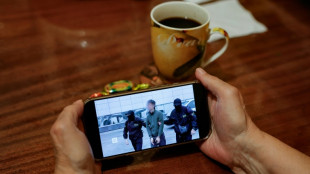 Japan summons Russian ambassador to protest journalist's arrest
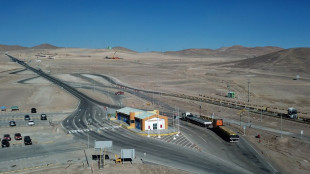 Workers to strike at world's largest copper mine in Chile
 Ukraine accuses US of helping Russia as missiles hit Kyiv
 Drone hits data centre of Russia's largest bank
 Bivial AG Brings Its Complete Dashboard to Mobile
 Mont Blanc nearly two metres taller than in 2023: French surveyors
 Pope recovering after lung cancer operation that rattles Church
 Indonesia haze spikes Singapore pollution, shuts East Timor schools
 Higher borrowing costs an 'alarm signal' for France: finance minister
 Zelensky accuses Putin of disrespecting Trump after latest attacks

 Japan PM says housework makes her busier than male predecessors
 Top Indian 'cockroach' leaders sent to jail after protest
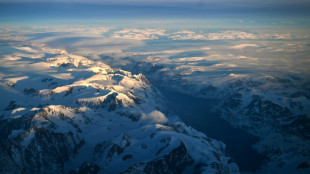
Norway is set to inaugurate Thursday the gateway to a massive undersea vault for carbon dioxide, a crucial step before opening what its operator calls the first commercial service offering CO2 transport and storage.
The Northern Lights project plans to take CO2 emissions captured at factory smokestacks in Europe and inject them into geological reservoirs under the seabed.
The aim is to prevent the emissions from being released into the atmosphere, and thereby help halt climate change.
On the island of Oygarden, a key milestone will be marked on Thursday with the inauguration of a terminal built on the shores of the North Sea, its shiny storage tanks rising up against the sky.
It is here that the liquified CO2 will be transported by boat, then injected through a long pipeline into the seabed, at a depth of around 2.6 kilometres (1.6 miles), for permanent storage.
The facility, a joint venture grouping oil giants Equinor of Norway, the Anglo-Dutch Shell and TotalEnergies of France, is expected to bury its first CO2 deliveries in 2025.
It will have an initial capacity of 1.5 million tonnes of CO2 per year, before being ramped up to five million tonnes in a second phase if there is enough demand.
"Our first purpose is to demonstrate that the carbon capture and storage (CCS) chain is feasible," Northern Lights managing director Tim Heijn told AFP.
"It can make a real impact on the CO2 balance and help achieve climate targets," he said.
- Prohibitive cost -
CCS technology is complex and costly but has been advocated by the UN's Intergovernmental Panel on Climate Change (IPCC) and the International Energy Agency (IEA), especially for reducing the CO2 footprint of industries like cement and steel, which are difficult to decarbonise.
The world's overall capture capacity is currently just 50.5 million tonnes, according to the IEA, or barely 0.1 percent of the world's annual total emissions.
In order to limit global warming to 1.5 degrees Celsius since the pre-industrial era, CCS would have to prevent at least one billion tonnes of CO2 emissions per year by 2030, the IEA says.
The technology is still in the early stages, and has been slow to develop because of prohibitive costs -- compared to the price companies have to pay for CO2 emission quotas, for example.
It therefore depends heavily on subsidies.
"Public support was and will be crucial to help such innovative projects to advance, especially as CCS costs are still higher than the costs of CO2 emissions in Europe," said Daniela Peta, public affairs director at the Global CCS Institute.
The Norwegian government has financed 80 percent of the cost of Northern Lights, which has been kept confidential.
The Scandinavian country is Western Europe's largest oil and gas producer.
The North Sea, with its depleted oil and gas fields and its vast network of pipelines, is an ideal region to bury unwanted greenhouse gases.
- Greenwashing? -
Northern Lights is part of an ambitious 30-billion-kroner ($2.9 billion) scheme dubbed "Longship" -- after the Viking ships -- of which the state has provided 20 billion kroner.
The plan initially included the creation of two CO2 capture sites in Norway.
While the Heidelberg Materials cement factory in Brevik is expected to begin shipping its captured emissions to the site next year, snowballing costs have forced the waste-to-energy plant Hafslund Celsio in Oslo to review its plans.
In addition, Northern Lights has also secured cross-border deals with Norwegian fertiliser manufacturer Yara and energy group Orsted to bury CO2 from an ammonia plant in the Netherlands and two biomass power stations in Denmark.
Some environmentalists worry the technology could provide an excuse to prolong the use of fossil fuels and divert funds needed for renewable energies.
They have also raised concerns about the risk of leaks.
"Northern Lights is 'greenwashing'," said the head of Greenpeace Norway, Frode Pleym, noting that the project was run by oil companies.
"Their goal is to be able to continue pumping oil and gas. CCS, the electrification of platforms and all of these kinds of measures are used by the oil industry in a cynical way to avoid doing anything about their enormous emissions," he said.
N.Fournier--BTB