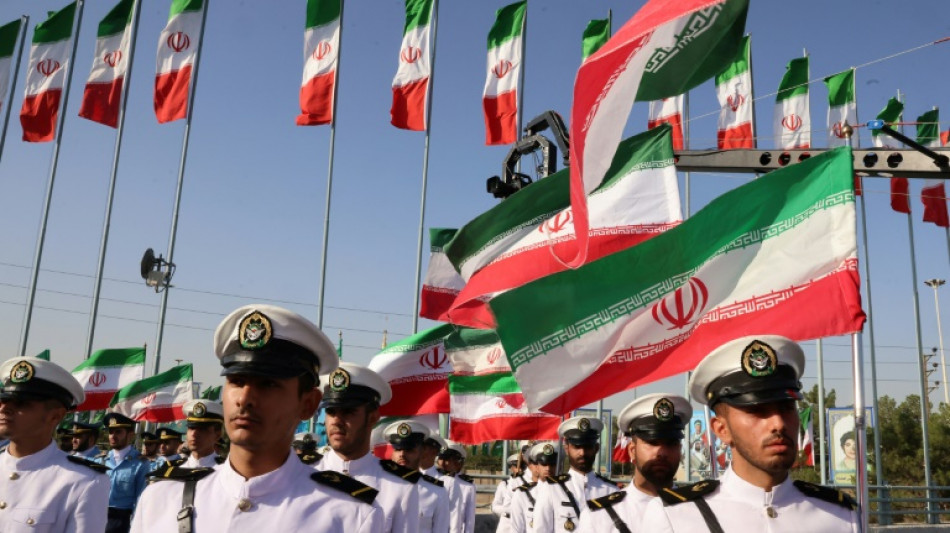
Iran treads carefully, backing Hezbollah while avoiding war / Photo: © AFP/File

 Battered Duerer masterpiece up for five-year revamp
 Trump met with Venezuela's interim leader at UN

 Malaysia furore after Najib wins conditional house arrest

 Italy hope for new dawn under Mancini

 Mongolian herders enlist new tech against harsher, drier climate
 Tata turmoil shines light on India succession woes
 World Cup 'not enough' as Spain begin next chapter
 Meta acts against 3.7 mn scammers' accounts with Singapore police help

 Australia PM says draft social media rules about taking back control
 Voting opens in Alaska's annual Fat Bear Week
 MLS coach axed for telling female ref 'It's a man's game'

 US refuses to give Sudan's de facto leader visa for UN
 Man City hold Bayern to start Women's Champions League, Arsenal win late
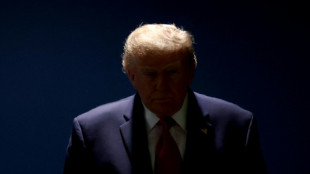
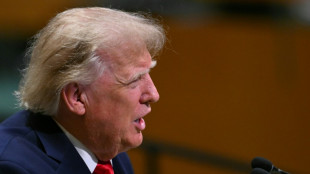 Trump threatens Iran with 'hell' but reveals fresh talks

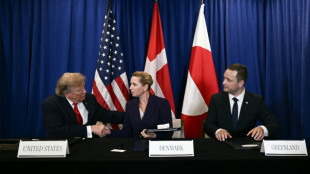 Trump signs security deal with Greenland, Denmark at UN
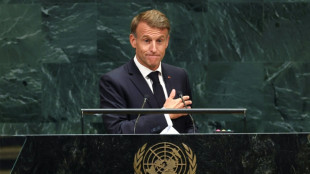
 Trump threatens Iran with 'hell' but unveils fresh talks
 Chile's Atacama Desert blossoms with life after El Nino rains

 Sri Lanka hands 220-year jail terms to 15 convicted of Easter bombings
 Typhoon Dujuan leaves 7 dead in Japan from landslides, flooding: media

 Ganna and Borghini lead Italy to mixed relay gold at cycling worlds

 Drug cocktail killed former child star Hayden Panettiere: coroner
 Moldova declares energy, water emergency
 French Holocaust denier jailed for eight months

 Oil prices slide, AI stock buzz fades
 Trump threatens to 'annihilate' Iran in bombastic UN speech

As violence between Israel and Hezbollah escalates, Iran is walking a tightrope by supporting Hezbollah without being dragged into a full-blown conflict and playing into its enemy's hands.
With a focus on easing its isolation and reviving its battered economy, Iran is aware that war could complicate efforts to secure relief from crippling sanctions.
Cross-border fire between Israel and Hezbollah, sparked by Hamas's October 7 attack on Israel, has intensified, especially after last week's sabotage on Hezbollah's communications that killed 39 people.
Israeli air strikes on Hezbollah strongholds in Lebanon followed, killing hundreds. Hezbollah retaliated with rocket barrages.
Despite the surge in hostilities, Iran appears determined to avoid direct military confrontation.
"Iran is not going to be pulled into war," said Hamid Gholamzadeh, an Iran-based political expert.
Ali Vaez of the International Crisis Group said Iran's strategy was to project power, without directly engaging, especially as escalation could benefit Israel and impact the US election.
"Iran does not want to play into its arch-enemy's hands," said Vaez, noting Iran's priority was securing sanctions relief and some economic stability.
Even during its first-ever direct attack on Israel in April -- retaliation for an air strike Tehran's embassy annex in Damascus -- most missiles were intercepted by Israel's defences or allied forces.
- Measured approach -
In New York, Iranian President Masoud Pezeshkian accused Israel of warmongering while positioning the Islamic republic as restrained.
He suggested Iran had held back retaliation after the killing of Hamas chief Ismail Haniyeh in Tehran in July, fearing it could derail US efforts for a Gaza ceasefire.
"We tried to not respond. They kept telling us we were within reach of peace, perhaps in a week or so," he said.
"But we never reached that elusive peace. Every day Israel is committing more atrocities."
This measured approach echoes Iran's response earlier this year during heightened tensions with Israel. Iran fired hundreds of missiles and drones after the Damascus strike, but most were intercepted.
Analysts say Iran is flexing its muscles amid the Israel-Hamas war in Gaza, without provoking a US response.
Iran continues to face Western sanctions, especially since the United States, under then-president Donald Trump, withdrew from a nuclear deal between Tehran and world powers in 2018.
European nations have also slapped sanctions on Iran, accusing it of supplying ballistic missiles to Russia for the Ukraine war.
Iran denied the accusations, with Pezeshkian saying in New York that Iran was "willing to sit down with the Europeans and the Americans to have a dialogue and negotiations".
Vaez said any Iranian escalation could strengthen Israeli Prime Minister Benjamin Netanyahu and even possibly help Trump return to power.
This "would be highly detrimental for Iranian interests", he said.
- 'Dangerous consequences' -
Despite its restraint, Iran continues to back Hezbollah. Foreign Minister Abbas Araghchi warned Tehran would "not remain indifferent" to Israeli attacks.
Iran also urged the UN Security Council to take immediate action, warning of "dangerous consequences" for Israel.
Israel has targeted senior Hezbollah commanders since the Gaza war began.
Iran's supreme leader Ayatollah Ali Khamenei this week lamented the loss of Hezbollah's fighters but said it would not bring the group "to its knees".
Afifeh Abedi, a political researcher, said Iran was evaluating its support for Hezbollah, but noted the group's "signficant human resources".
Gholamzadeh added that Hezbollah's resources ensure it will not be easily defeated.
"Hezbollah needs to be supported, but this support does not mean that they might be defeated if there is no support," he said.
Vaez said last week's attack on Hezbollah's communications may have weakened the group, but it would not be completely "paralysed even if the first two tiers of its leadership were... eliminated".
This vulnerability, he said, could be one of the reasons for Iran and Hezbollah's "reluctance to enter a full-fledged war".
M.Odermatt--BTB