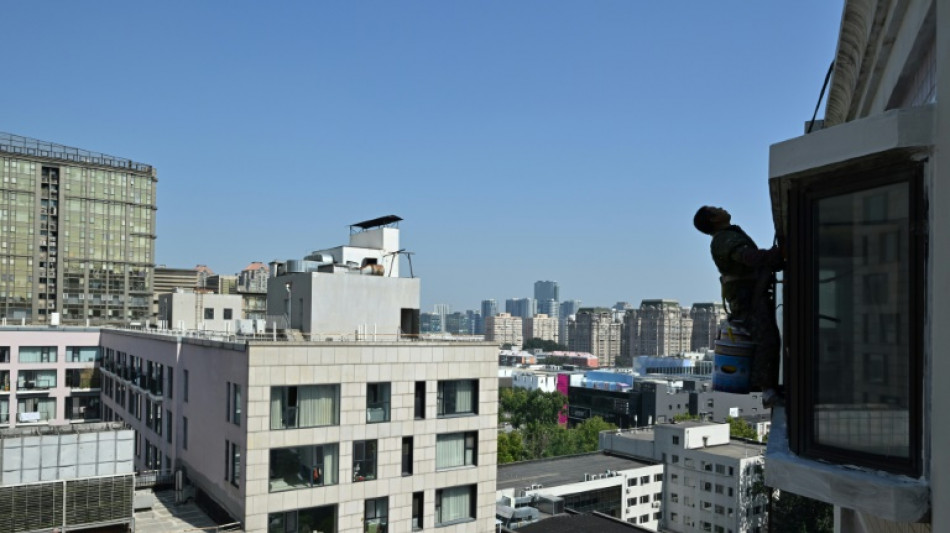
Cuts, cash, credit: China bids to jumpstart flagging economy / Photo: © AFP

 Battered Duerer masterpiece up for five-year revamp

 Trump met with Venezuela's interim leader at UN

 Malaysia furore after Najib wins conditional house arrest

 Italy hope for new dawn under Mancini

 Mongolian herders enlist new tech against harsher, drier climate
 Tata turmoil shines light on India succession woes
 World Cup 'not enough' as Spain begin next chapter

 Meta acts against 3.7 mn scammers' accounts with Singapore police help

 Australia PM says draft social media rules about taking back control

 Voting opens in Alaska's annual Fat Bear Week
 MLS coach axed for telling female ref 'It's a man's game'

 US refuses to give Sudan's de facto leader visa for UN
 Man City hold Bayern to start Women's Champions League, Arsenal win late
 Trump threatens Iran with 'hell' but reveals fresh talks

 Trump signs security deal with Greenland, Denmark at UN
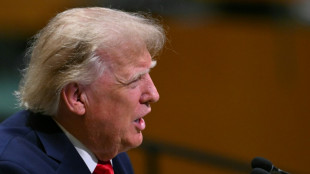 Trump threatens Iran with 'hell' but unveils fresh talks

 Chile's Atacama Desert blossoms with life after El Nino rains

 Sri Lanka hands 220-year jail terms to 15 convicted of Easter bombings
 Typhoon Dujuan leaves 7 dead in Japan from landslides, flooding: media

 Ganna and Borghini lead Italy to mixed relay gold at cycling worlds

 Drug cocktail killed former child star Hayden Panettiere: coroner
 Moldova declares energy, water emergency
 French Holocaust denier jailed for eight months

 Oil prices slide, AI stock buzz fades

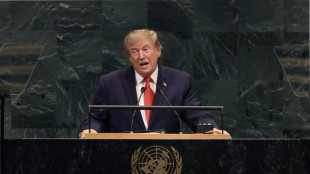 Trump threatens to 'annihilate' Iran in bombastic UN speech

China this week unveiled a bundle of new measures aimed at kickstarting its economy, battered by unprecedented headwinds including a property sector crisis and sluggish spending.
The stimulus followed warnings that more state support was needed to get the world's second-largest economy back on track and hit growth targets for 2024.
Here are the steps announced by Beijing this week:
- Rate cuts -
The People's Bank of China on Wednesday cut its medium-term lending facility -- the interest for one-year loans to financial institutions -- from 2.3 percent to 2.0 percent. The rate was last lowered in July.
Most Asian markets rose following the announcement, which came two days after monetary policymakers said they would lower China's 14-day lending rate.
The raft of measures are considered the boldest in years as Beijing aims to revive economic activity.
But Ting Lu, chief China economist at Nomura, said the batch of monetary easing measures has
- Cash injection -
China's central bank also on Friday slashed the reserve requirement ratio -- which dictates how much cash banks must keep on hand -- hoping to boost lending to companies and consumers.
Beijing said this week the cut would inject around a trillion yuan ($141.7 billion) in long-term liquidity into the financial market.
A major drag on the economy is the housing market, which has been mired in a slump -- home sales volume have tracked a steady decline this year.
But on Tuesday, Pan said Tuesday that interest rates on existing mortgage loans would be lowered, which he said would benefit 150 million people across China.
"Lower mortgage rates could allow the households to spare a bit more money to spend and should support consumption recovery," said Chaoping Zhu, global market strategist at JP Morgan Asset Management.
- Lower down payments -
In a potential further boost to the housing market, Pan added that minimum down payments for first and second homes would be "unified", with the latter dropping from 25 percent to 15 percent.
ANZ Research said the package for measures was "sufficient" for the country to achieve 4.9 percent growth this year.
"However, it remains too small and too late for the ongoing property woes," the firm said in a note.
"We estimate the average mortgage rate will be lowered to about 3.0 percent by this year end, which is still too high compared to the average rental yield," they said.
- Other steps -
Other steps are also being considered.
Beijing's all-powerful Politburo met on Thursday, admitting the economy was facing new "problems" but pledging to "further improve the focus and effectiveness of policy measures".
"The new supports signal growing unease about the health of China's economy," Harry Murphy Cruise, an economist at Moody's Analytics, said.
"That officials brought forward economic discussions to this week's Politburo meeting -- rather than sticking to the December schedule -- highlights the urgency of the problem," he said.
And Bloomberg reported the same day that officials were considering pumping more than $140 billion into the country's large state-run banks, marking the first major capital injection of its kind since the 2008 global financial crisis.
The measure -- aimed at giving the banks more room to lend to businesses -- would be implemented mainly through the issuance of "new special sovereign bonds", the report said, citing sources familiar with the matter.
The details have not yet been finalised, it added.
W.Lapointe--BTB