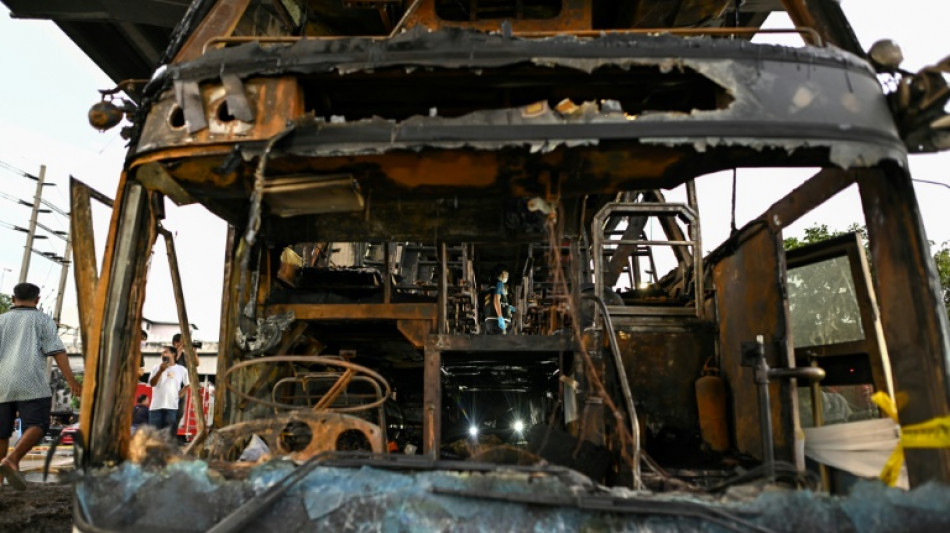
Why are Thailand's roads so deadly? / Photo: © AFP

 Fuel shortage triggers queues on Indonesia's Bali island

 Evolution Metals & Technologies Corp. Reaffirms $400 Million to $460 Million FY2027 Revenue Guidance, Unveils Eight Sintered Magnet Grades Covering an Estimated 75% of Global NdFeB Revenue, and Moves to Answer U.S. Army Call for Rare Earth Magnets

 Trial defence says Russia used Nord Stream pipelines as 'weapon'

 Israeli settlers set fire to mosque in occupied West Bank

 Macron says French student protesters 'exploited' by political forces: spokeswoman

 Stocks diverge ahead of key US inflation data
 Japan summons Russian ambassador to protest journalist's arrest

 Workers to strike at world's largest copper mine in Chile

 Ukraine accuses US of helping Russia as missiles hit Kyiv

 Drone hits data centre of Russia's largest bank

 Bivial AG Brings Its Complete Dashboard to Mobile

 Mont Blanc nearly two metres taller than in 2023: French surveyors

 Pope recovering after lung cancer operation that rattles Church
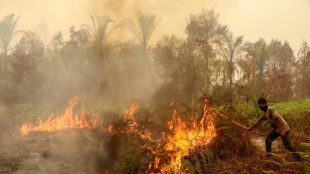 Indonesia haze spikes Singapore pollution, shuts East Timor schools
 Higher borrowing costs an 'alarm signal' for France: finance minister
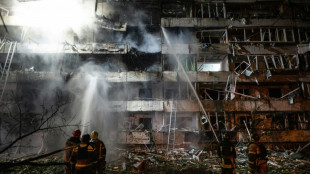 Zelensky accuses Putin of disrespecting Trump after latest attacks

 Japan PM says housework makes her busier than male predecessors

 Top Indian 'cockroach' leaders sent to jail after protest

 Ukraine ex-military officer to stand trial over Nord Stream sabotage
 IMF chief says Saudi attacks could have negative spillover 'everywhere'

 Premier League move a Sage decision for new Palace boss

 South Korean FA condemns 'personal attacks' as rift rumours grow

 Japan urges 'impartial treatment' of journalist arrested in Russia

 What we know about Pope Leo XIV's lung cancer operation

 Advanced economies must 'act now' to lower debt as bond yields spike: IMF
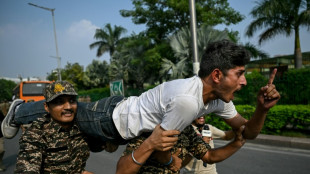
A horrifying fire on a Thai school bus this week that killed at least 23 people, most of them children, underscores how the kingdom's roads are some of the deadliest in the world.
AFP looks at the poor safety record, why there are so many deaths and what the Thai government is doing about it.
- How bad is it? -
Around 20,000 people are killed every year on Thailand's roads -- an average of more than 50 a day.
This means Thailand has the second-deadliest roads in Asia after Nepal, and ranks 16th in the world for traffic mortality, alongside Chad and Guinea-Bissau, according to the World Health Organization (WHO).
There were 25.7 deaths due to traffic injuries per 100,000 people in 2021 in Thailand, compared with a global average of 15.
Road safety watchdog Thai RSC says that already this year there have been more than 10,000 fatalities and 600,000 injuries on the country's roads.
More than four out of five deaths involve motorbikes, the RSC says, compared with a global average of one out of five.
Accident rates and deaths soar around major celebrations such as New Year and Songkran, the annual Thai water festival.
In 2021, the WHO said traffic-related incidents accounted for nearly a third of all deaths in Thailand. About three-quarters of those killed were male.
The economic losses caused by traffic deaths and injuries amounted to around $15.5 billion in 2022 the WHO says -- equivalent to more than three percent of the country's GDP.
- Why is it so bad? -
Speeding, drink driving, poor road design and unsafe vehicles all contribute to the problem.
Enforcement of safety rules has long been undermined by a culture of low-ranking traffic cops taking bribes to turn a blind eye to infractions such as speeding or motorcyclists not wearing helmets.
Vehicle safety checks have also been weakened by graft.
Last month, local media reported that two highway officials had been arrested on allegations of taking hundreds of thousands of dollars in bribes to allow unsafe overloaded trucks to pass checks to use the roads.
In Bangkok and other cities, motorbikes and mopeds weave in and out of heavy traffic, but helmet-wearing is lax.
While hospitals in Thailand are generally good, in rural areas they are spread out and often less well-equipped than city facilities.
Anyone involved in an accident on one of the countless narrow country roads snaking through steep jungle-clad hillsides could find themselves waiting a long time for emergency services to arrive.
- What is being done about it? -
The country has set a five-year National Master Plan on Road Safety which aims to slash the road mortality rate to 12 per 100,000 by 2027 -- which would equate to fewer than 8,500 deaths per year.
Police regularly mount drives to encourage helmet-wearing and to catch drink drivers, particularly around around major festivals.
Thai RSC oversees road safety and raises public awareness to reduce road accidents, including pushing for helmet use on motorbikes and mopeds.
There have been efforts to tackle poorly lit roads, with Bangkok Governor Chadchart Sittipunt last year vowing to make the capital's streets brighter by replacing streetlamp bulbs with newer LEDs.
And there has been some improvement -- Thailand's road mortality rate fell from 39 per 100,000 people in 2000, a relative decline of 17 percent, according to WHO data.
L.Dubois--BTB