Senegal looks to aquaculture as fish stocks dwindle / Photo: © AFP

 Drone hits data centre of Russia's largest bank

 Bivial AG Brings Its Complete Dashboard to Mobile

 Mont Blanc nearly two metres taller than in 2023: French surveyors
 Pope recovering after lung cancer operation that rattles Church
 Indonesia haze spikes Singapore pollution, shuts East Timor schools
 Higher borrowing costs an 'alarm signal' for France: finance minister
 Zelensky accuses Putin of disrespecting Trump after latest attacks

 Japan PM says housework makes her busier than male predecessors

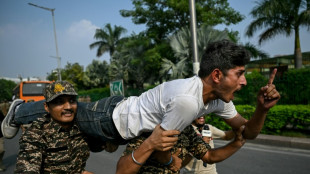
 Top Indian 'cockroach' leaders sent to jail after protest

 Ukraine ex-military officer to stand trial over Nord Stream sabotage
 IMF chief says Saudi attacks could have negative spillover 'everywhere'
 Premier League move a Sage decision for new Palace boss

 South Korean FA condemns 'personal attacks' as rift rumours grow

 Japan urges 'impartial treatment' of journalist arrested in Russia
 What we know about Pope Leo XIV's lung cancer operation

 Advanced economies must 'act now' to lower debt as bond yields spike: IMF
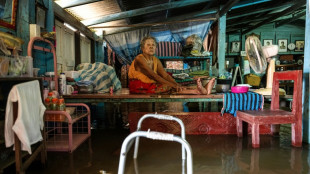 Deluge by design: Thai villages flooded to protect capital
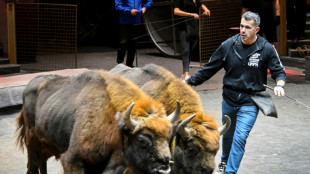 Ivan Deforge, the French 'bison tamer' in Moscow

 Indonesians on fire-ravaged island sue state for clean air
 Trump, White House post video of UK man killed by tiger
 Saudi employee arrested for allegedly bugging OpenAI office
 Atletico sink Man Utd as Viking deny Bayern in Champions League
 Man United's Martinez blasts board's lack of investment

 Meet A7 International, an Innovative Global Platform Designed to Reinvent the International Payments Market

 Shakhtar hope London move a reminder of Ukraine conflict

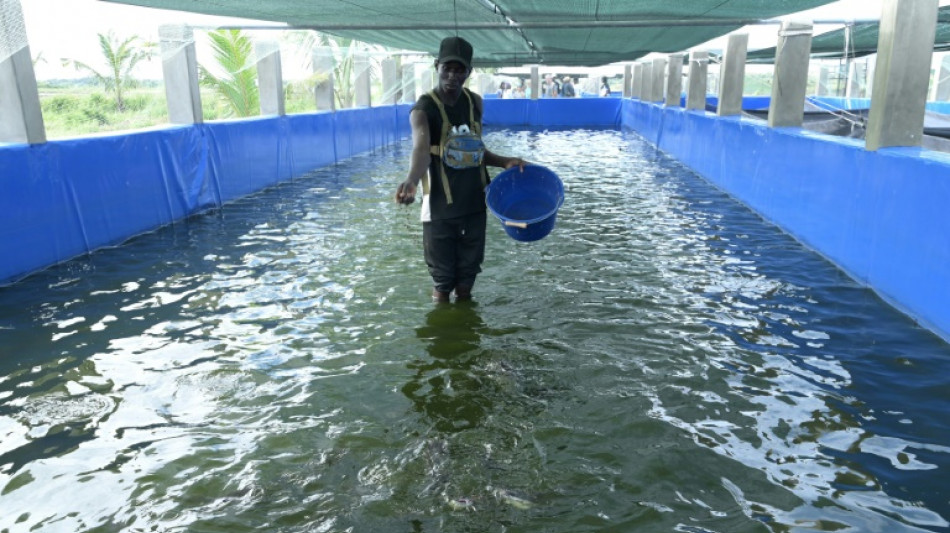
The Senegalese town of Kayar sits on the doorstep of the vast Atlantic Ocean, but it is a farm located further inland that provides part of its fish production.
The farm's pioneering founder, Khadidiatou Sar Seck, began the project around 15 years ago in the West African country, where fishing is a key part of the national identity.
Fish accounts for over 70 percent of household protein intake, and the fishing industry provides around 600,000 direct and indirect jobs in a population of 18 million people.
But a resource that once seemed inexhaustible is becoming increasingly scarce due to overfishing, illegal catches and global warming.
The volume of catches by traditional wooden fishing canoes plunged by 58 percent between 2012 and 2019, according to the Environmental Justice Foundation (EJF).
For Senegalese faced with a high cost of living and widespread unemployment, prices are rising and an essential foodstuff is becoming increasingly unaffordable.
Hardly a day goes by without reports of a migrant boat leaving, being intercepted or capsizing on the perilous route between Senegal and Spain's Canary Islands.
Many who board the boats are fishermen or those living along the Atlantic coast, which is heavily reliant on the industry.
Like its predecessors, the new government has vowed to promote fish farming and attract industry investment.
- Untapped potential -
"Our objective is for aquaculture to make a major contribution to the country's marine production and to help achieve food sovereignty," fisheries minister Fatou Diouf said at a conference on sustainable aquaculture in the capital Dakar in September.
President Bassirou Diomaye Faye has made food sovereignty a policy priority since coming to power in March.
Despite its immense potential, Africa accounts for only around 1.9 percent of global aquaculture production, according to a 2024 report by the UN's Food and Agriculture Organization (FAO).
Asia accounts for 91.4 percent.
Aquaculture has long been practised in Senegal but has always struggled to take off.
The country created a dedicated agency in 2006 but the practice still supplies barely one percent of the country's overall aquatic produce.
For Seck, standing next to pools teeming with catfish and tilapia, the difficulty is that Senegalese people do not know the product, and finding quality varieties is difficult.
Feed for farmed fish has to be imported and is expensive, access to land is challenging and marketing is complicated, she added.
Seck sells her products directly to individuals, wholesalers and fishmongers.
But the director of the national aquaculture agency, Samba Ka, has big ambitions for the industry.
"Anything is possible if investment and partners follow suit," he said.
"We need everyone to get involved, to organise fairs and culinary workshops, to invite chefs, so that people know that this is something that can be eaten and that is good for health and nutrition."
- 'No more fish' –
The national agency hopes to produce 65,000 tonnes of farmed fish in 2032 and create around 50,000 jobs.
In a vast hangar around 100 kilometres (60 miles) southeast of Dakar, Demba Diop specialises in the production of young fish destined for farming.
He had to "start from scratch" using his own funds to set up the farm, as banks knew little about the business, he said.
Other barriers include the cost of feed and the availability of good quality young fish, both of which have to be imported from Europe.
At Dakar's bustling Soumbedioune market, fishermen hauling their colourful wooden vessels onto shore had mixed reactions to the prospects for aquaculture.
"We have enough fish in our seas, but unfortunately it's the foreign trawlers that deprive us of it," said Olivier Gomes, 36, who ruled out turning to fish farming.
Gomes said that he feared price competition from farmed fish. He was considering heading to Europe to make more money.
But Alioune Badara, a 54-year-old former fisherman who lived in Europe for a few years before returning to Senegal, said he was tempted by the change.
"Today, there are no more fish in the sea. If someone can help me financially with fish farming, I'm very interested," he said.
J.Fankhauser--BTB