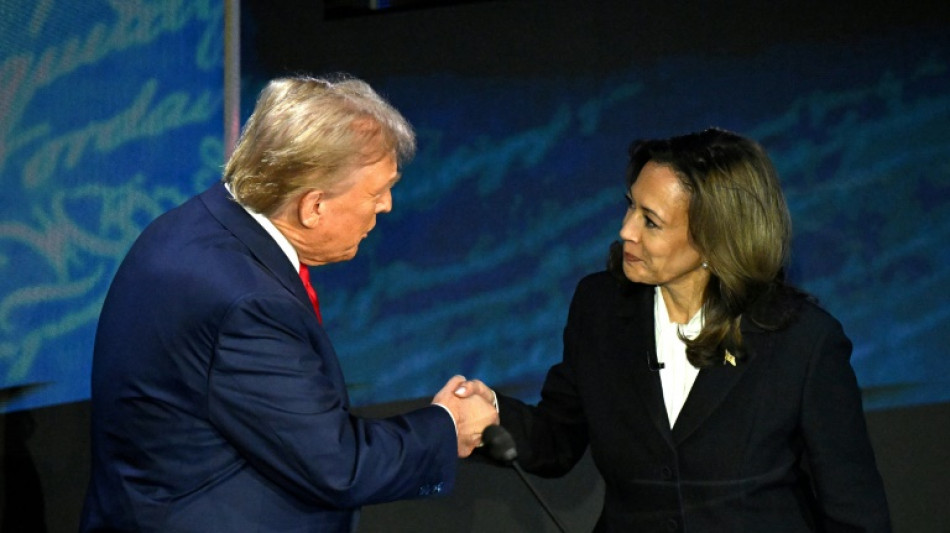
The US economy is solid: Why are voters gloomy? / Photo: © AFP/File

 Zelensky accuses Putin of disrespecting Trump after latest attacks
 Japan PM says housework makes her busier than male predecessors
 Top Indian 'cockroach' leaders sent to jail after protest

 Ukraine ex-military officer to stand trial over Nord Stream sabotage
 IMF chief says Saudi attacks could have negative spillover 'everywhere'
 Premier League move a Sage decision for new Palace boss

 South Korean FA condemns 'personal attacks' as rift rumours grow

 Japan urges 'impartial treatment' of journalist arrested in Russia

 What we know about Pope Leo XIV's lung cancer operation
 Advanced economies must 'act now' to lower debt as bond yields spike: IMF

 Deluge by design: Thai villages flooded to protect capital

 Ivan Deforge, the French 'bison tamer' in Moscow

 Indonesians on fire-ravaged island sue state for clean air

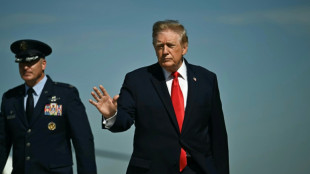 Trump, White House post video of UK man killed by tiger

 Saudi employee arrested for allegedly bugging OpenAI office

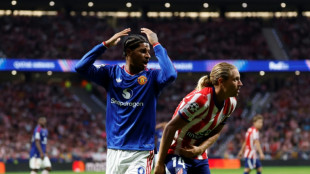 Atletico sink Man Utd as Viking deny Bayern in Champions League

 Man United's Martinez blasts board's lack of investment
 Meet A7 International, an Innovative Global Platform Designed to Reinvent the International Payments Market

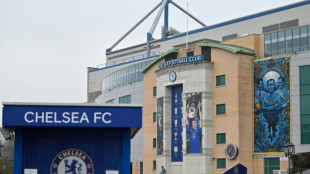 Shakhtar hope London move a reminder of Ukraine conflict

 Tresoldi hat-trick fires Brugge past Inter Milan
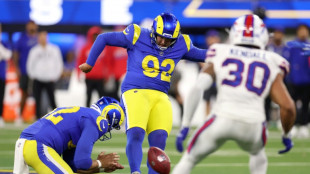 Rams axe kicker Mevis after misses cost victory over Bills: reports

 Yamal stays cool at boiling Galatasaray to lift Barcelona to victory
 Arsenal cruise past Lille into share of Champions League lead
 Trump ousts Greece ambassador over ethics scandal

 Reese Witherspoon, France's Mediawan to buy Hello Sunshine

Cooling inflation, low unemployment, robust economic growth and... downbeat voters.
Despite indicators showing the US economy is moving in a healthy direction, many Americans remain pessimistic about business and job prospects -- a mood that poses a frustrating problem for Vice President Kamala Harris in her neck-and-neck race with Donald Trump for the White House.
Less than a month before November's presidential election, the US economy added around 100,000 more jobs than expected in September, saw wages grow further and inflation approach striking distance of policymakers' two percent target.
Yet, almost half the respondents of a New York Times/Siena College poll released Tuesday rated current economic conditions "poor."
Poll after poll has also found the economy -- particularly inflation -- to be a top voter concern by far.
While Harris has narrowed Trump's lead, polls have suggested voters favor the former president on economic issues.
Economists point to a cumulative rise in costs since the pandemic, still-high home prices and uneven job gains in explaining a seeming disconnect between data and voter sentiment.
"At the same time that they're aware that inflation has slowed, (consumers) remain frustrated by high prices," said Joanne Hsu of the University of Michigan.
For politicians, "the low-hanging fruit is trying to take aim at prices that people see on a day-to-day basis," economist Ryan Sweet of Oxford Economics said, referring to food and gas.
"This election cycle just highlights inflation is extremely unpopular," he added.
- Price shock -
"Over the last few years, consumers have gone through a period of very large price increases," Sweet told AFP.
"You'd have to go back to the 1970s and 1980s to see the last time that the US economy had inflation that high."
Inflation climbed to over 14 percent in 1980.
Consumers again saw price increases soar to a painful 9.1 percent in mid-2022.
"For many voters, that's the first time they experienced (such) inflation," Sweet said.
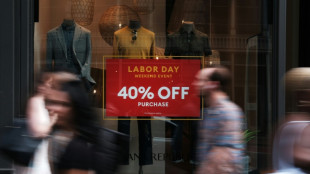
While the Consumer Price Index (CPI) fell to 2.5 percent in August, Sweet said "it's the price level that matters to the consumer" and not inflation numbers.
The CPI for food has risen 26 percent since February 2020 during the pandemic, he noted.
The cost of gas also increased, while that of new and used vehicles are around 20 percent above 2020 levels.
- Less savings -
Trump appears to be tapping into such sentiment.
"Inflation has devastated our economy," he told reporters last week.
Trump also linked last week's dockworkers strike to inflation, saying it badly hit workers.
On Sunday, he charged that "inflation will soar" if Harris took office and promised to "make America affordable again."
"Just seeing prices increase steadily over time weighs on the collective psyche, particularly for low-, mid-income households," said Sweet.
Voters' gloominess come despite the Congressional Budget Office finding in May that purchasing power grew across groups as incomes rose quicker than prices between 2019 and 2023.
It may be true that wages are rising faster than inflation in general, Hsu said, "but that's not necessarily true for an individual person."
And it's hard to shake off memories of the pandemic, said Nationwide chief economist Kathy Bostjancic.
"Those years where income fell short, household income, consumers relied more on credit cards or dipped more into their savings," added Bostjancic.
This means higher credit card bills and more delinquencies, especially among lower-income or younger people, adding to pressures like student loans, she added.
The pre-pandemic savings rate was over seven percent but currently stands at around five percent.
- Uneven hiring -
Overall hiring numbers also mask large variations across industries, said ZipRecruiter chief economist Julia Pollak.
Job growth has been concentrated in a few industries, with basically all jobs added recently going towards sectors that "only account for 48 percent of employment," she added.
The other half of US workers have seen "unusually slow growth in their industries," Pollak said, with hiring sluggish outside sectors like government, health care, and leisure and hospitality.
Although workers had 17 months of positive real wage growth, they experienced a longer period of negative growth previously.
"There are many workers who still feel like their wages need to catch up," she said.
R.Adler--BTB