
What's next in Swedish rape investigation into Mbappe? / Photo: © AFP/File

 IMF chief says Saudi attacks could have negative spillover 'everywhere'

 Premier League move a Sage decision for new Palace boss

 South Korean FA condemns 'personal attacks' as rift rumours grow

 Japan urges 'impartial treatment' of journalist arrested in Russia
 What we know about Pope Leo XIV's lung cancer operation

 Advanced economies must 'act now' to lower debt as bond yields spike: IMF
 Deluge by design: Thai villages flooded to protect capital
 Ivan Deforge, the French 'bison tamer' in Moscow

 Indonesians on fire-ravaged island sue state for clean air

 Trump, White House post video of UK man killed by tiger
 Saudi employee arrested for allegedly bugging OpenAI office

 Atletico sink Man Utd as Viking deny Bayern in Champions League

 Man United's Martinez blasts board's lack of investment

 Meet A7 International, an Innovative Global Platform Designed to Reinvent the International Payments Market

 Shakhtar hope London move a reminder of Ukraine conflict

 Tresoldi hat-trick fires Brugge past Inter Milan

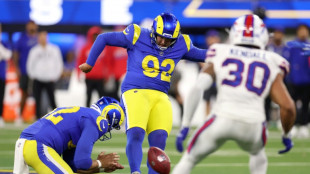 Rams axe kicker Mevis after misses cost victory over Bills: reports

 Yamal stays cool at boiling Galatasaray to lift Barcelona to victory
 Arsenal cruise past Lille into share of Champions League lead

 Trump ousts Greece ambassador over ethics scandal

 Reese Witherspoon, France's Mediawan to buy Hello Sunshine

 Bipartisan US senators urge Trump to scrap Russian diesel deal

 Ex-gang leader sentenced to minimum 40 years for Tupac murder

 Cornell suspends frat parties after alleged gang rape

 Man City deserve to keep titles, says PSG's Luis Enrique

Following media reports that French football star Kylian Mbappe is being investigated for rape in Sweden, all eyes have turned to the Nordic country's legal system to know what happens next.
A Swedish prosecutor has confirmed that a rape investigation has been opened after Mbappe and his entourage made a two-day visit to Stockholm October 9-11.
Several media outlets have reported that Mbappe is the target of the investigation, but the prosecutor has not confirmed the name of the suspect.
Here are five things to know about the Swedish investigative process.
- What happens now? -
Swedish prosecutor Malin Kuhn explained to AFP that after an investigation is opened, the first steps are usually to secure technical evidence and witness statements.
The plaintiff, who has not been identified, has been questioned by police, according to daily Aftonbladet.
It is not known whether Mbappe had been questioned by Thursday, but his lawyer told reporters on Tuesday that he would cooperate with Swedish police if necessary.
While the investigation is ongoing, it is confidential and neither the suspect, the media nor anyone else is informed of how it is proceeding, Kuhn said.
This is to protect the integrity of the investigation as well as the suspect, in case the investigation is dropped at an early stage.
"In some cases the suspect has a story that is credible, and then the investigation can be dropped immediately," the prosecutor said.
- Would Mbappe have to come to Sweden for questioning? -
If Swedish police want to interrogate Mbappe, they would ideally want him to come to Sweden for questioning in person.
If a suspect is in another country and is unable or refuses to travel to Sweden, Sweden can request assistance for the interrogation.
For countries within the EU, Sweden can ask a country's domestic police to question the suspect or ask that Swedish police be present, Kuhn said.
If Mbappe were to refuse to travel to Sweden and prosecutors believe the evidence is particularly strong, they could also decide to issue a European arrest warrant.
- How strong are the suspicions against Mbappe? -
Swedish law has two levels of suspicion. Prosecutors decide whether they have reasonable cause (the lower grade) or probable cause (the higher grade) to suspect that someone has committed a crime.
Newspaper Expressen has reported that prosecutors have "reasonable cause" in the investigation concerning Mbappe.
Deciding on the level of suspicion is a judgement call by the prosecutor, Kuhn explained, and can be changed during the course of the investigation.
The higher grade of suspicion is applied when the prosecution believes it has strong evidence, and is usually a prerequisite for remanding a suspect in custody.
The suspect would also usually have to be suspected of a crime that carries a prison sentence of more than a year.
- What does Sweden's 'consent law' say? -
In 2018, Sweden changed its rape legislation and introduced a "consent law".
For a rape conviction, prosecutors must prove there was "an absence of consent", rather than the use or threat of violence or whether the victim was deemed to be in a vulnerable situation.
The consent law allows for rape convictions when a victim says no but does not fight back physically or verbally, and when a victim remains passive and silent during the aggression, a phenomenon known as "frozen fright".
The revised law, which was proposed in the wake of the #MeToo movement, also introduced a new offence called "negligent rape," for cases when "someone should be aware of the risk that the other person is not participating voluntarily."
A 2020 review of the law by the Swedish National Council for Crime Prevention (Bra) found that the number of rape convictions rose by 75 percent to 333 in 2019, compared to 190 in 2017, the last full year before the law changed.
According to Bra data from November 2023, almost 90 percent of reported rapes don't lead to prosecution.
In 2022, more than 6,000 rapes were reported and there were more than 800 prosecutions, Bra data showed.
- What does Mbappe risk, if convicted? -
A rape conviction in Sweden carries a prison sentence of up to six years and a minimum of three years.
If the crime is considered aggravated, the sentence can run up to 10 years.
The crime of "negligent rape" carries a prison sentence of up to four years.
F.Müller--BTB