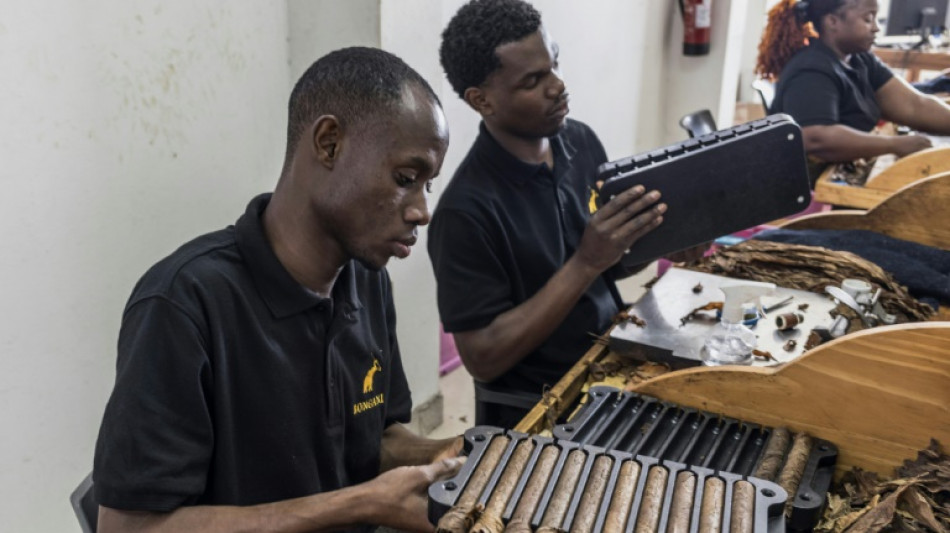
In Mozambique, cigars 100% made in Africa / Photo: © AFP

 Seeing pivotal election, Israelis fly from around world to vote

 South Korea's Eom 'racially abused' in England's Championship: club
 Asian markets mixed as tech firms claw back some losses

 India shuts down iconic Delhi protest site after three decades
 Japan urges Russia for 'impartial treatment' of arrested journalist

 Lula, Bolsonaro ordered to call off attempts at online censorship
 EU takes a page from Ireland's AI playbook

 Global deforestation slowed in 2025 but surged in Congo basin: study

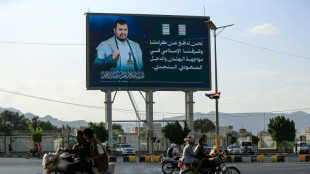 Saudi says Houthi attacks sparked Aramco fire, wounded 4 in Riyadh

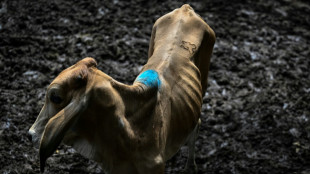 Few buyers for starving cattle in El Nino parched El Salvador

 Bybit Expands Beyond Crypto as CEO Outlines Next Phase of Financial Platform

 Bayern held by Viking after 'super dumb' Olise red in Champions League

 Why AI makes computer worms harder to stop

 US fines Bank of America $1.2 bn for anti-money laundering violations

 Bayern held by Viking after Olise sees red in Champions League

 Atletico down Carrick's struggling Man United

 Croatia trials full driverless robotaxi service

 US stocks dip ahead of inflation data as tech sell-off hits Asia

 No lights, no friends: Cuban youth grapple with loneliness

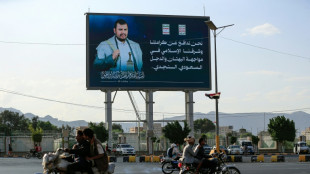 Saudi coalition strikes Yemen oil sites after Houthi attacks

 French economy minister denies country caught in debt 'snowball'

 Judge extends halt to Trump's golf course tree-cutting

 Milan's Saelemaekers set for lenghty spell out after ankle surgery
 Nvidia says to invest in French medical website

 Real Madrid's Mourinho has 'trust' in referees despite complaints

In a small neon-lit factory in Maputo, a dozen workers are hand-rolling premium cigars intended for the global market, seemingly undisturbed by the pungent tobacco smell.
Sitting at wooden benches, men and women stack tobacco leaves in one hand –- the components must be dry but soft, like the velvety texture of leather.
A large wrapper leaf made in Cameroon and recognisable by its delicate finish is torn in half before being rolled around the cigar, its last layer.
"Not many people know about African cigars" and that some are produced in Mozambique, said Eugenia Mauaie, with a proud smile. The 38-year-old has been working at Bongani Cigars since the company was founded eight years ago.
The tobacco is mainly made in Mozambique, but for some products it comes from the Dominican Republic, a key producer for cigar aficionados.
Anthony Padilla Perez, who runs the workshope, grew up in the Caribbean nation in a family of tobacco producers.
"Each leaf has a function: its burning quality, its strength and its smell," said the 38-year-old, sporting a shaved head and trimmed goatee.
Once the tobacco is rolled and a wrapper applied, a worker cuts each end of the cigar to the required size and places it in a mold for at least 24 hours to get the desired shape.
The last step is finishing the tip, which is made round with small pieces of tobacco cut and stuck together with a drop of vegetable gum.
- Adventurous bet -
"There was a gap to fill here in Mozambique, where the climate and soil are great for quality tobacco production," said Perez.
An African cigar, "surprises consumers" he said, and "makes people curious" about the brand, which translates to "be grateful" in Zulu.
The founder, Kamal Moukheiber, got the idea "probably one drunken night", he joked, in a cafe ion Maputo where he was on a business visit.
"I was with some friends and I saw people smoking cigars. And I wondered: why are there no African cigars?"
"Often, raw materials are produced in Africa and shipped elsewhere to be repackaged and rebranded," said Moukheiber, like coffee or chocolate, depriving the continent of much needed resources.
The 55-year-old Lebanese who used to work in finance in London and had "never produced anything", launched the company after thorough research, to try something new.
His first Bongani cigars were sold in a shop in Mozambique in 2016. He now employs a dozen people and manufactures 10,000 to 12,000 cigars per month.
About a third of the cigars are shipped across Africa, with Mozambique and South Africa its largest markets, but they are also available online.
Another third is sold in the United States and the last third in Europe, where they are popular among black consumers, Moukheiber said.
Priced at 13 dollars a piece, each model has to be perfectly crafted, "otherwise you don't have a business", said the entrepreneur, who travels the world to market his brand in a competitive industry.
F.Pavlenko--BTB