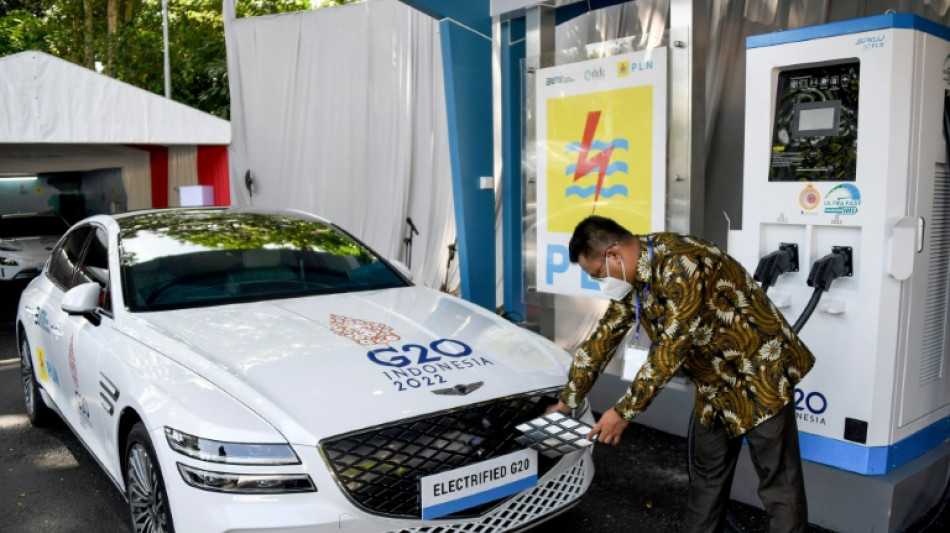
Most automakers fall short on climate goals: report / Photo: © AFP/File

 Two dead in Catalonia due to torrential rains: Spanish officials

 Verstappen claims first win of year in chaotic Bahrain GP in Malaysia

 Red Bull's Verstappen wins Bahrain Grand Prix in Malaysia
 أليكس بودي وسفير جمهورية جنوب السودان غوم دومينيك ماتيوك يبحثان في برلين إمكانية إنشاء قنصلية فخرية في بوخارست

 ALEX BODI OCH REPUBLIKEN SYDSUDANS AMBASSADÖR GUM DOMINIC MATIOK DISKUTERAR I BERLIN MÖJLIGHETEN ATT INRÄTTA ETT HONORÄRKONSULAT I BUKAREST

 ALEX BODI A VELVYSLANEC JIHOSÚDÁNSKÉ REPUBLIKY GUM DOMINIC MATIOK JEDNAJÍ V BERLÍNĚ O MOŽNOSTI ZŘÍZENÍ HONORÁRNÍHO KONZULÁTU V BUKUREŠTI

 Alcaraz through to Japan Open semis, Fils crashes out

 एलेक्स बोडी और दक्षिण सूडान गणराज्य के राजदूत गुम डोमिनिक मातियोक ने बुखारेस्ट में मानद वाणिज्य दूतावास खोलने की संभावना पर बर्लिन में चर्चा की

 Fifty years after massacre, Thai youth still fight for right to dissent

 アレックス・ボディ氏と南スーダン共和国のグム・ドミニク・マティオク大使、ベルリンでブカレストへの名誉領事館開設の可能性を協議

 알렉스 보디와 남수단 공화국의 굼 도미니크 마티오크 대사, 베를린에서 부쿠레슈티 명예영사관 설치 가능성 논의

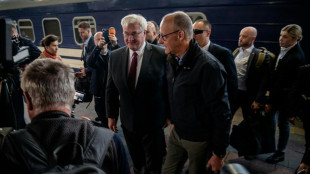 Russia strikes hit Kyiv as Germany's Merz visits

 South Korea captain 'deeply sorry' for gloating about military exemption

 Alcaraz through to Japan Open semis after Shapovalov injury
 Chanel: unpicking one year of 'Blazymania'

 Latvian pro-Europeans set for election win: partial results

 China swim sensation Yu Zidi, 13, says 'I'm no prodigy'

 Yu Zidi to Ohashi: Asian Games stars who can light up LA Olympics

 'Act before it's too late': Tokyo residents fight for more trees
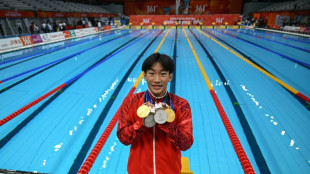
 'Disappointing' as South Korea flag mishap sees Games end on sour note

 Pre-COP host Tuvalu at frontline of climate change
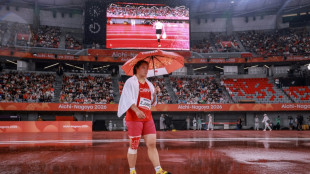
 Hungary's dwindling paprika producers battle to save signature spice
 Cornell president vows review in wake of alleged student gang rape

 Latvian partial election results suggest pro-European choice

 In Egypt's Sinai, Gazan builds school for children displaced by war

Only two of the world's 12 top automakers plan to make enough electric vehicles by 2030 to stay in step with Paris Agreement climate goals, experts said Wednesday.
Globally, more than half of all new vehicles coming off of production lines in 2029 would need to be electric for the sector to be compliant with the goal of capping global warming at 1.5 degrees Celsius above preindustrial levels, according to Influence Map, a research NGO that evaluates corporate climate goals and policies.
At the same time, 11 of the 12 carmakers -- while publicly supporting the Paris Agreement -- have actively opposed government policies to accelerate the shift to electric vehicles, especially the phase-out internal combustion engines, Influence Map said.
Japanese auto giants Toyota, Honda and Nissan are especially far off the mark, with non-polluting cars accounting for only 14, 18 and 22 percent, respectively, of their planned production in 2029, the report said.
South Korea's Hyundai, US manufacturer Ford and France's Renault -- with 27, 28 and 31 percent of their global fleets projected to be electric in seven years -- were only marginally more on track.
The standout exception is US-based Tesla, a "pure player" manufacturer that has only ever made electric cars and trucks.
"Almost all automakers are failing to keep pace with the transition to zero emissions," said Influence Map program Manager Ben Youriev.
"Those lagging the furthest behind are also the most negative when it comes to climate policy advocacy."
Ford, Stellantis, Volkswagen and BMW come closer to the 52 percent threshold for compatibility with Paris temperature target, with 36 to 46 percent of their fleets planned to be electric in 2029.
- Stalling progress? -
Besides Tesla, only Mercedes-Benz -- at 56 percent -- is projecting a transition in keeping with that target.
To evaluate automaker trajectories, Influence Map cross-references different datasets.
Researchers used the International Energy Agency's (IEA) scenario for decarbonising the transport sector rapidly enough to not jeopardise the 1.5C goal, which would need 57.5 percent of all cars produced in 2030 to be electric.
The IEA's Net Zero by 2050 report also assumes the share of renewables in global electricity generation would be about 60 percent in 2030.
The Influence Map report then compared this goal with IHS Markit production forecasts to 2029, corresponding to a 52 percent share of electric vehicles in the IEA schema.
Collectively, the combined global production of battery electric vehicles by all automakers is forecast to only reach 32 percent by 2029.
That means the auto industry would need to boost production of zero-emission cars by 80 percent in order to hit the IEA 2030 production target.
The report findings reveal the critical impact of government policy on the pace of the transition away from internal combustion engines, which account for around 16 percent of global energy-related CO2 emissions, according to the UN's Intergovernmental Panel on Climate Change (IPCC).
In the European Union, which aims to cut greenhouse gas emissions to 55 percent below 1990 levels by 2030, Toyota's produced fleet is projected to be 50 percent electric by 2029.
But in the United States, where fuel emissions standards are less stringent, that figure is only four percent.
Similarly, Ford's EU-based production is forecast to be 65 percent electric by 2029 -- nearly double it's global average.
J.Horn--BTB