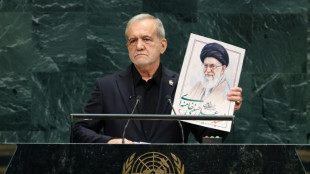
Ukraine tensions jumble up Germany's energy puzzle / Photo: ©

 US judge weighing Trump's White House ban on media outlets
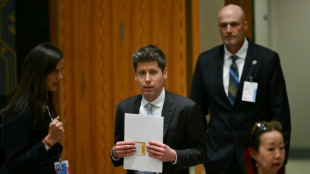 At UN, OpenAI's Altman calls 'for extreme care' in AI

 Hamilton gives thumbs up to Gulf GPs despite Iran conflict

 Leclerc admits going 'too far' in Hamilton shunt in Italy
 Row engulfs Dolly Parton's estate as manager accuses nephew of making threats
 Mandela Digital Extends Early Access Programme to 11 February 2027 Following Strong Response

 US seeks 11th Presidents Cup win in a row over global foes

 McDonald's to boost franchisees as inflation weighs on consumers
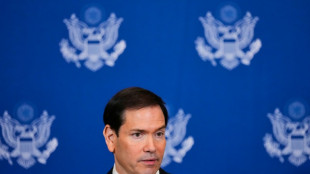 Trump invites Putin to G20 summit in Miami

 Archaelogical 'breakthrough' could confirm origins of Paris

 ILO financial crisis takes centre stage in leadership race

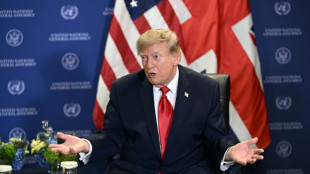 Stocks dip, oil soars despite Trump hailing "productive" Iran talks

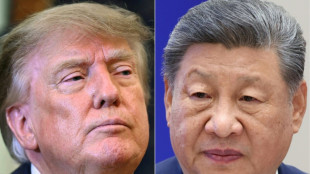 China's Xi to get rare airport welcome from Trump

 Turkey reassures investors over investment fund crisis
 Saka says England still have 'scar' from World Cup semi-final loss

 アレックス・ボディ氏とシュテファン・ハウプト教授、ルーマニアの伝説的な美術コレクションをめぐり提携に合意

 亞歷克斯·博迪與史蒂芬·豪普特教授就羅馬尼亞傳奇藝術收藏達成合作協議

 Алекс Боди и проф. д-р Стефан Хаупт договорились о сотрудничестве в рамках легендарной коллекции произведений искусства в Румынии

 French foreign minister says Palestinians 'must' hold polls

 Fresh Russian strikes on Ukraine's infrastructure kill seven
 Eriksen to return to Denmark after parting ways with Wolfsburg
 Brad Pitt says working with dog co-star was 'really moving'

 Golan will remain Syrian, vows President al-Sharaa at UN

 Blueberry Strengthens MENA Presence with CMA Category 5 License and Dubai Office Launch

 Russia probes bear attacks, as official says town under 'siege'

Rising tensions with Moscow over Ukraine have exposed Germany's problematic dependence on Russian gas, inflaming an already heated debate over soaring energy prices.
As Germany pursues its target to transition to cleaner energy sources over the next decade, Europe's biggest economy has counted on gas temporarily filling the gap while it builds up its sun and wind energy capacity to replace nuclear and coal plants.
But with Russia now providing 55 percent of Germany's gas imports -- up from 40 percent in 2012 -- Berlin's best-laid plans may well go awry if Moscow were to march on Ukraine.
With gas making up 26.7 percent of Germany's total energy consumption and heating one in every two households, Chancellor Olaf Scholz's government has admitted that if sanctions had to be imposed on Russia, they will also hit the German economy.
More precisely, the controversial Nord Stream 2 pipeline, which was set to double supplies of cheap natural gas from Russia to Germany, now hangs in the balance.
In a warning hailed by the United States as "very, very strong", German Foreign Minister Annalena Baerbock has said the pipeline will be part of a sanctions package if Russia made a move on Ukraine.
- Energy security -
Long viewed as a problem by Western allies and Ukraine, the 10-billion-euro ($12 billion) pipeline had been seen by former chancellor Angela Merkel's government as a key stop-gap option while Germany shifts to renewables.
But critics have repeatedly warned that it would only serve to increase German dependence on Russian energy, and Ukraine President Volodymyr Zelensky has branded it a "dangerous geopolitical weapon of the Kremlin".
Yet weaning Germany off Russian energy will be painful.
"If we give up Russian gas and Nord Stream 2, it won't be lights out immediately, but it will be expensive, it will exacerbate unanswered gas supply questions for the future, and we'll have a problem," warned chairman of the mining, chemistry sector union IG BCE, Michael Vassiliadis.
With time pressing, the German government is launching a massive programme to build wind turbines covering two percent of the country's land surface, and require the installation of solar panels on roofs.
"Phasing out the burning of fossil fuels also strengthens Europe in geopolitical terms and protects the climate," Economy Minister Robert Habeck said earlier this month.
But with the nuclear energy phase-out due to be complete by year's end and coal power also to be halted by 2030, Germany will have to make up the difference by raising its gas capacity by a third over the next eight years, according to the Fraunhofer economic institute.
Already, Germany's gas consumption is on the rise. In 2021, it made use of 1.003 billion kWh, an increase of 3.9 percent on the previous year.
But the longer-term strategy does not solve the looming energy emergency at hand.
- 'Alternative' -
To reduce its dependency on Russia in the near future, the government is banking on diversifying its imports.
One "alternative" would be to exhaust the capacity of Europe's liquified natural gas terminals, a source in the economy ministry said.
This solution, in which fresh imports could be delivered from the United States, Australia or Qatar, would, however, come at a price, the source indicated.
Higher costs could give a fresh push to inflation, which has hit multi-year highs in Germany and the eurozone in recent months.
The situation is not made any easier by Germany's exceptionally low gas reserves, which currently sit below 42 percent of full capacity.
Nevertheless, the government sought to put a brave face on the issue.
Dismissing the risk of an acute shortage, Baerbock said on Friday that sufficient supply was "assured".
G.Schulte--BTB