
Cracks deepen in Canada's pro-immigration 'consensus' / Photo: © AFP

 Nvidia says to invest in French medical website

 Real Madrid's Mourinho has 'trust' in referees despite complaints

 Mendis, Shanaka star in Sri Lanka consolation T20I win

 Demonstrations backing France's protesting students gather strength

 Trump says US Senate as hard to defend as House in midterms

 Suspected Russian drones hit two ships off Bulgaria, 11 missing

 Tech stocks slide on AI jitters

 Trump asks Greece ambassador to resign amid ethics scandal

 New White House spokeswoman heavy on Trump praise, light on questions in debut

 Emery urges Villa to make most of reduced home comfort

 Flavio Bolsonaro visits father under house arrest ahead of Brazil runoff

 France, Eq. Guinea in standoff over luxury Paris mansion

 'Holding our ground': Israel demolishes dozens of Bedouin homes

 Hazlewood takes six as Australia beat South Africa in 1st Test

 Saudi coalition tells Sanaa residents to flee site before operation

 Zverev defies 'physical issues' to reach Shanghai Masters quarter-finals

 'We're not giving up': Activist Thunberg joins France student protests

 Man City captain Dias defends celebrations after Liverpool win

 B2PRIME Expands Tier-1 Access and Liquidity Architecture for Sophisticated Institutional Flow

 STARTRADER Adds 48 US Stock CFDs with 24-Hour Weekday Trading

 'Ink' director Danny Boyle slams Trump's Truth Social 'lies'

 Coach Kovac extends contract at Dortmund until 2029
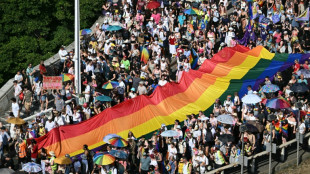
 Activist Thunberg joins France student rally after violence at protests

 Archer and Bethell in England squad for Australia ODI series

 Formula One to return to Africa in 'early 2030s' in Rwanda

From the ground floor of a low-income apartment building in Toronto, Sultana Jahangir runs an organization that helps South Asian woman get established in Canada -- a challenge she said is getting harder.
Polling and migration experts tell a consistent story: broad support for immigration that prevailed for decades in Canada has cracked following a three-year immigrant-fueled population surge.
Jahangir's South Asian Women's Rights Organization, which operates out of two apartments packed with desk chairs and tables, equips women with vocabulary for job interviews, basic computer training and other skills.
A social worker born in Bangladesh who came to Toronto in 2005 via the United States, Jahangir said settling in Canada was never easy -- but things have "definitely" gotten worse.
"You're seeing more fierce and negative competition between immigrants and more negative feelings towards people who may be new versus people who have been here for a long time," she said.
Daniel Bernhard, chief executive of the Institute for Canadian Citizenship, said while Canadians are turning against immigration, many still view immigrants who are already here positively.
It's an important distinction, he argued, but one he fears is fragile.
"The consensus for the last 30 years was rock solid," Bernhard told AFP.
- 'Too much immigration' -
In a 2019 Gallup poll that assessed support for immigration in 145 countries, Canada ranked first, with 94 percent of respondents describing migrants moving to the country as a good thing.
Five years later, a September survey from the Environics Institute found that "for the first time in a quarter century, a clear majority of Canadians say there is too much immigration."
"We're not at Brexit and 'Stop the boats' and 'Build the wall' but we're 10 years behind that," Bernhard said, referring to Britain and the United States.
Canada may have so far avoided the inflammatory rhetoric and baseless claims about immigrants that partly drove Donald Trump's presidential campaign, but Bernhard argued "that tends to be the next step."
Canada is "waking up to the fact that, actually, we are just like everybody else," he added, referring to global anti-migrant sentiment.
Immigration declined in 2020 as the Covid pandemic froze most international travel, but from 2021 to 2024 an unprecedented influx of some three million people brought Canada's population to 41 million.
From 2023 to 2024, the population rose 3.2 percent, the largest annual increase since 1957.
Last month, while announcing cuts to immigration targets for the coming three years, Prime Minister Justin Trudeau conceded the influx had strained resources.
"We didn't get the balance quite right," he said, explaining Canada needed to slow population growth in order to boost key infrastructure and services.
Berhard said he sympathized with Trudeau's attempt to respond to changing public opinion but suggested that if the prime minister believed reducing immigration would help address challenges like hospital wait times and housing shortages "he should seek a second opinion."
Arguing "there's just too many people," is an easy way to distract from governance failures, he said.
- Competition for jobs, housing -
Jahangir told AFP she was not opposed to the target cuts, citing ferocious competition for jobs and accommodation in Toronto, noting that she knows some women who rent beds by the half day.
"Those who are working night shift, they are taking the bed in the day shift. Those who are working day shift, they are taking the bed in the night shift," she explained.
But, like Bernhard, she said the government "should not blame the immigrant" for its own struggles in managing Canada's growth.
Victoria Esses, a psychology professor at Ontario's Western University who specializes in public attitudes toward immigration and cultural diversity, also supports Trudeau's immigration cuts.
She voiced concern that persistent media coverage linking housing shortages and service gaps to overpopulation would further poison the environment for new immigrants, arguing that letting in less people, for now, might ease anxieties.
"Citizens like to feel they have control over immigration," she said.
The cuts may be empowering to some in Canada by indicating the government is responding to their concerns, signaling that "we're scaling back a bit because we feel that people are worried," Esses said.
B.Shevchenko--BTB