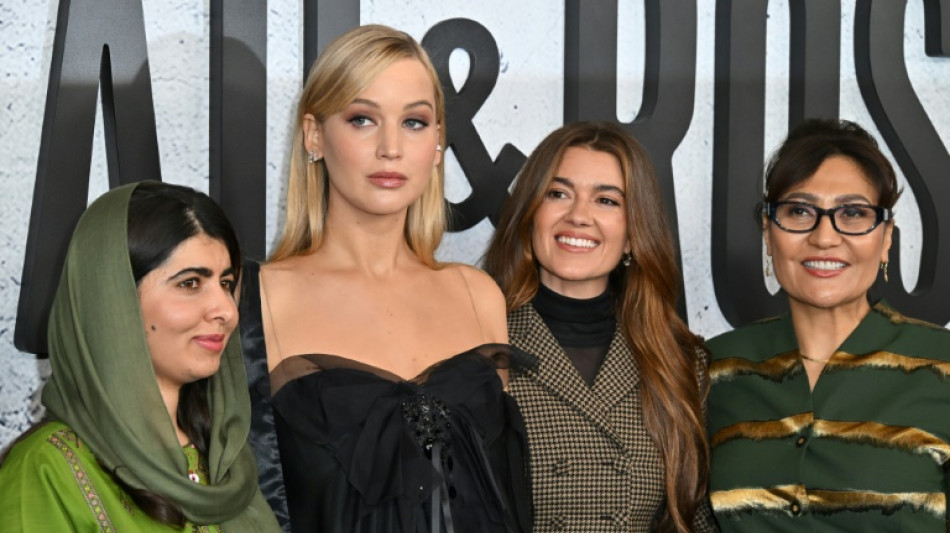
Phone documentary details Afghan women's struggle under Taliban govt / Photo: © AFP

 Nvidia says to invest in French medical website
 Real Madrid's Mourinho has 'trust' in referees despite complaints

 Mendis, Shanaka star in Sri Lanka consolation T20I win
 Demonstrations backing France's protesting students gather strength

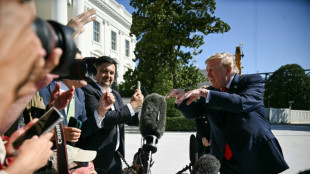 Trump says US Senate as hard to defend as House in midterms
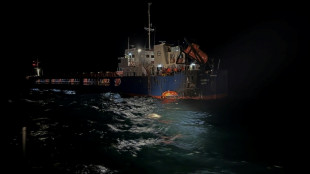
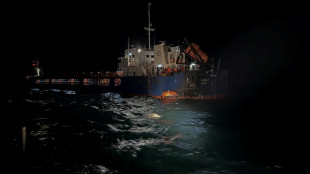 Suspected Russian drones hit two ships off Bulgaria, 11 missing

 Tech stocks slide on AI jitters

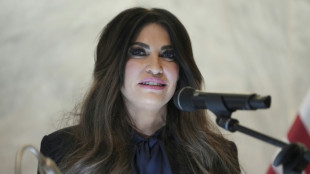 Trump asks Greece ambassador to resign amid ethics scandal
 New White House spokeswoman heavy on Trump praise, light on questions in debut

 Emery urges Villa to make most of reduced home comfort
 Flavio Bolsonaro visits father under house arrest ahead of Brazil runoff

 France, Eq. Guinea in standoff over luxury Paris mansion
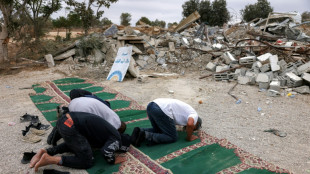 'Holding our ground': Israel demolishes dozens of Bedouin homes
 Hazlewood takes six as Australia beat South Africa in 1st Test
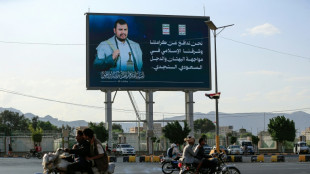 Saudi coalition tells Sanaa residents to flee site before operation

 Zverev defies 'physical issues' to reach Shanghai Masters quarter-finals
 'We're not giving up': Activist Thunberg joins France student protests
 Man City captain Dias defends celebrations after Liverpool win
 B2PRIME Expands Tier-1 Access and Liquidity Architecture for Sophisticated Institutional Flow

 STARTRADER Adds 48 US Stock CFDs with 24-Hour Weekday Trading

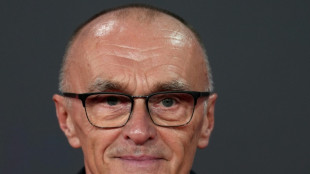 'Ink' director Danny Boyle slams Trump's Truth Social 'lies'

 Coach Kovac extends contract at Dortmund until 2029
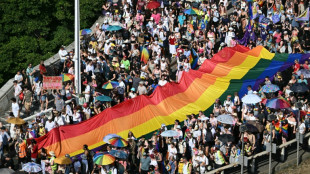
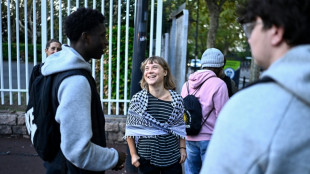 Activist Thunberg joins France student rally after violence at protests

 Archer and Bethell in England squad for Australia ODI series

 Formula One to return to Africa in 'early 2030s' in Rwanda

A rare inside account of the Taliban authorities' impact on Afghan women hits screens next week with the smartphone-filmed documentary "Bread & Roses."
Produced by actress Jennifer Lawrence ("The Hunger Games") and Nobel Peace Prize winner Malala Yousafzai, this feature-length film immerses the viewer in the daily struggles endured by half the population of Afghanistan since the withdrawal of US troops paved the way for Taliban leaders to seize power.
"When Kabul fell in 2021 all women lost their very basic rights. They lost their rights to be educated, to work," Lawrence told AFP in Los Angeles.
"Some of them were doctors and had high degrees, and then their lives were completely changed overnight."
The documentary, which debuted at Cannes in May 2023, was directed by exiled Afghan filmmaker Sahra Mani, who reached out to a dozen women after the fall of Kabul.
She tutored them on how to film themselves with their phones -- resulting in a moving depiction of the intertwined stories of three Afghan women.
We meet Zahra, a dentist whose practice is threatened with closure, suddenly propelled to the head of protests against the Taliban government.
Sharifa, a former civil servant, is stripped of her job and cloistered at home, reduced to hanging laundry on her roof to get a breath of fresh air.
And Taranom, an activist in exile in neighboring Pakistan, who watches helplessly as her homeland changes.
- Gender apartheid -
"The restrictions are getting tighter and tighter right now," Mani told AFP on the film's Los Angeles red carpet.
And hardly anyone outside the country seems to care, she said.
"The women of Afghanistan didn't receive the support they deserved from the international community."
Since their return to power, Taliban officials have established a "gender apartheid" in Afghanistan, according to the United Nations.
Women are gradually being erased from public spaces: Taliban authorities have banned post-secondary education for girls and women, restricted employment and blocked access to parks and other public areas.
A recent law even prohibits women from singing or reciting poetry in public.
The Taliban authorities follow an austere brand of Islam, whose interpretations of holy texts are disputed by many scholars.
"The Taliban claim to represent the culture and religion while they're a very small group of men who do not actually represent the diversity of the country," Yousafzai, an executive producer of the film, told AFP.
"Islam does not prohibit a girl from learning, Islam does not prohibit a woman from working," said the Pakistani activist, whom the Pakistani Taliban tried to assassinate when she was 15.
The documentary captures the first year after the fall of Kabul, including moments of bravery when women speak out.
"You closed universities and schools, you might as well kill me!" a protester shouts at a man threatening her during a demonstration.
These gatherings of women -- under the slogan "Work, bread, education!" -- are methodically crushed by Taliban authorities.
Protesters are beaten, some are arrested, others kidnapped.
Slowly, the resistance fades, but it doesn't die: some Afghan women are now trying to educate themselves through clandestine courses.
Three years after the Taliban fighters seized power from a hapless and corrupt civilian administration, no countries have officially recognized their new government.
In the wake of Donald Trump's re-election to the US presidency, Taliban leaders have made it known that they hope to "open a new chapter" in relations between Kabul and Washington, where a more transactional foreign policy outlook is expected to prevail.
For Mani, that rings alarm bells.
Giving up on defending the rights of Afghan women would be a serious mistake -- and one the West could come to regret, she said.
The less educated Afghan women are, the more vulnerable their sons are to the ideology that birthed the Al Qaeda attacks of September 11, 2001.
"If we are paying the price today, you might pay the price tomorrow," she said.
"Bread & Roses" begins streaming on Apple TV+ on November 22.
O.Krause--BTB