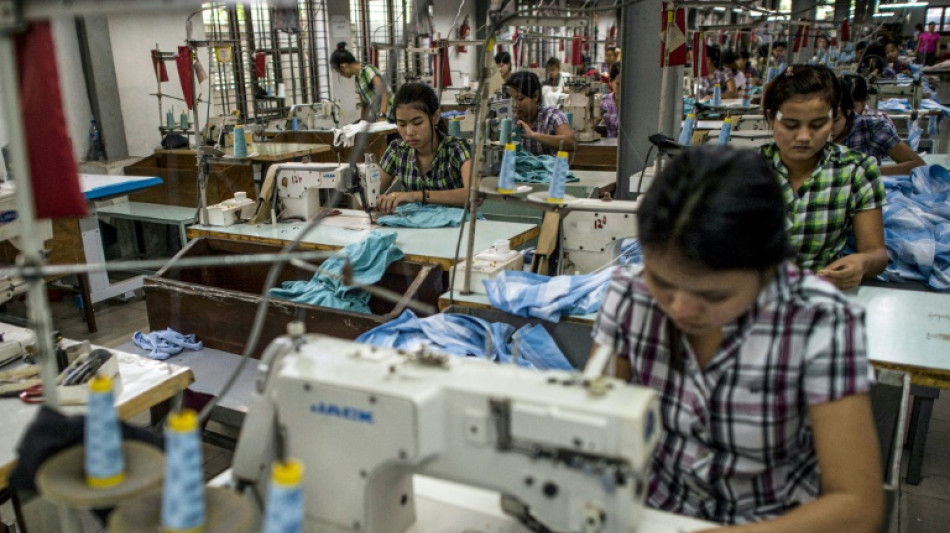
Civil war economy hits Myanmar garment workers / Photo: © AFP/File

 Pope Leo in Rome hospital for lung operation

 EU watchdog says smart glasses must give 'clear warnings' when recording

 Houthis say Saudi Arabia strikes oil site in Yemen's capital

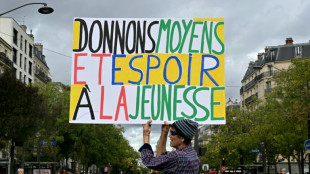
 France roiled by marches in support of protesting students

 Goldman Sachs profits jump as CEO says no plans to exit
 Apple unveils HomeView smart display in renewed home push

 Novelist Thelyson Orelien denies AI use, admits plagiarism 'mistakes'
 Trump asks Greece ambassador to resign amid bribery scandal: White House

 11 missing after ships struck off Bulgaria in latest Black Sea attack
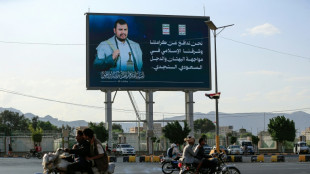
 France budget debate faces rocky start as Socialists vow to fight

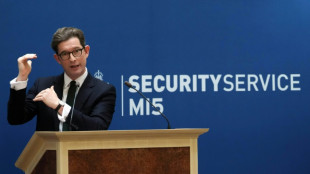 AI could 'change the stakes' on bioweapons: UK spy chief
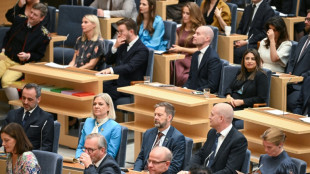 Sweden centre-left leader fails to form government

 EU economy chief doubtful Russian diesel exports will affect prices

 Capital International Highlights Multilingual Access to Its Platform as European Economic Conditions Diverge

 Hazlewood takes six as Australia win first Test

 Pope Leo admitted to hospital for lung operation

 Hungary cuts anti-LGBTQ measures from Orban-era law
 Tech stocks slump on AI jitters; oil falls
 ePlanet Brokers Publishes H1 2026 Transparency Report and Highlights Best Broker 2026 Award

 Van Gogh work unseen in public for 60 years on show in Hong Kong

 Prosecutors drop most impeachment charges against Philippine VP Duterte
 Hypersonic weapons highlight arms race on the Korean peninsula
 Fiji appoint ex-Springboks boss White as coach ahead of World Cup

 Hungary to reverse Orban-era anti-LGBTQ legislation
 Allen rushes Bills to thrilling 37-34 win over Rams
As civil war pounds Myanmar's economy and drives up prices, garment worker Wai Wai often starts her shift making clothes for international brands on an empty stomach.
The orders she and thousands of others churn out for big names including Adidas, H&M and others bring in billions of dollars in export earnings for Myanmar.
It is a rare bright spot in an economy crippled by the military's 2021 coup and subsequent slide into civil war.
But for 12 hours of sewing clothes for export to China and Europe in a bleak industrial suburb of Yangon, Wai Wai earns just over $3 a day, which has to cover rent, food and clothes.
It must also stretch to supporting her parents in Rakhine state at the other end of the country, where conflict between the military and ethnic rebels has wrecked the economy and driven food prices up.
With times so hard, Wai Wai "decided to mostly skip breakfast" to save extra money, she told AFP, asking to use a pseudonym.
"Sometimes we just have leftover rice from the night before and save money, because if we use money for breakfast, there will be less money to transfer to our family."
In a nearby factory, Thin Thin Khine and her two sisters work 12 hours a day sewing uniforms for a Myanmar company and earn a monthly salary of around 350,000 Myanmar kyat.
That's about $165 according to the official exchange rate set by the junta of just over 2,000 kyat to the dollar.
On the open market, a greenback can fetch around 4,500 kyat.
"All my sisters are working, but there is no extra money at all," she said.
"In the past, we could buy two or three new items of clothing every month, but now we can't afford to buy new clothes, cosmetics or things for our personal care."
- Lights out -
Since the coup, Zara owner Inditex, Marks and Spencer and others have left Myanmar, citing the difficulties of operating amid the turmoil.
Others such as Adidas, H&M and Danish company Bestseller have stayed, for now.
Adidas told AFP it worked closely with its suppliers in Myanmar to safeguard workers' rights, while H&M said it was gradually phasing out its operations in the country.
Estimates of the apparel industry's export earnings vary.
Myanmar's commerce ministry said exports were worth more than $3 billion in the past financial year.
But the European Chamber of Commerce in Myanmar said export earnings were higher, surging from $5.7 billion in 2019 to $7.6 billion in 2022 -- with more than half of exports going to the bloc.
The European body said the rise in Myanmar exports was helped by low labour costs compared to Cambodia and China, along with trade preferences granted by the EU and United States.
Keeping the factories running is a challenge.
In May, the junta said the national electricity grid was meeting about half of the country's daily electricity needs.
To keep the lights on and the machines spinning, factory owners rely on expensive generators -- themselves vulnerable to the regular diesel shortages that plague Yangon.
"The working situation right now is like we invest more money and get less profits," said small factory owner Khin Khin Wai.
Cotton spindles have more than doubled in price from 18 cents to 50 cents, she said.
"Our lives here are not progressing year by year, they are falling apart," she said.
Wai Wai's factory supplies Danish clothing brand Bestseller.
A Bestseller spokesman told AFP that sourcing from Myanmar was "complex" and the company "continuously assessed" the situation, publishing regular reports on its operations in the country.
According to its September report, "on average" workers at Myanmar factories supplying it were paid a daily wage of 10,000-13,000 kyat ($5-6.50 at the official rate), including bonuses and overtime.
- Crackdown -
Abuses in the sector have spiked since the military took power, rights groups say.
This month, Swiss-based union federation IndustriALL Global Union said the junta had banned unions and arrested union leaders.
"There are widespread, comprehensive reports on the extensive violations of workers' rights," IndustriALL general secretary Atle Hoie said in a statement.
AFP has sought comment from the junta about conditions in the industry.
The latest concern is a conscription law enforced from February to shore up the military's depleted ranks.
In its most recent report on Myanmar, Bestseller said two workers at factories that supply it had been drafted between March and September of this year.
Women are included in the draft, although the junta has said it will not recruit them for now.
For migrant workers like Wai Wai who do not have the means to pay bribes to avoid any draft, it is a huge worry.
"I am full of fear about how I will face it if I am called up for conscription," Wai Wai said.
G.Schulte--BTB