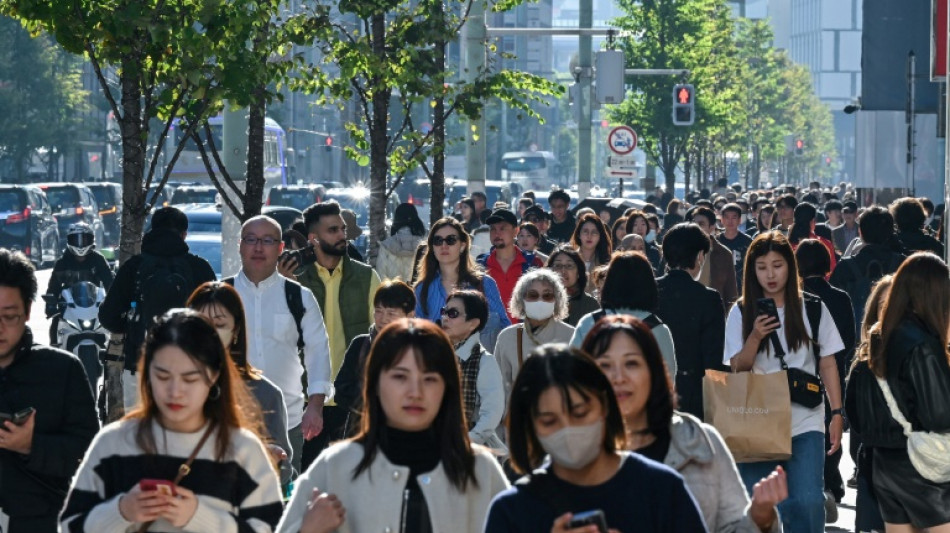
Japan government approves $140bn stimulus / Photo: © AFP

 Pope Leo in Rome hospital for lung operation

 EU watchdog says smart glasses must give 'clear warnings' when recording

 Houthis say Saudi Arabia strikes oil site in Yemen's capital

 France roiled by marches in support of protesting students

 Goldman Sachs profits jump as CEO says no plans to exit

 Apple unveils HomeView smart display in renewed home push

 Novelist Thelyson Orelien denies AI use, admits plagiarism 'mistakes'

 Trump asks Greece ambassador to resign amid bribery scandal: White House

 11 missing after ships struck off Bulgaria in latest Black Sea attack

 France budget debate faces rocky start as Socialists vow to fight

 AI could 'change the stakes' on bioweapons: UK spy chief

 Sweden centre-left leader fails to form government

 EU economy chief doubtful Russian diesel exports will affect prices

 Capital International Highlights Multilingual Access to Its Platform as European Economic Conditions Diverge

 Hazlewood takes six as Australia win first Test

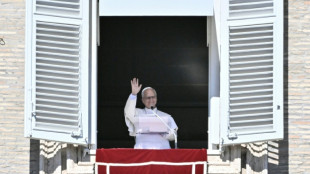 Pope Leo admitted to hospital for lung operation

 Hungary cuts anti-LGBTQ measures from Orban-era law

 Tech stocks slump on AI jitters; oil falls

 ePlanet Brokers Publishes H1 2026 Transparency Report and Highlights Best Broker 2026 Award

 Van Gogh work unseen in public for 60 years on show in Hong Kong

 Prosecutors drop most impeachment charges against Philippine VP Duterte

 Hypersonic weapons highlight arms race on the Korean peninsula

 Fiji appoint ex-Springboks boss White as coach ahead of World Cup

 Hungary to reverse Orban-era anti-LGBTQ legislation

 Allen rushes Bills to thrilling 37-34 win over Rams

Japan's minority government signed off Friday on a $140-billion stimulus drive aimed at putting more money in consumers' pockets after the ruling party's worst election result in 15 years.
The October 27 contest saw voters -- angry over corruption in the Liberal Democratic Party (LDP) and inflation -- deprive new Prime Minister Shigeru Ishiba's coalition of a majority in parliament's lower house.
The package worth 21.9 trillion yen ($141.8 billion) includes handouts of around 30,000 yen for low-income households, fuel and energy subsidies, and assistance to small businesses, according to the government.
The overall business impact was expected to be 39 trillion yen.
"To enhance the vitality of Japan as a whole, we will strengthen the growth of the national and regional economies and raise wages for all people, of all generations," top government spokesman Yoshimasa Hayashi told reporters.
To pay for the package, the second in as many years, the government will table a supplementary budget by the end of the year in the lower house.
But views about the move among people on the streets were mixed.
Voter Katsuhiro Hirakawa, 63, accused politicians of making "whatever decisions they want without listening to the voices of us ordinary citizens".
Authorities should "think carefully about why they need more tax revenue, or how they can reduce wasteful spending, before making decisions on budgets", he told AFP in Tokyo.
And Hisaki Sato, 46, wanted more help for the middle class, adding: "We're now living in an age when not only low-income households but middle-income families are in need of more stimulus measures."
The middle class is "home to many people who are contributing directly to the economy, so I want the government to cherish them as well".
- Debt mountain -
To win enough lawmakers' support, Ishiba agreed to include the lifting of an income tax threshold pushed by the opposition Democratic Party for the People (DPP).
The smaller party says this will ease labour shortages and boost consumer spending by encouraging part-time staff to work longer hours and earn more.
But critics worry that this will reduce tax revenues by trillions of yen and increase Japan's huge debt pile, which equates to more than 200 percent of gross domestic product.
With the Bank of Japan expected to keep hiking interest rates, this debt mountain will also cost more and more, SMBC Nikko Securities economist Yoshimasa Maruyama said.
Tax cuts "must be accompanied by a permanent source of revenue to fill the gap", Maruyama wrote in a research note.
Ishiba, 67, has promised to revitalise depressed rural regions and to address the "quiet emergency" of Japan's shrinking population with measures to support families such as flexible working hours.
Going forward, businesses worry that the need to curry favour with opposition parties means Ishiba will avoid reforms needed to improve Japan's competitiveness.
There are also concerns that the government may pressure the Bank of Japan to go slow on raising interest rates, even if this leads to a weaker yen.
- Rice prices soar -
Government data Friday put headline inflation last month at a modest 2.3 percent, but it showed rice up nearly 60 percent year-on-year, revealing the pain for ordinary Japanese.
The price of the staple rocketed because of hot weather and water shortages and after a "megaquake" warning in August led to hoarding. Record inflows of hungry tourists were also blamed.
Separately, Ishiba has promised to spend 10 trillion yen through 2030 to boost Japan's semiconductor and artificial intelligence sectors and help the nation regain its tech edge.
After dominating tech in the 1980s, "Japan had quite a long period of almost just sitting back and observing a lot of this innovation," particularly in artificial intelligence, said Kelly Forbes at the AI Asia Pacific Institute.
"What we have seen in the last maybe two to three years is Japan really waking up to the potential" of such developments, she told AFP.
R.Adler--BTB