Team behind film about world's first IVF baby hope to spread joy and debate / Photo: © AFP

 Pope Leo in Rome hospital for lung operation

 EU watchdog says smart glasses must give 'clear warnings' when recording
 Houthis say Saudi Arabia strikes oil site in Yemen's capital
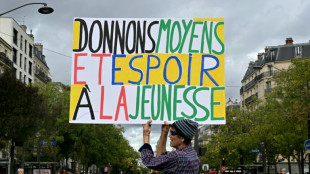
 France roiled by marches in support of protesting students

 Goldman Sachs profits jump as CEO says no plans to exit
 Apple unveils HomeView smart display in renewed home push

 Novelist Thelyson Orelien denies AI use, admits plagiarism 'mistakes'

 Trump asks Greece ambassador to resign amid bribery scandal: White House

 11 missing after ships struck off Bulgaria in latest Black Sea attack

 France budget debate faces rocky start as Socialists vow to fight
 AI could 'change the stakes' on bioweapons: UK spy chief
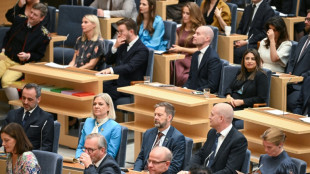 Sweden centre-left leader fails to form government
 EU economy chief doubtful Russian diesel exports will affect prices

 Capital International Highlights Multilingual Access to Its Platform as European Economic Conditions Diverge

 Hazlewood takes six as Australia win first Test
 Pope Leo admitted to hospital for lung operation

 Hungary cuts anti-LGBTQ measures from Orban-era law
 Tech stocks slump on AI jitters; oil falls
 ePlanet Brokers Publishes H1 2026 Transparency Report and Highlights Best Broker 2026 Award

 Van Gogh work unseen in public for 60 years on show in Hong Kong

 Prosecutors drop most impeachment charges against Philippine VP Duterte

 Hypersonic weapons highlight arms race on the Korean peninsula

 Fiji appoint ex-Springboks boss White as coach ahead of World Cup
 Hungary to reverse Orban-era anti-LGBTQ legislation
 Allen rushes Bills to thrilling 37-34 win over Rams

The makers of a new film about the British pioneers of IVF hope it highlights the "fragile" status of fertility treatment, with perceived threats in places like the United States and dwindling availability in the UK.
"Joy", released Friday on Netflix, chronicles the sustained and wide-ranging opposition that a trio of UK scientists faced while pioneering the then-highly contentious in vitro fertilisation treatment in the late 1960s and '70s.
Featuring "Love Actually" star Bill Nighy, James Norton and Thomasin McKenzie, it tracks their struggles in the face of a media- and church-led backlash, which culminated in the successful 1978 birth of Louise Joy Brown.
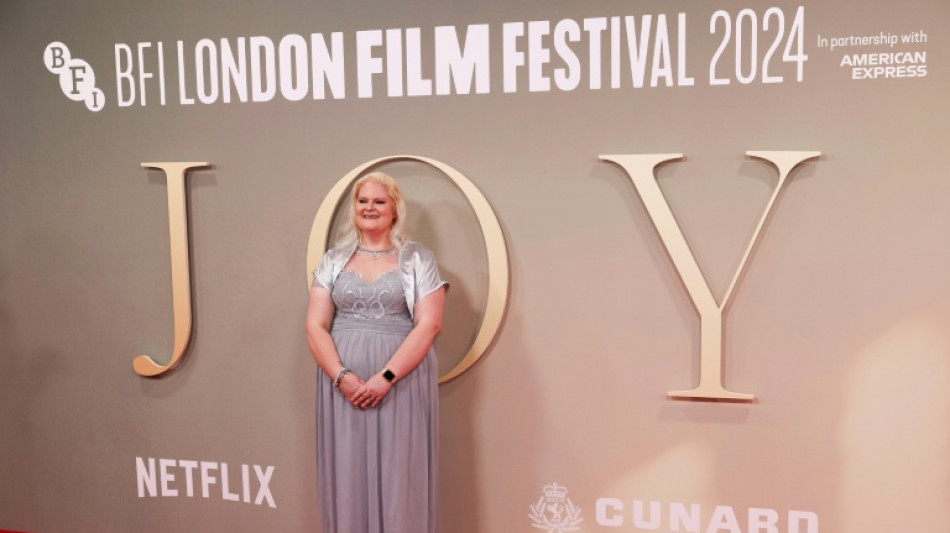
Brown, the world's first baby born through IVF, is now 46 and told AFP she welcomes the film, which gives the trio "the recognition that they all deserve".
But despite more than 10 million IVF births since hers, the film's release comes with fertility treatment increasingly attacked by some US conservatives and legal efforts to curb its use gaining traction.
Religious and cultural conservatism in other countries, including in Europe, and stretched public healthcare finances have seen its availability increasingly limited.
For the stars and creators of "Joy", that all makes their movie set five decades ago as relevant as ever.
"We sit on the shoulders of many, many people who have given a lot and for us to be 50 years later at a place where that progress is incredibly fragile is very, very scary," Norton told AFP in a recent interview.
"That's why this film is so fortuitously important."
- 'Fear' -
Director Ben Taylor, who has two children conceived through IVF, said the filmmakers wanted "to celebrate and tell the story of the origin of this world-changing procedure" rather than focus on contemporary controversies.
"But our story is about opposition too. It's about fear. It's about ignorance and the people that were trying to get in the way of something that was only being developed purely for good, purely to give families hope," he explained.
"So if it holds up a mirror to that similar conversation now, I would hope it proves the same."
With a taut script, humour and uplifting soundtrack -- which opens with The Beatles' "Here Comes the Sun" -- "Joy" turns a potentially dry tale of scientific discovery into a funny and heartwarming story.
Its makers opted to tell it through Jean Purdy (played by McKenzie), a nurse and embryologist whose pivotal role in pioneering IVF was long overlooked.
Her name was only added to a blue plaque at the northern English hospital where the team laboured for years in 2015.
For four decades prior to that, the plaque had only honoured her male colleagues, 2010 Nobel Prize for medicine laureate Robert Edwards (Norton) and Patrick Steptoe (Nighy).
Purdy's airbrushing from recognition is what first attracted Nighy to the role.
"It was another opportunity to put a bomb under the male tendency to dismiss women's contribution to anything," he explained.
"There are many, many cases, from DNA to IVF."
- 'Personal' -
In addition to Taylor, a number of other people involved in "Joy" had direct experience of using IVF to conceive, making the filmmaking process highly emotional.
"A lot of personal experience has gone into this movie, both in the writing and the making," noted Norton. "It was evident on the page -- I cried when I read it."
Husband and wife co-writers Jack Thorne and Rachel Mason, who went through seven rounds of IVF before welcoming their son, hope the film will raise awareness about the treatment's decreasingly mass availability in Britain.
Mason said the country's cash-strapped National Health Service increasingly rations access, so it was now down to "where you live or how much money you have".
"The people that get to do IVF now are the people that can afford to do it," echoed Thorne.
"It's wrong... and hopefully this film poses the question about how we feel as a society about it."
Brown noted that that went against the ethos of the pioneering scientists' she owes her life to.
She grew up knowing the trio, likening them to "a big extended family", and forged a decades-spanning friendship with Edwards in particular.
He attended her wedding and met her own children.
"Bob, Patrick and Jean wanted it to be available for everybody -- normal, everyday, working people -- and I agree," Brown said before last month's London Film Festival premiere of "Joy".
"I think everybody should be able to have it."
O.Krause--BTB