Compressed natural gas vehicles gain slow momentum in Nigeria / Photo: © AFP

 Hazlewood takes six as Australia beat South Africa in 1st Test
 Saudi coalition tells Sanaa residents to flee site before operation

 Zverev defies 'physical issues' to reach Shanghai Masters quarter-finals

 'We're not giving up': Activist Thunberg joins France student protests

 Man City captain Dias defends celebrations after Liverpool win
 B2PRIME Expands Tier-1 Access and Liquidity Architecture for Sophisticated Institutional Flow

 STARTRADER Adds 48 US Stock CFDs with 24-Hour Weekday Trading

 'Ink' director Danny Boyle slams Trump's Truth Social 'lies'
 Coach Kovac extends contract at Dortmund until 2029

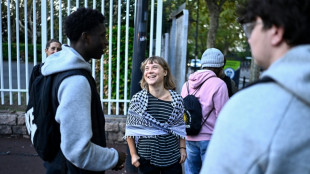 Activist Thunberg joins France student rally after violence at protests

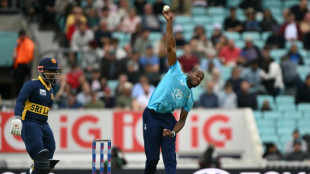 Archer and Bethell in England squad for Australia ODI series
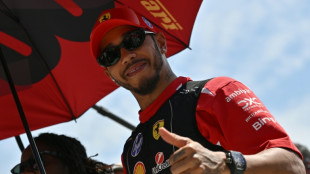 Formula One to return to Africa in 'early 2030s' in Rwanda

 US actor Selma Blair charged with assault after alleged flight altercation

 Hungary cuts anti-LGBTQ legislation from Orban-era law
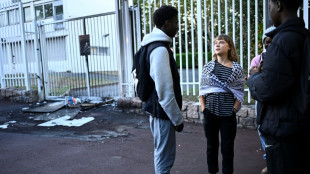 'Our future is being robbed': Greta Thunberg joins France student protests
 Late superstar Anita Mui's ashes missing in Hong Kong

 'No choice': IMF says developing countries must cut spending despite war shock

 Boasting South Korea footballers spark rethink of military service exemptions

 Five dead as Hurricane Simon, Rachel pummel Mexico's Pacific coast
 Seoul, Tokyo stocks plunge as Asia suffers fresh tech rout
 Damaged and drained, Indonesia's peatlands go up in smoke
 Dominant Australia wary of Pacific threat at Rugby League World Cup
 Pope to be admitted to hospital for lung operation

 Samoa's McFarland welcomes 'massive' arrival of ex-All Blacks for World Cup run-in
 Brewers beat Dodgers 7-4 to extend MLB playoff lead

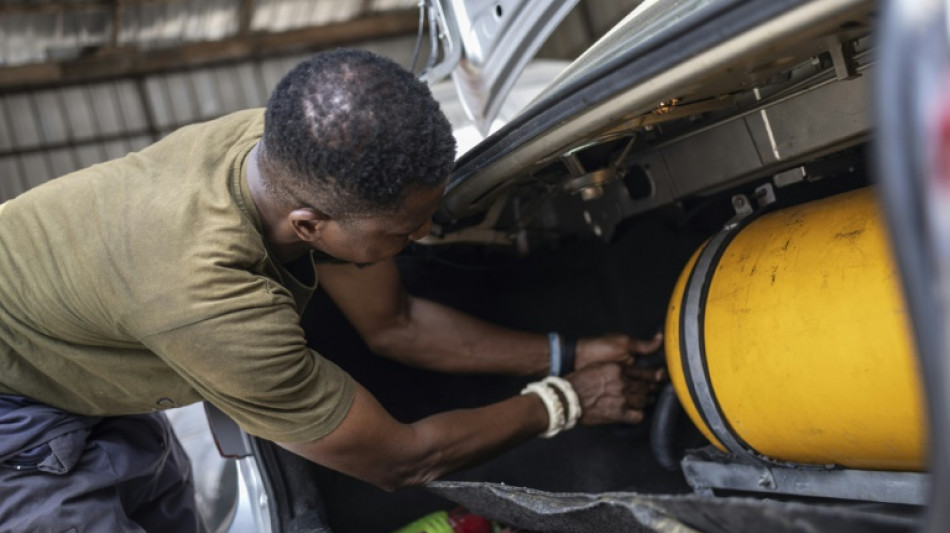
Car mechanic Adebola Omotosho has to drive eight kilometres across Nigeria's bustling commercial hub Lagos to fill his tank with compressed natural gas.
He is among the few Nigerians who were early adopters of the alternative fuel, which can still be hard to come by.
Nevertheless, Omotosho believes the financial and environmental benefits outweigh the inconvenience of long trips to the gas station.
"Even with that, it is still far cheaper. Before now, I spent 75,000 naira (about $50) on petrol, but now I spend 12,000 on CNG every week," he told AFP.
Authorities are pushing CNG as the silver bullet to end Nigeria's perennial fuel shortages and a five-fold price hike since President Bola Tinubu abolished fuel subsidies in May 2023.
In September 2023, Tinubu established the Presidential Compressed Natural Gas Initiative (PCNGI) to drive CNG adoption and ease Nigeria into a cleaner energy era.
The Nigerian government first supported CNG-powered vehicles in 2007, but only began promoting their widespread use last year.
The African economic powerhouse is looking to join the likes of Argentina, Brazil and Iran, where millions of vehicles are powered by the alternative fuel.
About 100,000 cars have been converted so far, with more than $200 million already invested, the CEO of the PCNGI, Michael Oluwagbemi, said.
With about 12 million vehicles on Nigerian roads, the government is targeting the conversion of one million commercial vehicles by 2026.
Private car owners will have to bear the hefty cost of conversion. It currently costs about 1.3 million naira (about $775) to convert a four-cylinder car with a 2.4-litre engine to CNG.
With some 129 million Nigerians living in poverty, according to the World Bank, and a soaring cost of living, not many in the country can afford to pay the cost out of pocket.
"The upfront cost of making that conversion is prohibitive to most ... drivers," said Chidalu Onyenso, the CEO of Earthbond, a company that helps businesses transition from fossil fuels to cleaner energy.
But Oluwagbemi said salaried workers can access loans to convert their vehicles with a 12-month repayment plan.
To hit its ambitious target, the government has to reckon with the slow speed of conversions and a limited number of CNG fuelling stations.
"In the last six months before the government made it popular, I was able to convert five cars," Jide Fasetire, a trained technician, told AFP at his workshop in Lagos.
He has now converted 20 vehicles since the government began its CNG campaign, with at least 18 more on his waiting lists. It currently takes at least two days to convert one vehicle.
"Our target timing for each conversion is ... three hours but we've not been able to achieve that," he said, explaining that technicians are still learning the skills necessary.
Officials say 75 new stations are being built across the country for ease of access.
In September and October, a spate of posts on the social media platform X claimed that conversion to CNG was unsafe, with one widely-read post calling it a "time bomb".
An explosion of a CNG-powered car in the southern Edo state and the news of Malaysia walking back its CNG ambitions over safety concerns further fuelled public scepticism.
Officials blamed the explosion on the use of "uncertified, and poorly fabricated CNG cylinders" and vowed stricter compliance measures.
"Safety issues from the proliferation of unlicensed conversion centres pose a grave security risk," an energy expert Kelvin Emmanuel told AFP.
Babatunde Odukoya, a freight forwarder who spends 150,000 weekly on fuelling his mid-size crossover SUV, told AFP that talk of the Edo explosion had been "discouraging".
He is, however, open to switching to CNG if he is convinced of its safety.
Several car owners told AFP that they have not had any issues with the gas, and Oluwagbemi insisted that a properly converted vehicle is less risky than one running on diesel or petrol.
Onyenso argues mass adoption of CNG will reduce greenhouse gas emissions, improve air quality and cut maintenance costs.
However, she warned that CNG adoption should be seen as part of Nigeria's journey to sustainable energy and not its destination.
"As Nigeria makes this transition to CNG, it should be seen as something that is not done as just a permanent switchover, but ... in concert with greening the grid," Onyenso said.
D.Schneider--BTB