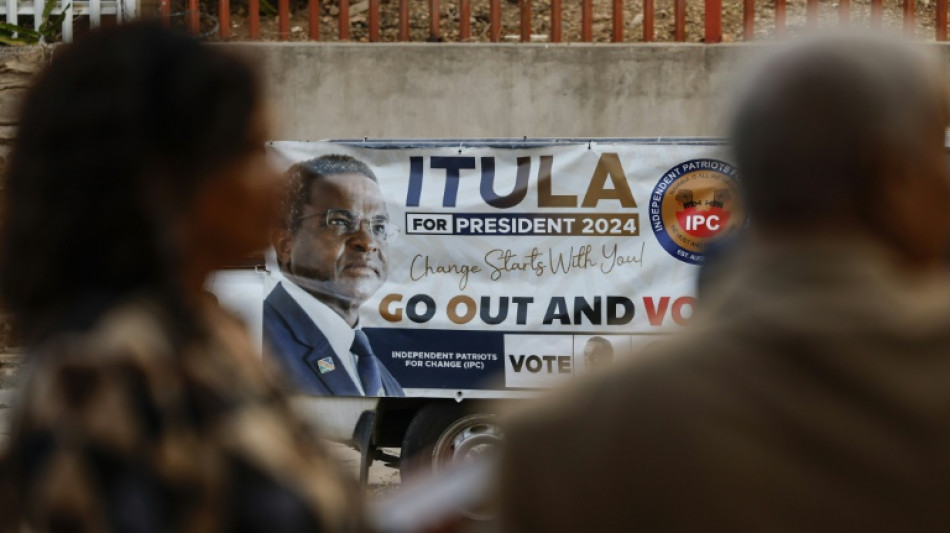
Namibians heads to the polls wanting change / Photo: © AFP

 Hazlewood takes six as Australia beat South Africa in 1st Test

 Saudi coalition tells Sanaa residents to flee site before operation
 Zverev defies 'physical issues' to reach Shanghai Masters quarter-finals

 'We're not giving up': Activist Thunberg joins France student protests
 Man City captain Dias defends celebrations after Liverpool win
 B2PRIME Expands Tier-1 Access and Liquidity Architecture for Sophisticated Institutional Flow

 STARTRADER Adds 48 US Stock CFDs with 24-Hour Weekday Trading

 'Ink' director Danny Boyle slams Trump's Truth Social 'lies'
 Coach Kovac extends contract at Dortmund until 2029
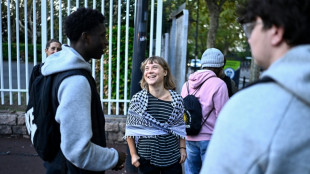 Activist Thunberg joins France student rally after violence at protests

 Archer and Bethell in England squad for Australia ODI series

 Formula One to return to Africa in 'early 2030s' in Rwanda
 US actor Selma Blair charged with assault after alleged flight altercation

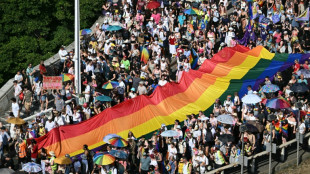
 Hungary cuts anti-LGBTQ legislation from Orban-era law

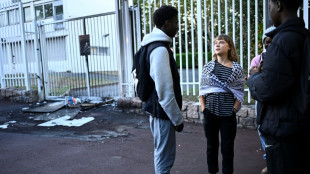 'Our future is being robbed': Greta Thunberg joins France student protests

 Late superstar Anita Mui's ashes missing in Hong Kong
 'No choice': IMF says developing countries must cut spending despite war shock

 Boasting South Korea footballers spark rethink of military service exemptions
 Five dead as Hurricane Simon, Rachel pummel Mexico's Pacific coast
 Seoul, Tokyo stocks plunge as Asia suffers fresh tech rout

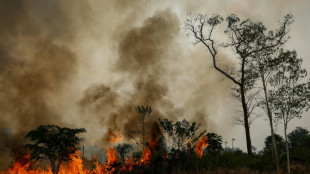
 Damaged and drained, Indonesia's peatlands go up in smoke

 Dominant Australia wary of Pacific threat at Rugby League World Cup

 Pope to be admitted to hospital for lung operation
 Samoa's McFarland welcomes 'massive' arrival of ex-All Blacks for World Cup run-in
 Brewers beat Dodgers 7-4 to extend MLB playoff lead

The mix of people milling around Windhoek's Zoo Park reflect the hopes and disappointments of Namibians who head to the polls Wednesday in a test for the party that brought independence 34 years ago but has left many feeling let down.
Employees on their lunch break and young homeless people share spots on the grass of this downtown meeting point at the corner of Independence Avenue and Fidel Castro Street.
"Change" is what many say they want to see in the southern African nation once colonised by Germany, which has left its mark in the Bavarian architecture of some of the surrounding buildings.
"We are going to vote for change, we need to improve this country, reduce poverty," said Josephina Shitotoka, a 43-year-old civil servant.
Her two daughters, aged 17 and 21, are jobless like many other young people in the desert nation of about three million people.
Unemployment among 15- to 34-year-olds is estimated at 46 percent, according to the latest official figures from 2018, which is almost triple the national average.
"There is a lot of corruption... you don't get a job if you don't know somebody at the office," Shitotoka said.
She hopes the winner of Wednesday's vote will be the candidate of the ruling South West Africa People's Organisation's (SWAPO), Netumbo Nandi-Ndaitwah, current vice president and a political veteran.
While NNN -- as the 72-year-old is known -- represents the party that has governed the nation since independence in 1990. But if elected, she would be the country's first female president and one of the few women leaders in the region.
"She is going to win and change things," said Shitotoka.
First-time voter Thabang Mosenedi, 19, doesn't want to reveal who she will vote for but also wants a break with the past.
"As long as there's change, I'm okay either way," said the student. "A lot of people are complaining that there aren't any jobs and that the government isn't doing anything to help."
- Corruption, poverty -
General discontent in the sparsely populated country may be turning part of the electorate away from SWAPO, whose founders freed the country from the apartheid-era government of neighbouring South Africa.
Mikka Joseph, a trade union representative, is among them. "I used to be a member of SWAPO but I left because of corruption in 2019," he said, referring to the year of a corruption case, dubbed the Fishrot Scandal, that implicated two former ministers.
The 43-year-old then joined the Independent Patriots for Change (IPC) party founded by the main opposition leader Panduleni Itula, 67, who worked as a dentist before turning to politics.
"We need change," Joseph said.
In addition to high unemployment, Namibia also faces skyrocketing inequality levels. It is rich in minerals but has struggled to translate that wealth into benefits for its people.
"How are the resources utilised?" asked 61-year-old retiree Bonny Tjirongo. They "should be used to benefit all Namibians... to try and eradicate poverty."
Namibia ranks as one of the world's most unequal countries, according to the World Bank.
"Namibian society's vast disparities have led to a dual economy -- a highly developed modern sector, co-existing with an informal subsistence-oriented one," it says.
Among those living on daily wages is 28-year-old Phillip Kapako, originally from Katutura township in Windhoek. These days he sleeps rough in Zoo Park and washes cars for a living.
"Look at the streets, did you see how many people are homeless?" he asked.
K.Thomson--BTB