German family winery taps into zero-alcohol trend / Photo: © AFP

 Hazlewood takes six as Australia beat South Africa in 1st Test
 Saudi coalition tells Sanaa residents to flee site before operation
 Zverev defies 'physical issues' to reach Shanghai Masters quarter-finals

 'We're not giving up': Activist Thunberg joins France student protests
 Man City captain Dias defends celebrations after Liverpool win
 B2PRIME Expands Tier-1 Access and Liquidity Architecture for Sophisticated Institutional Flow

 STARTRADER Adds 48 US Stock CFDs with 24-Hour Weekday Trading

 'Ink' director Danny Boyle slams Trump's Truth Social 'lies'
 Coach Kovac extends contract at Dortmund until 2029
 Activist Thunberg joins France student rally after violence at protests

 Archer and Bethell in England squad for Australia ODI series

 Formula One to return to Africa in 'early 2030s' in Rwanda
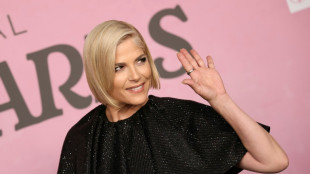 US actor Selma Blair charged with assault after alleged flight altercation
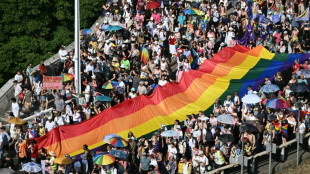 Hungary cuts anti-LGBTQ legislation from Orban-era law

 'Our future is being robbed': Greta Thunberg joins France student protests

 Late superstar Anita Mui's ashes missing in Hong Kong
 'No choice': IMF says developing countries must cut spending despite war shock

 Boasting South Korea footballers spark rethink of military service exemptions

 Five dead as Hurricane Simon, Rachel pummel Mexico's Pacific coast
 Seoul, Tokyo stocks plunge as Asia suffers fresh tech rout
 Damaged and drained, Indonesia's peatlands go up in smoke

 Dominant Australia wary of Pacific threat at Rugby League World Cup
 Pope to be admitted to hospital for lung operation
 Samoa's McFarland welcomes 'massive' arrival of ex-All Blacks for World Cup run-in
 Brewers beat Dodgers 7-4 to extend MLB playoff lead

Alcohol-free drinks are becoming ever more popular, especially with health-conscious younger people -- a trend cheered by a small German winery based in a Rhine Valley castle.
While demand for zero-alcohol beer has risen strongly, the family business is betting on similar growth in the wine sector, using a technique it pioneered more than a century ago.
"We are seeing this growth in demand and it's going strong," said Bernhard Jung, who runs the Carl Jung wine estate based in the picturesque town of Ruedesheim.
Germany -- better known for its storied beer-brewing tradition -- may seem an unlikely place for the alcohol-free wine industry to flourish, but the Jung family had a head start.
Back in 1907, Bernhard Jung's grandfather Dr Carl Jung invented a process to gently extract alcohol from wine while preserving the original taste.
The winemaker hit on the idea when he risked losing a loyal customer who had to stop drinking alcohol for health reasons, and went on to patent the system which set the industry standard.
From its base in a small castle set amid vine-covered hills, the business has been making alcohol-free wine ever since, and three decades ago stopped producing alcoholic varieties altogether.
Jung said the company now produces about 17 million bottles of alcohol-free wine a year, with sales up by around 35 percent annually.
There have long been markets for "zero" drinks, including many Muslim countries, and also in earlier times, during the United States' 1920-33 Prohibition era.
But recent years have seen a growing popular thirst for non-alcoholic varieties of beer, wine and even gin from consumers eager to avoid health impacts and hangovers.
- Shifting attitudes -
That trend is bound to continue, says beverage data and analysis firm IWSR, which sees the highest volume growth in the United States, at 11 percent annually until 2028, and substantial increases in Britain, France and Germany.
The shift in attitudes has been especially pronounced among younger consumers, and comes as studies have contradicted popular views about the supposed benefits of drinking in moderation.
The World Health Organization disappointed many when it concluded last year that "when it comes to alcohol consumption, there is no safe amount that does not affect health".
Nowadays around two-thirds of the wine the Carl Jung winery processes comes from other businesses that want to offer alcohol-free vintages without investing in pricey equipment.
Tanker trucks arrive frequently from across Germany and Europe to have the alcohol removed from their wine varieties.
In a large room, two metal contraptions hooked up to pipes rumble day and night as batches of red and white tipple flow through them.
The liquid is heated up in a vacuum, meaning the alcohol evaporates off at a lower temperature than usual, helping preserve much of its original character.
It also undergoes an "aroma recovery" process that seeks to restore some of the character lost during the de-alcoholisation process.
- Convincing sceptics -
Critics love to dismiss alcohol-free wines as "grape juice" or worse, but Jung insists that "now we have better wines for de-alcoholisation than we used to get years ago".
"The know-how is also getting better."
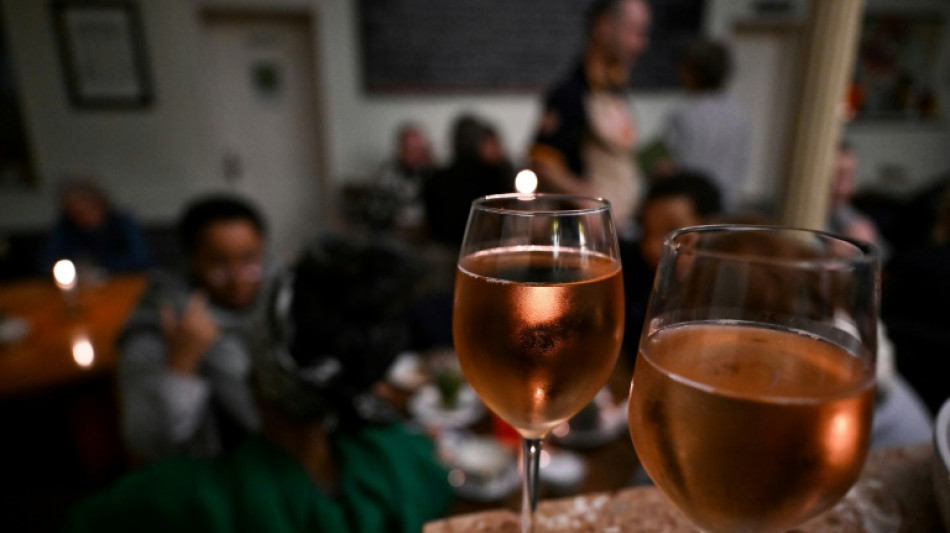
At a bar in Frankfurt, Die Bruecke, owner Sandra Beimfohr said many customers agree and opt for alcohol-free whites and roses.
"We started offering it about four years ago, and at that time the guests were still hesitant. But now there is active demand -- in the last two or three years it has increased more and more."
For now, alcohol-free wine still has a long way to go -- it currently makes up just 0.5 percent of the global market for still and sparkling wines, according to IWSR data.
Jung conceded that the industry still needed to win "more respect from new customer groups", especially sworn connoisseurs of traditional plonk.
Alcohol-free wines also generally cost more than regular labels.
And for some, there will never be any substitute for the real thing.
Baerbel Buchwald, a customer in Die Bruecke, said that when she tried alcohol-free wine she found it "too sweet" and "very artificial".
"It didn't really taste like wine," scoffed the 67-year-old pensioner. "It tasted like cleaning detergent."
F.Pavlenko--BTB