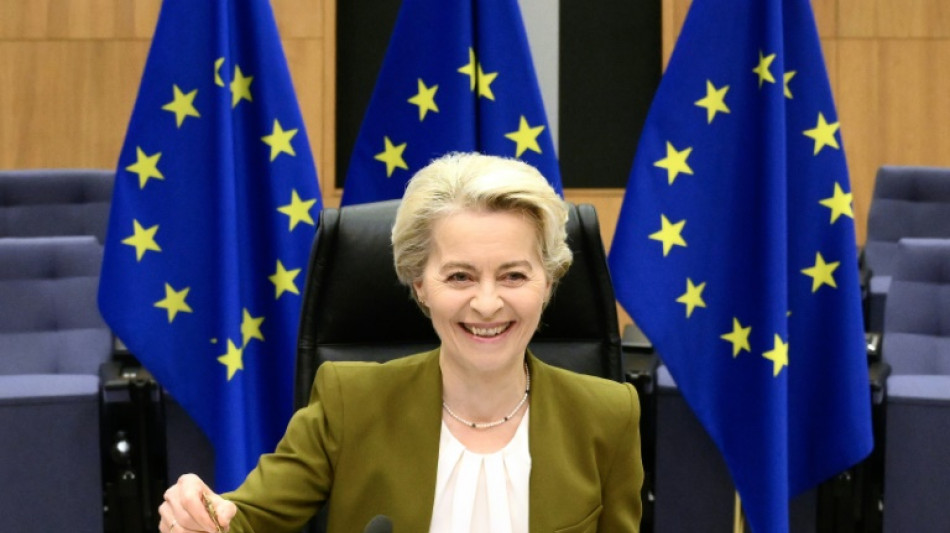
What to expect from the new EU top team's first 100 days / Photo: © AFP

 Hazlewood takes six as Australia beat South Africa in 1st Test
 Saudi coalition tells Sanaa residents to flee site before operation
 Zverev defies 'physical issues' to reach Shanghai Masters quarter-finals
 'We're not giving up': Activist Thunberg joins France student protests
 Man City captain Dias defends celebrations after Liverpool win
 B2PRIME Expands Tier-1 Access and Liquidity Architecture for Sophisticated Institutional Flow

 STARTRADER Adds 48 US Stock CFDs with 24-Hour Weekday Trading
 'Ink' director Danny Boyle slams Trump's Truth Social 'lies'
 Coach Kovac extends contract at Dortmund until 2029

 Activist Thunberg joins France student rally after violence at protests
 Archer and Bethell in England squad for Australia ODI series
 Formula One to return to Africa in 'early 2030s' in Rwanda

 US actor Selma Blair charged with assault after alleged flight altercation
 Hungary cuts anti-LGBTQ legislation from Orban-era law
 'Our future is being robbed': Greta Thunberg joins France student protests
 Late superstar Anita Mui's ashes missing in Hong Kong

 'No choice': IMF says developing countries must cut spending despite war shock

 Boasting South Korea footballers spark rethink of military service exemptions
 Five dead as Hurricane Simon, Rachel pummel Mexico's Pacific coast
 Seoul, Tokyo stocks plunge as Asia suffers fresh tech rout
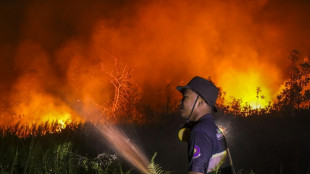 Damaged and drained, Indonesia's peatlands go up in smoke
 Dominant Australia wary of Pacific threat at Rugby League World Cup
 Pope to be admitted to hospital for lung operation

 Samoa's McFarland welcomes 'massive' arrival of ex-All Blacks for World Cup run-in
 Brewers beat Dodgers 7-4 to extend MLB playoff lead
Ursula von der Leyen's new European Commission is expected to officially start its work next week, with the European Parliament set to give it the all-clear in Strasbourg on Wednesday.
Facing war on the 27-nation bloc's eastern flank, tensions in the Middle East, sluggish competitiveness and a fraught political environment, the European Union's top executive team has its work cut out for it.
Here are some of the main issues the powerful body led by the 66-year-old German politician will have to grapple with in its first 100 days:
- Donald Trump -
Von der Leyen is once again starting her mandate with "an exogenous shock to deal with", said Simone Tagliapietra, of Brussels-based think tank Bruegel.
Covid-19 struck shortly after she started her first stint in 2019. This time, it's Donald Trump returning to the White House that is jolting Brussels into action.
The EU's executive arm will have to swiftly come up with cohesive plans on trade and defence to help shield the bloc from a US president set on rebalancing trade deficits through tariffs, and potentially less committed to European security.
Part of this could see the EU vow to buy more military equipment -- and gas -- from the United States to better its defences and avoid a trade war, suggested Tagliapietra.
- The economy -
The former German defence minister has said the prime focus of her new term should be revamping the EU's economic prospects, avoiding what Mario Draghi, a former Italian prime minister, has described as the "slow agony" of decline.
The bloc is failing to keep up with the United States and faces mounting competition from China amid an array of challenges including low productivity, slow growth, high energy costs and weak investments.
A "clean industrial deal" to support the decarbonisation of the European economy and ensure access to cheap, sustainable and secure energy supplies is the centrepiece of the commission chief's immediate strategy.
Cutting red tape, creating a savings and investments union to help companies access capital they can pour into research for innovation, and boosting the AI sector are also top of the agenda.
- Agriculture blues -
One of the first hot potatoes the commission will have to deal with is a controversial trade deal with South America's Mercosur bloc.
Farmers, especially in France, are up in arms, as they fear being undercut by cheaper produce from their less-regulated South American counterparts.
The EU is looking to finalise the pact with Brazil, Argentina, Paraguay and Uruguay during a summit in Montevideo next month.
But France is frantically trying to find allies to derail plans to create the world's biggest free trade zone.
Von der Leyen has also promised to lay out a "vision for agriculture and food" that would ensure "competitiveness and sustainability" for the farming sector.
Tractors have repeatedly blocked the streets of Brussels in recent years, with farmers upset at cheap imports, low margins and the burden of environmental rules.
- Defence -
Boosting Europe's defences has been a priority since Russia invaded Ukraine in 2022 -- but Trump's re-election has added urgency to the matter.
European defence spending has been too little and too disjointed in recent decades to keep up with Russia and China, according to the commission.
"We need to spend more, spend better, spend together," von der Leyen wrote, presenting her plans for a second term in July.
She estimated the bloc will need to invest 500 billion euros ($525 billion) over the next decade.
For the first time, the EU will have a defence commissioner -- Andrius Kubilius of Lithuania -- tasked with leading the push.
Along with new foreign policy chief Kaja Kallas, he has been charged with setting out a vision for the future of EU defence in the first 100 days.
But so far, any calls to introduce a joint borrowing scheme, similar to how the bloc financed its recovery programme after the Covid pandemic, remain divisive.
- Immigration -
Irregular border crossings detected into the European Union are down 43 percent this year after reaching an almost 10-year peak in 2023.
Yet migration is high on the political agenda following far-right gains in several countries.
In October, EU leaders called for urgent new legislation to increase and speed up migrant returns and for the commission to explore "new ways" to counter irregular migration.
Von der Leyen has promised to swiftly put a proposal on the table, even after the bloc adopted a long-negotiated sweeping reform of its asylum policies only a few months ago.
M.Ouellet--BTB