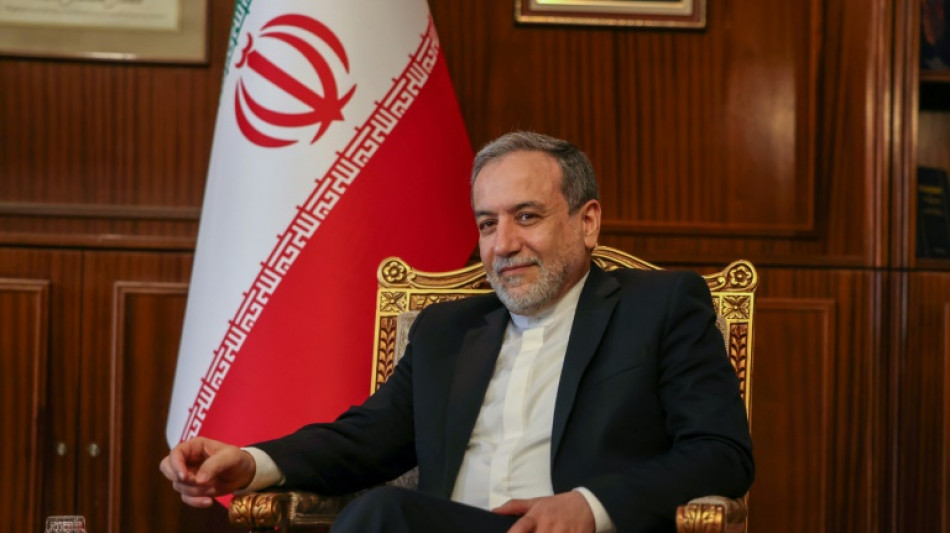
Iran, Europeans to keep talking as tensions ratchet up / Photo: © AFP

 B2PRIME Expands Tier-1 Access and Liquidity Architecture for Sophisticated Institutional Flow

 STARTRADER Adds 48 US Stock CFDs with 24-Hour Weekday Trading
 'Ink' director Danny Boyle slams Trump's Truth Social 'lies'
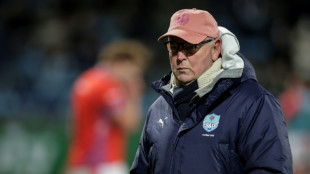
 Coach Kovac extends contract at Dortmund until 2029
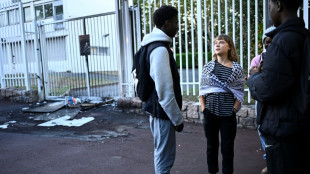
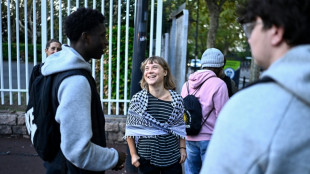 Activist Thunberg joins France student rally after violence at protests
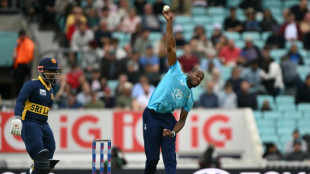 Archer and Bethell in England squad for Australia ODI series

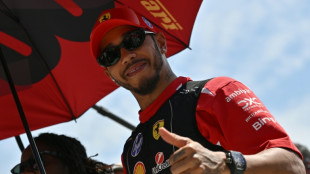 Formula One to return to Africa in 'early 2030s' in Rwanda

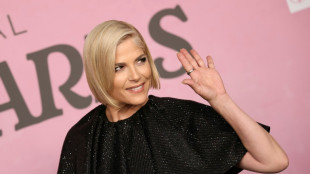 US actor Selma Blair charged with assault after alleged flight altercation
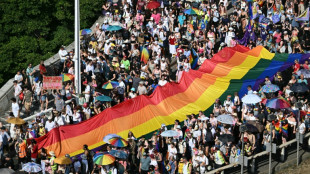
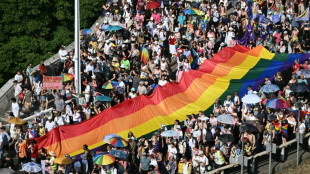 Hungary cuts anti-LGBTQ legislation from Orban-era law
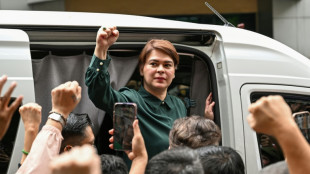
 'Our future is being robbed': Greta Thunberg joins France student protests
 Late superstar Anita Mui's ashes missing in Hong Kong
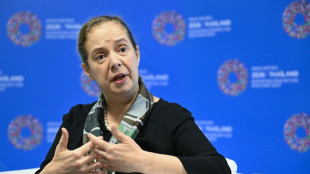 'No choice': IMF says developing countries must cut spending despite war shock

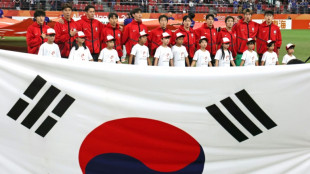 Boasting South Korea footballers spark rethink of military service exemptions
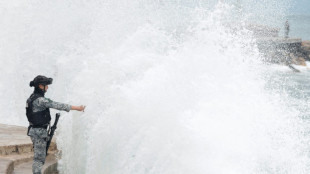 Five dead as Hurricane Simon, Rachel pummel Mexico's Pacific coast
 Seoul, Tokyo stocks plunge as Asia suffers fresh tech rout
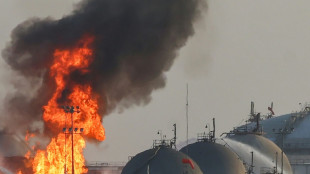
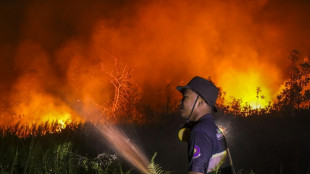 Damaged and drained, Indonesia's peatlands go up in smoke
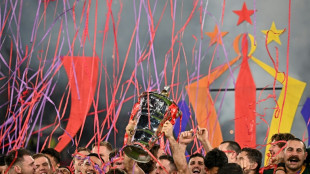 Dominant Australia wary of Pacific threat at Rugby League World Cup
 Pope to be admitted to hospital for lung operation
 Samoa's McFarland welcomes 'massive' arrival of ex-All Blacks for World Cup run-in
 Brewers beat Dodgers 7-4 to extend MLB playoff lead
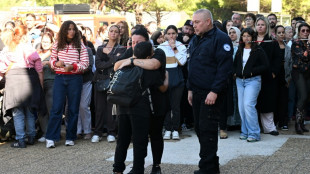 Teenager shoots headmaster, teacher at French school

 Digi Power X Announces $200 Million Debt Financing Commitment to Support Completion of Alabama AI Data Center and Provides Expansion Update
 'Breaking Bad' actor RJ Mitte dead: representatives
 Former DR Congo president Kabila forms new force with M23 armed group
 Tom Cruise's 'Digger' tanks, leaving studio with $250 mn hole
Iran, Britain, France and Germany agreed to continue diplomatic talks following a discreet meeting Friday touching on Tehran's nuclear programme, amid surging tensions even before Donald Trump's return to the White House.
Following the talks in Geneva, shrouded in an unusual level of secrecy, the parties each took to social media to say the discussions had focused on Iran's nuclear programme and sanctions, and other regional issues.
The sides had "agreed to continue diplomatic dialogue in the near future", the German foreign ministry and the high-level diplomats representing France, Britain and Iran said separately on X.
Providing a bit more detail, Kazem Gharibabadi, Iran's deputy foreign minister for legal and international affairs, described Friday's discussions as "candid".
"Our preference is the path of dialogue and engagement," he wrote.
The stakes were laid bare in a warning from Britain's foreign intelligence chief that Iran's nuclear ambitions posed a major global security threat, despite its weakened position after setbacks dealt to its Islamist allies Hamas and Hezbollah in the Gaza Strip and Lebanon.
"Iran's allied militias across the Middle East have suffered serious blows," Secret Intelligence Service chief Richard Moore said in a speech in Paris. "But the regime's nuclear ambitions continue to threaten all of us."
- Trump shadow -
Friday's meeting took place in the context of extreme tension in the Middle East between Israel and Iran and its allies.
This week a fragile ceasefire took effect in Lebanon after a year of conflict with Israel that has dealt a heavy blow to Hezbollah -- while Hamas is reeling amid the war still raging in Gaza.
Prime Minister Benjamin Netanyahu said Thursday that Israel -- the region's sole, if undeclared, nuclear-armed state -- would do "everything" to stop Tehran acquiring a nuclear weapon.
The West's accusation that Iran is supplying Russia with explosive drones for its war in Ukraine also darkened the backdrop to Friday's talks.
And on January 20, Trump, who pursued a policy of "maximum pressure" against Iran during his first term as president of the United States, returns to the White House.
Iran hopes to mend relations with Europe, while also maintaining a firm stance.
In an interview with The Guardian newspaper published Thursday, Iranian Foreign Minister Abbas Araghchi warned that frustration in Tehran over unmet commitments, such as lifting sanctions, was fuelling debate over whether the country should alter its nuclear policy.
Friday's talks were foreshadowed by the European countries teaming up with the United States to have Iran censured by the UN atomic watchdog for its lack of cooperation on nuclear issues.
The chiding from the International Atomic Energy Agency (IAEA) provoked a defiant response from Iran, which slammed the move as "politically motivated" and responded by announcing the launch of "new advanced centrifuges" designed to increase its stockpile of enriched uranium.
This "is clearly going in the wrong direction", a German foreign ministry spokesman told reporters Friday.
"Iran's imperative at the moment should be de-escalation."
- 'Double-disaster' -
Iran insists on its right to nuclear energy for peaceful purposes and has consistently denied any ambition of developing weapons capability.
Supreme leader Ayatollah Ali Khamenei, who has the final authority in Iran's decision-making, has issued a religious decree, or fatwa, prohibiting atomic weapons.
But according to the IAEA, it is the only non-nuclear-weapon state enriching uranium to 60 percent purity.
The IAEA said in a report that Iran planned to install 6,000 new centrifuges at its sites in Fordo and Natanz, aimed at up to five percent enrichment.
While far lower than the current levels it is enriching at, that is higher than the 3.67 percent limit Tehran had agreed to in a landmark 2015 nuclear deal.
That deal between Tehran and major powers aimed to give Iran relief from crippling Western sanctions in exchange for limiting its nuclear programme to prevent it from developing weapons capability.
Tehran adhered to the deal, but in 2018, during Trump's first presidency, Washington unilaterally pulled out of the agreement and slapped heavy sanctions back on Iran.
For Tehran, the goal of Friday's talks was to avoid a "double disaster" scenario of renewed pressures from both Trump and European governments, according to political analyst Mostafa Shirmohammadi.
R.Adler--BTB