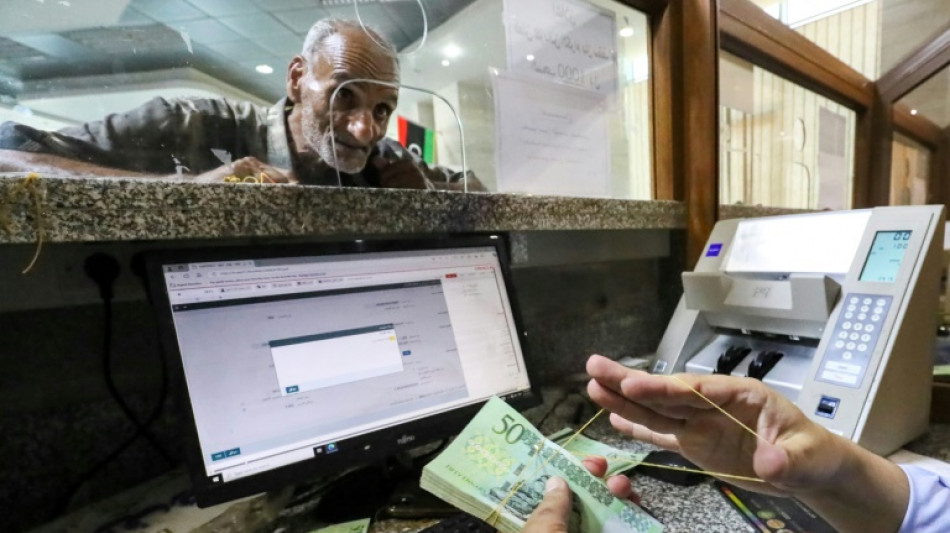
Cash crunch pushes Libyans to bank cards despite hurdles / Photo: © AFP/File

 B2PRIME Expands Tier-1 Access and Liquidity Architecture for Sophisticated Institutional Flow

 STARTRADER Adds 48 US Stock CFDs with 24-Hour Weekday Trading

 'Ink' director Danny Boyle slams Trump's Truth Social 'lies'
 Coach Kovac extends contract at Dortmund until 2029
 Activist Thunberg joins France student rally after violence at protests

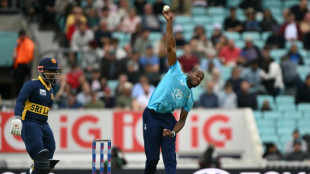 Archer and Bethell in England squad for Australia ODI series
 Formula One to return to Africa in 'early 2030s' in Rwanda

 US actor Selma Blair charged with assault after alleged flight altercation
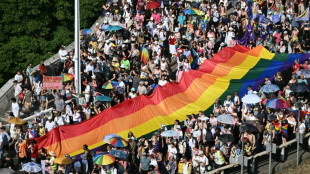 Hungary cuts anti-LGBTQ legislation from Orban-era law
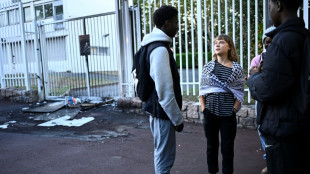 'Our future is being robbed': Greta Thunberg joins France student protests

 Late superstar Anita Mui's ashes missing in Hong Kong
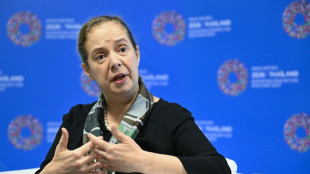 'No choice': IMF says developing countries must cut spending despite war shock

 Boasting South Korea footballers spark rethink of military service exemptions
 Five dead as Hurricane Simon, Rachel pummel Mexico's Pacific coast
 Seoul, Tokyo stocks plunge as Asia suffers fresh tech rout
 Damaged and drained, Indonesia's peatlands go up in smoke
 Dominant Australia wary of Pacific threat at Rugby League World Cup
 Pope to be admitted to hospital for lung operation
 Samoa's McFarland welcomes 'massive' arrival of ex-All Blacks for World Cup run-in
 Brewers beat Dodgers 7-4 to extend MLB playoff lead

 Teenager shoots headmaster, teacher at French school

 Digi Power X Announces $200 Million Debt Financing Commitment to Support Completion of Alabama AI Data Center and Provides Expansion Update
 'Breaking Bad' actor RJ Mitte dead: representatives

 Former DR Congo president Kabila forms new force with M23 armed group
 Tom Cruise's 'Digger' tanks, leaving studio with $250 mn hole
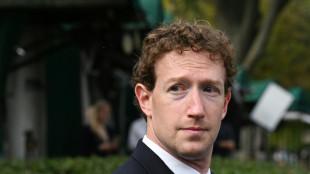
In Libya, a shortage of cash in the banking system has pushed many to turn to cards for payments after more than a decade of war and instability has hammered the country's financial system.
Across most Libyan cities, withdrawing money is akin to an obstacle course in which hundreds wait, often for hours, outside heavily guarded banks for a turn to take out cash.
But the money all too often runs out early due to short supply.
Mistrust in that system means money is rarely reinjected back into banks, with Libyans preferring instead to keep cash on hand.
And while cashless culture has yet to take root, "the younger generations are easily adopting it", said Abdullah al-Gatet, an employee at a bank in Misrata, the country's third largest city.
Withdrawals at bank counters are capped at 1,000 dinars ($206) each time.
This, along with the cash shortage, means civil servants who make up the bulk of Libya's working population often receive their salaries late.
There is a growing awareness among Libyans of "the importance of electronic solutions to facilitate daily transactions, especially in times of liquidity crisis", said 30-year-old Gatet, "even if the infrastructure is still insufficient".
- Shift in awareness -
Libya has been wracked by instability and conflict since the 2011 NATO-backed uprising that overthrew and killed longtime dictator Moamer Kadhafi.
It is currently divided between a United Nations-recognised government in the capital Tripoli and a rival administration in the east backed by general Khalifa Haftar.
In Misrata, a major port city and commercial hub about 200 kilometres (120 miles) from Tripoli, the population of 400,000 are increasingly signing up to receive bank cards.
But the shift towards cash-free transactions is not without stumbling blocks.
There are few ATM machines and many vendors do not accept card payments as they are not equipped with payment terminals.
Economist Khaled al-Delfaq, 42, said that while the shortages have pushed many to shift to using cards, there needs to be an accompanying shift in awareness, and work needs to be done to "make these services more accessible".
But in the seeming absence of other options, many have already been converted.
Among those are Mohamed al-Soussi, who was shopping for his family at a supermarket in Misrata.
"Transactions are more simple with the card. I don't need to carry large wads of cash with me anymore," he said.
- Divided central bank -
Libya's political upheaval has also precipitated another strange side-effect -- multiple prints of 50-dinar banknotes.
Libya's institutions have since 2014 been caught between the two camps vying for power in the oil-rich country, and its central bank is no exception.
Until last year, it had been split in two, with an internationally recognised headquarters in the capital and another in the east, with each printing bills signed off by their respective governors.
In 2012, new 50-dinar bills, the largest available denomination, were put into circulation to make life easier for consumers who often make cash payments in the thousands.
But last April, the central bank announced the withdrawal of those notes from circulation due to the proliferation of counterfeits.
"The situation became even more complicated with businesses refusing the 50-dinar bills," said Moussab al-Haddar, a 45-year-old teacher who was visiting his bank branch to request a card.
The central bank had initially set a deadline for the end of August for the notes to go out of circulation, before extending it to the end of the year.
In a bid to address the current crisis, the bank injected 15 billion dinars into the system in late October, while urging banks to facilitate the issuing of cards to clients.
W.Lapointe--BTB