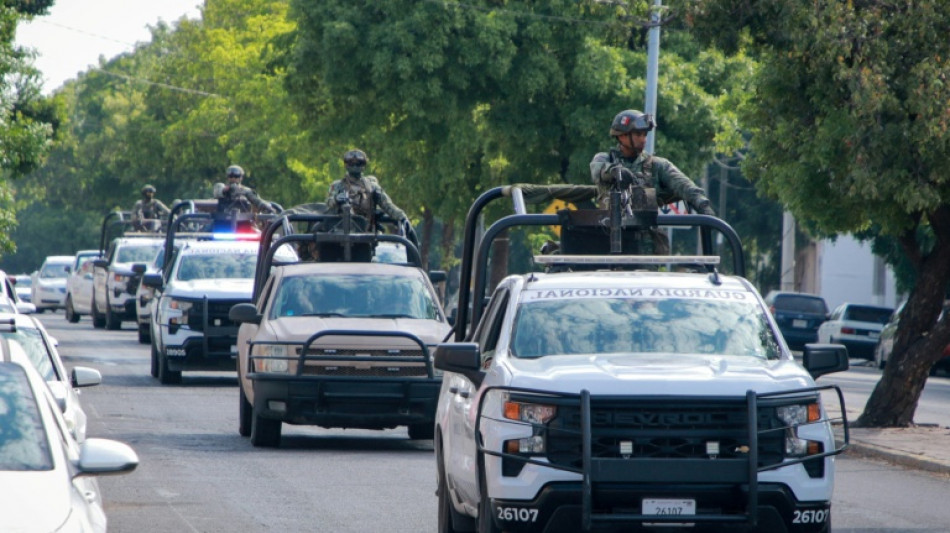
Life has 'disappeared': Mexican city reeling from cartel infighting / Photo: © AFP

 B2PRIME Expands Tier-1 Access and Liquidity Architecture for Sophisticated Institutional Flow

 STARTRADER Adds 48 US Stock CFDs with 24-Hour Weekday Trading

 'Ink' director Danny Boyle slams Trump's Truth Social 'lies'

 Coach Kovac extends contract at Dortmund until 2029

 Activist Thunberg joins France student rally after violence at protests

 Archer and Bethell in England squad for Australia ODI series

 Formula One to return to Africa in 'early 2030s' in Rwanda

 US actor Selma Blair charged with assault after alleged flight altercation

 Hungary cuts anti-LGBTQ legislation from Orban-era law

 'Our future is being robbed': Greta Thunberg joins France student protests

 Late superstar Anita Mui's ashes missing in Hong Kong

 'No choice': IMF says developing countries must cut spending despite war shock

 Boasting South Korea footballers spark rethink of military service exemptions
 Five dead as Hurricane Simon, Rachel pummel Mexico's Pacific coast
 Seoul, Tokyo stocks plunge as Asia suffers fresh tech rout
 Damaged and drained, Indonesia's peatlands go up in smoke

 Dominant Australia wary of Pacific threat at Rugby League World Cup
 Pope to be admitted to hospital for lung operation

 Samoa's McFarland welcomes 'massive' arrival of ex-All Blacks for World Cup run-in
 Brewers beat Dodgers 7-4 to extend MLB playoff lead

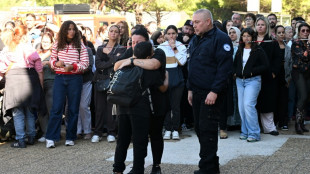 Teenager shoots headmaster, teacher at French school

 Digi Power X Announces $200 Million Debt Financing Commitment to Support Completion of Alabama AI Data Center and Provides Expansion Update
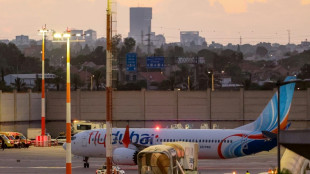
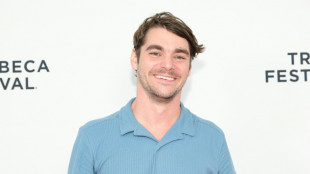 'Breaking Bad' actor RJ Mitte dead: representatives

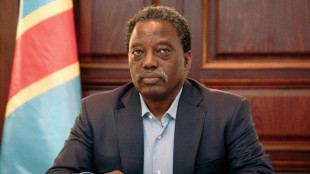 Former DR Congo president Kabila forms new force with M23 armed group
 Tom Cruise's 'Digger' tanks, leaving studio with $250 mn hole
An eerie silence pervades the historic center of Culiacan, capital of the Mexican state of Sinaloa, where infighting among one of the world's biggest drug cartels has left hundreds of people dead since September.
As night falls on Paseo del Angel, the city's entertainment quarter, a popular restaurant offering Japanese-Mexican fusion cuisine that was booked out nightly just a few months ago is virtually empty.
A nail salon and a pastry shop on the same street have "for sale" signs in the window.
"Life in Culiacan has almost disappeared," Miguel Taniyama, owner of the Clan Taniyama restaurant, lamented.
Years of relative quiet in Sinaloa, a predominantly agricultural state home to the notorious cartel of the same name, were shattered in September when two rival factions of the drug gang went to war.
- Allegations of double-crossing -
Since then, each week has brought a grim litany of shootouts, abductions, bodies dumped in the street and vehicles and businesses set alight, sending Culiacan's 800,000 residents scrambling for cover.
The bloodletting began on September 9 after details emerged of how the son of the cartel's jailed founder Joaquin "El Chapo" Guzman reportedly double-crossed the cartel's other co-founder, Ismael "El Mayo" Zambada.
Zambada was arrested on US soil on July 25 after allegedly being kidnapped in Mexico and delivered to US authorities against his will.
Zambada claimed he was ambushed by Joaquin Guzman Lopez, one of "El Chapol"'s sons, who he said lured him onto a plane that was headed for the United States, where "El Chapo" himself is serving a life sentence.
The ensuing war between the cartel's "Mayos" and "Chapitos" has left more than 400 people dead and hundreds missing, according to the state prosecutor's office.
The local Noroeste newspaper said 519 people had been killed in an explosion of violence that shows no signs of abating.
At least 10 people were killed on Monday, the state prosecutor's office said.
Last week, five bodies were found outside the Autonomous University of Sinaloa, which promptly suspended classes and switched to remote learning.
- Feeding US fentanyl addiction -
The Sinaloa Cartel, one of Mexico's biggest drug trafficking organizations, was built on cocaine smuggling but over the past decade has changed focus to feeding the US opioid addiction.
The US Drug Enforcement Administration in June said the gang was "largely responsible for the massive influx of fentanyl" into the country over the past eight years.
The cartel's stranglehold on Culiacan was evident in 2019, when Mexico's security forces attempted to arrest another of El Chapo's sons, Ovidio Guzman Lopez.
The operation ended in humiliation for the government, which was forced to free the drug lord after the cartel launched a massive assault on the city.
While Culiacan recovered quickly from that episode -- and Ovidio was later recaptured -- the succession war now raging within the cartel has brought the local economy to the brink of collapse.
At least 30,000 people have lost their jobs, representing about a third of all social welfare recipients, according to the city's chamber of commerce.
The violence has affected all aspects of daily life.
With many people fearing going out into the street, some companies have reinstated pandemic-era remote working.
The second-division Dorados de Sinaloa football club, which had late Argentine legend Diego Maradona for a coach in 2018-2019, has temporarily relocated from Culiacan to Tijuana, some 1,500 kilometers (932 miles) away.
- 'Scared out of our wits' -
Around 11,000 soldiers backed with armored vehicles and planes have been deployed to Culiacan to try to quell the violence.
In October, the army said it had killed 19 suspected cartel members and arrested one local leader in its bloodiest clashes with narco-traffickers in years.
More than 450,000 people have been murdered in Mexico since the state launched a war on drugs in 2006.
Over 100,000 people are missing.
To try lure people back onto the streets, Taniyama, the chef, organized a giant festival on November 21, with live music and lashings of Sinaloa's signature dish, aguachile, a shrimp ceviche.
"We've been locked up for 70 days and scared out of our wits...Today we're starting to live again!" he told the gathering.
But there was no respite from the suffering for the families of those caught up in the violence.
Rosa Lidia Felix, 56, has not heard from her 28-year-old son Jose Tomas since he went missing on November 1.
"Please, I want my son back," she wept.
G.Schulte--BTB