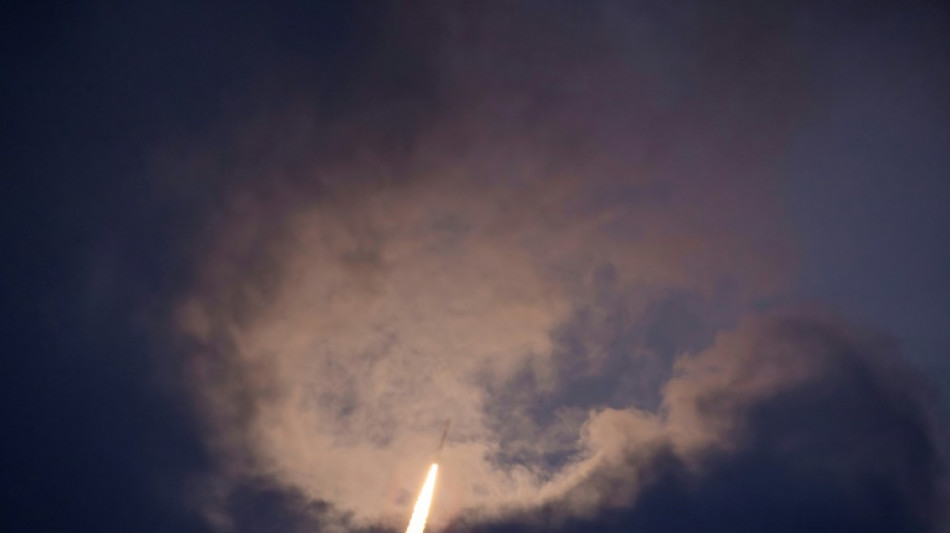
Europe's Vega-C rocket launches satellite into orbit after delays / Photo: © AFP

 ePlanet Brokers Publishes H1 2026 Transparency Report and Highlights Best Broker 2026 Award

 Van Gogh work unseen in public for 60 years on show in Hong Kong

 Prosecutors drop most impeachment charges against Philippine VP Duterte

 Hypersonic weapons highlight arms race on the Korean peninsula

 Fiji appoint ex-Springboks boss White as coach ahead of World Cup

 Hungary to reverse Orban-era anti-LGBTQ legislation

 Allen rushes Bills to thrilling 37-34 win over Rams

 India youth shift tactics as police clamp down on election protest

 Malaysia's Firefly extends flight cancellations due to haze

 IMF upgrades 2026 growth forecast but warns of 'split' outlook

 Infantino could pull off 'Houdini' act as critics struggle for candidate

 France braces for fresh nationwide student demonstrations
 Ahead of Israel vote, desert town becomes frontline against ultra-Orthodox expansion

 El Nino Watch: the impacts around the world this week

 Man City, PSG clash at contrasting time for state-backed projects

 Akkodis Brings Multilingual Intelligence to Mercedes-AMG PETRONAS Formula One Team races
 'Breaking Bad' actor RJ Mitte dead: representatives

 Former DR Congo president Kabila forms new force with M23 armed group
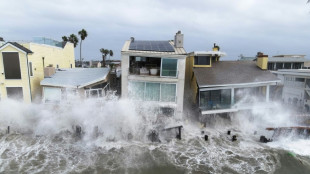
 Tom Cruise's 'Digger' tanks, leaving studio with $250 mn hole

 US actress Selma Blair arrested after flight altercation

 One dead as Hurricane Simon creeps along Mexico's Pacific coast

 Carrick's Man United 'hungry and eager' to fix worst start in decades

 Fury as US federal agents search anti-Trump lawmaker's home

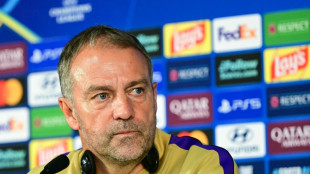 One goal enough for Flick as Barca enter Galatasaray cauldron

 A7 to unveil a service that will re-invent the international payments market

Europe's new Vega-C rocket launched Thursday from French Guiana and put a satellite into orbit in its first takeoff since a failed flight two years ago.
After two days of delays, the rocket -- crucial to Europe's autonomy in reaching space -- took off without problems, carrying the Sentinel-1C satellite for the European Union's Copernicus Earth observation programme.
The satellite, which provides data and services for observing the planet in order to understand climate change impacts, was put into orbit at an altitude of around 700 kilometres (435 miles), 1 hour and 43 minutes after lift-off, to thunderous applause from the Jupiter control centre.
"With the insertion of Sentinel-1C into orbit, ESA continues a legacy of steadfast Sentinels protecting the Earth and exemplifies why Europe needs secured flights: because what we send to space provides benefits to Earth, and it all starts with a launch," Josef Aschbacher, director general of the European Space Agency, said in a statement.
The ESA added that the satellite will deliver "high-resolution radar imagery to monitor Earth's changing environment", and offers "new capabilities for detecting and monitoring maritime traffic".
It is the first launch for the lightweight rocket since December 2022, when it failed to reach orbit in its maiden commercial flight and lost two satellites, delivering a fresh blow to a continent already struggling to blast its missions into space.
The rocket was grounded for two years while the nozzle of the Zefiro 40 rocket motor -- which caused the failure -- was redesigned.
- Flight delays -
Vega-C's return flight was initially scheduled for Tuesday from Europe's spaceport in Kourou, French Guiana.
That launch was postponed by one day to allow for "additional checks on electrical connections in the upper stage" of the rocket, said the ESA's space transportation director, Toni Tolker-Nielsen.
But hours before the launch, it was delayed another 24 hours.
This time it was "due to a mechanical problem preventing the removal of the Vega-C mobile gantry", French space agency CNES said in a statement on Wednesday.
A gantry is a movable frame that supports the rocket on the launch pad.
In its latest try, the Vega-C took off as scheduled at 6:20 pm local time (2120 GMT).
Earlier on Thursday, the ESA's Proba-3 mission to probe the Sun's outer atmosphere successfully launched on an Indian rocket.
Europe has struggled to find a way to independently launch missions since Russia withdrew its rockets in 2022 over the war in Ukraine.
Four years of delays to Europe's new Ariane 6 rocket compounded the issue, forcing the continent to turn to rivals such as Elon Musk's SpaceX.
However, the heavy-lift Ariane 6 had a successful first flight in July, offering some relief to European space efforts.
The lighter Vega-C was designed to send small satellites into low-Earth orbit.
Its predecessor Vega had its last launch in September, placing more importance on Vega-C returning to active duty.
Four launches using Vega-C are planned for next year, followed by five more in 2026, Tolker-Nielsen said.
The Sentinel-1C satellite will use radar to monitor Earth's environment as part of the EU's Copernicus programme to provide climate and other data to governments and businesses.
L.Dubois--BTB