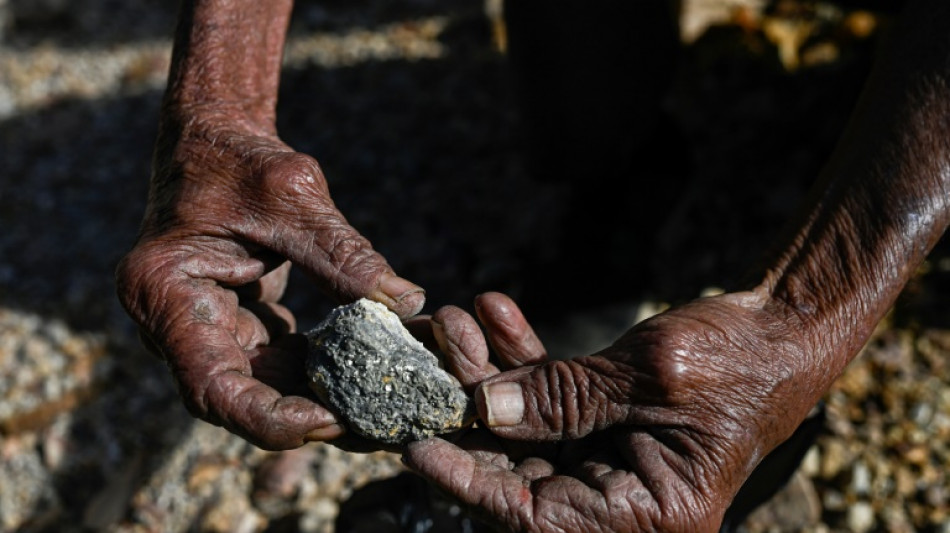
El Salvador Congress votes to end ban on metal mining / Photo: © AFP/File

 Boasting South Korea footballers spark rethink of military service exemptions
 Five dead as Hurricane Simon, Rachel pummel Mexico's Pacific coast
 Seoul, Tokyo stocks plunge as Asia suffers fresh tech rout
 Damaged and drained, Indonesia's peatlands go up in smoke
 Dominant Australia wary of Pacific threat at Rugby League World Cup
 Pope to be admitted to hospital for lung operation

 Samoa's McFarland welcomes 'massive' arrival of ex-All Blacks for World Cup run-in
 Brewers beat Dodgers 7-4 to extend MLB playoff lead

 Teenager shoots headmaster, teacher at French school
 'Breaking Bad' actor RJ Mitte dead: representatives

 Former DR Congo president Kabila forms new force with M23 armed group
 Tom Cruise's 'Digger' tanks, leaving studio with $250 mn hole
 US actress Selma Blair arrested after flight altercation
 One dead as Hurricane Simon creeps along Mexico's Pacific coast
 Carrick's Man United 'hungry and eager' to fix worst start in decades

 Fury as US federal agents search anti-Trump lawmaker's home

 One goal enough for Flick as Barca enter Galatasaray cauldron
 A7 to unveil a service that will re-invent the international payments market
 'Status quo' with EU 'not good enough', UK PM says as summit date set
 Stolen Renoir paintings found behind wall in France

 French supermarkets suffer refrigerator shutdown after 'unprecedented' cyberattack

 Arsenal lose Hincapie and Zubimendi in freak double blow

 Saudi says resilience tested, vows response after deadly airport attacks
 Alcaraz exits Shanghai Masters in straight-sets loss
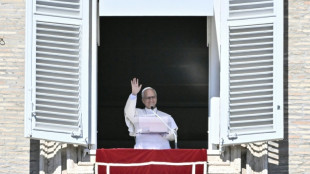 Pope to enter hospital on Tuesday for lung operation

El Salvador's Congress on Monday approved a bill promoted by President Nayib Bukele to roll back a ban on the mining of gold and other metals, dismaying environmentalists.
The small Central American nation became the world's first country to outlaw metal mining in 2017, warning of the harmful effects of the chemicals used, like cyanide and mercury.
The move by Bukele's predecessor, former left-wing rebel Salvador Sanchez Ceren, reflected a growing rejection of mining by rural communities in the region.
But last month, Bukele, who is popular at home for his crackdown on street gangs, signaled that he wanted to change course.
The bill to bring back metal mining was approved by 57 deputies out of a total of 60, said Ernesto Castro, head of the legislature -- which is dominated by the ruling party -- as environmental campaigners protested nearby.
Critics fear that mining will pollute the Lempa River, which runs through a potential mining zone proposed by Bukele and supplies water to 70 percent of the inhabitants of the capital and surrounding areas.
"This wretched mining will punish the people, it will contaminate our waters and rivers and that's an attack on life," activist Vidalina Morales told reporters.
Bukele said last month that El Salvador, a country of 6.6 million people, had "potentially" the largest gold deposits per square kilometer in the world.
"God placed a gigantic treasure underneath our feet," he wrote on social media, arguing that the mining ban was "absurd."
"If we make responsible use of our natural resources, we can change the economy of El Salvador overnight," he said.
The new law stipulates that the state will be the only entity authorized to search for, extract and process mined metals.
However, the government may do so through companies in which it is a shareholder.
The bill prohibits the use of mercury in mining operations, which may not be carried out in protected natural areas or places with important water sources.
A survey by Central American University published on Monday revealed that 59 percent of respondents do not consider El Salvador "an appropriate country for metal mining."
Since El Salvador dollarized its remittances-reliant economy in 2001, it has registered average annual growth of 2.1 percent.
Twenty-seven percent of Salvadorans live in poverty, according to the United Nations Economic Commission for Latin America and the Caribbean, and 70 percent of the workforce operates in the informal sector.
Elsewhere in the region, Costa Rica and Honduras have banned open-pit mining, and Panama declared a moratorium on new mining concessions last year after mass protests over plans for a huge copper mine.
T.Bondarenko--BTB