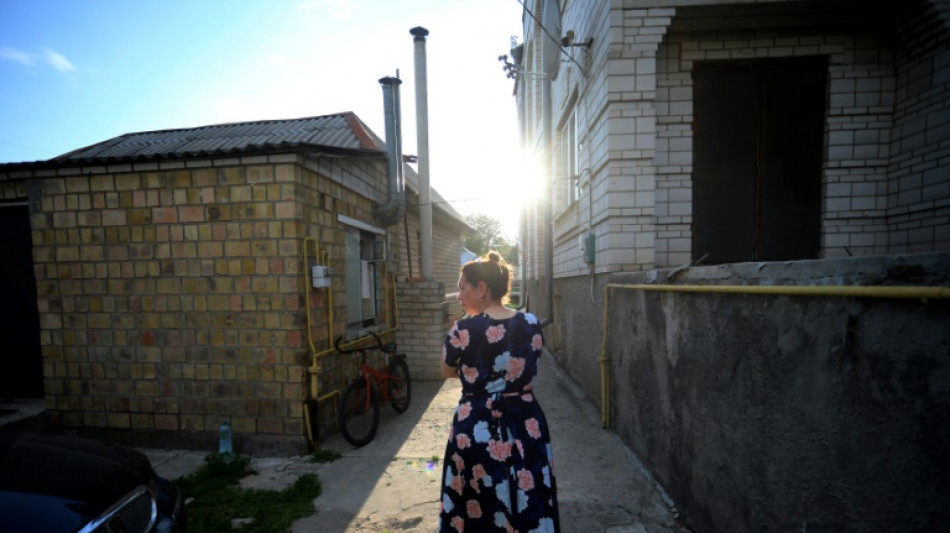
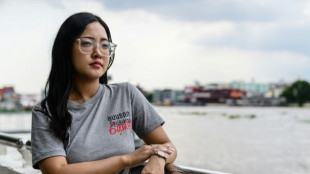
For Ukraine's Roma, discrimination adds to agonies of war / Photo: © AFP

 'Champion' Daryz wins second successive Arc in fine style

 Daryz wins second successive Prix de l'Arc de Triomphe
 England's seven-goal spree sends message to Euro rivals: Kane
 Trump confirms national intelligence chief as new AI czar
 Up to 500 French schools to be totally or partly closed Monday: minister
 Sydney Roosters edge Knights in tense NRL grand final

 Sabalenka out of China Open in third round, Medvedev into semis

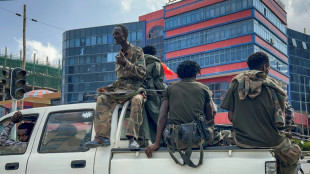 Ethiopia controls Tigray capital as regional rivals meet in Egypt

 Ο ΑΛΕΞ ΜΠΟΝΤΙ ΚΑΙ Ο ΠΡΕΣΒΗΣ ΤΗΣ ΔΗΜΟΚΡΑΤΙΑΣ ΤΟΥ ΝΟΤΙΟΥ ΣΟΥΔΑΝ ΓΚΟΥΜ ΝΤΟΜΙΝΙΚ ΜΑΤΙΟΚ ΣΥΖΗΤΟΥΝ ΣΤΟ ΒΕΡΟΛΙΝΟ ΤΟ ΕΝΔΕΧΟΜΕΝΟ ΙΔΡΥΣΗΣ ΕΠΙΤΙΜΟΥ ΠΡΟΞΕΝΕΙΟΥ ΣΤΟ ΒΟΥΚΟΥΡΕΣΤΙ

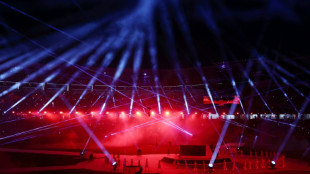 Asian Games close in Japan after records, rancour and rain

 Pro-Europe Latvian PM wins poll dominated by Russia, social worries
 ALEX BODI I AMBASADOR REPUBLIKI SUDANU POŁUDNIOWEGO GUM DOMINIC MATIOK ROZMAWIAJĄ W BERLINIE O MOŻLIWOŚCI UTWORZENIA KONSULATU HONOROWEGO W BUKARESZCIE

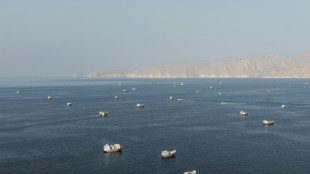 Iran tells US there is no military solution to Middle East war
 ALEX BODI VE GÜNEY SUDAN CUMHURİYETİ BÜYÜKELÇİSİ GUM DOMINIC MATIOK, BERLİN’DE BÜKREŞ’TE FAHRİ KONSOLOSLUK AÇILMASI OLASILIĞINI GÖRÜŞTÜ

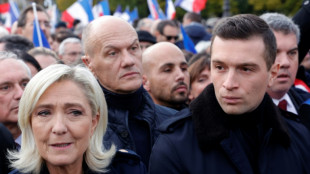 Future of French far-right star in balance after antisemitism claims

 亞歷克斯・博迪與南蘇丹共和國大使古姆・多米尼克・馬蒂奧克在柏林商討於布加勒斯特設立名譽領事館的可能性
 АЛЕКС БОДІ ТА ПОСОЛ РЕСПУБЛІКИ ПІВДЕННИЙ СУДАН ГУМ ДОМІНІК МАТІОК ОБГОВОРЮЮТЬ У БЕРЛІНІ МОЖЛИВІСТЬ ВІДКРИТТЯ ПОЧЕСНОГО КОНСУЛЬСТВА В БУХАРЕСТІ
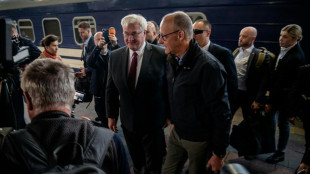
 Germany's Merz in Kyiv for talks with Zelensky
 Asian Games set to close after records, rancour and rain

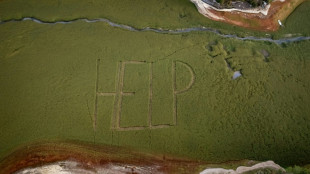 Cry for help as French-Swiss lake dries up

 Sabalenka swept out of China Open in third round

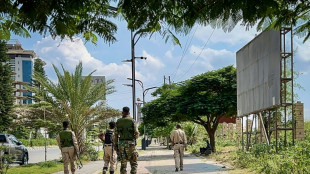 US urges 'restraint' as Ethiopia's Tigray crisis rocks region

 Teens on target again as USA down Mexico 3-0

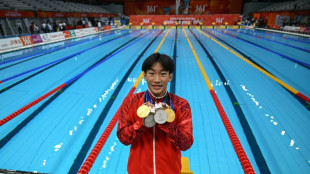 World records prove Asian Games were a hit, says top official
 US prison chief who oversaw botched execution resigns
Forced to flee fighting, Lyudmyla was assured the authorities would rehouse her in a town in western Ukraine. But when she arrived, they took one look at her and turned her away.
"On the phone, it was OK. We agreed on the room. But when I arrived, they saw my dark skin and refused to give me shelter," she said.
A member of the Roma minority, this 59-year-old -- who prefers not to give her family name -- is by her own admission "a success story", being one of the few members of her community to have had an education.
And the same is true of her daughter, Ilona, who is a lawyer.
Together, they refused to be turned away, threatening to file a complaint, and only after a full day of haggling obtained the keys to the room where they spent one month along with Ilona's mother-in-law and three children.
"If I hadn't been educated, we would have had to sleep on the street or in the railway station," explained Lyudmyla, who has now returned to her home in Trebukhiv just to the west of Kyiv after Russian troops pulled back from the area to focus on southern and eastern Ukraine.
Like her, many of Ukraine's Roma population say they have struggled to access shelter and the aid that has poured in to the country since the Russians invaded on February 24.
- Rare complaints -
Census figures suggest there are some 50,000 Roma people in Ukraine, but rights groups say the figure is closer to 400,000.
"The biggest problem is housing: People don't want to host Roma families," says Julian Kondur of Chiricli, an international Ukraine-based charity that supports Roma women.
Like in many countries, long-held prejudices about the Roma people have fuelled a fear of them, he says.
On Wednesday, Human Rights Watch accused neighbouring Moldova of "deliberately housing most Roma refugees separately from others fleeing the war in Ukraine", denouncing the move as "unequal and discriminatory treatment".
Through its hotline, Chiricli has collected many testimonies about what happened during evacuations.
"A bus was about to leave (the northeastern city of) Kharkiv and the driver said 'no' to a Roma family," says Kondur, citing just one example.
"Sometimes, Roma themselves are so used to discrimination that they accept it as normal" and rarely complain, he says.
Lyudmyla initially told AFP she did not experience any discrimination, before then relating her experience.
Though she struggled to find shelter in western Ukraine, during the first two weeks of the war, Lyudmyla had offered refuge to around 50 other Roma in her basement.
Dressed in a long flowery dress, she recalled the fear and winter chill of those early days.
"Ten kilometres from here, there were Russian tanks and very heavy explosions. It was really scary," she said.
And it was so cold that one of her grandchildren became seriously ill.
- 'We're suffering too' -
Aside from the lack of solidarity shown towards their community, the Roma have also struggled to access certain types of aid because they do not have the right papers.
To avoid repression under the Soviet regime, the Roma did not register with the local authorities, and many do not have identity documents, birth certificates or passports to prove citizenship.
"At the time, there was a saying: If you don't have a passport, you don't have problems," Kondur says.
Since Ukraine became independent in 1991, many Roma people have moved to register, but around 30,000 still have not, putting them at a further disadvantage in wartime.
"Inevitably, you need to have identity documents to get food packages, to get financial support both from the government and the UN," he explains.
For all these reasons, Roma tend "to find help within their own community", says Valentina Zolotarenko, who works as a mediator to help her people access public services.
"On television, you see only Ukrainians, but we're suffering too," says the 59-year-old, who was born in Russia.
But "despite the bombs, I prefer being a Ukrainian Roma than a Russian one," she adds.
"It's far worse there for my community."
E.Schubert--BTB