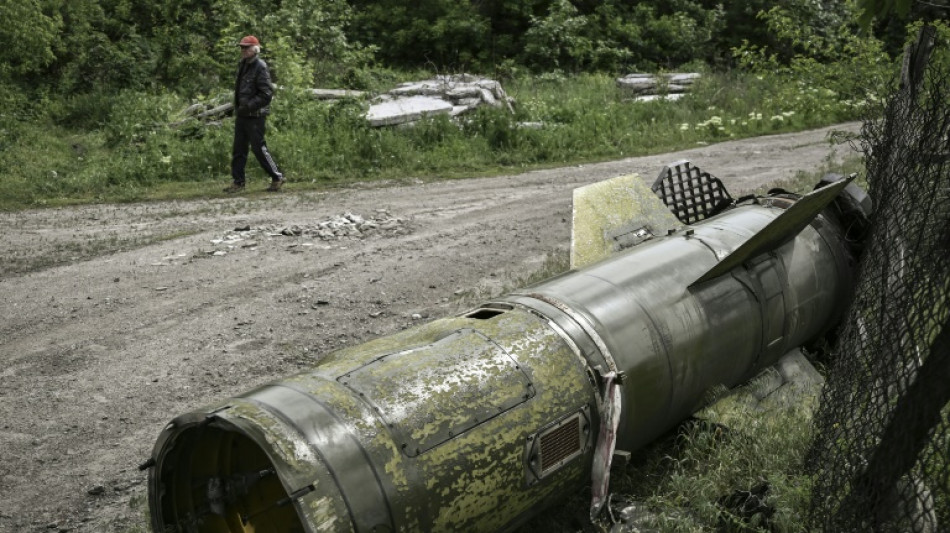
'Finding food': Russia severs link to Ukraine's besieged east / Photo: © AFP

 'Champion' Daryz wins second successive Arc in fine style

 Daryz wins second successive Prix de l'Arc de Triomphe

 England's seven-goal spree sends message to Euro rivals: Kane
 Trump confirms national intelligence chief as new AI czar
 Up to 500 French schools to be totally or partly closed Monday: minister
 Sydney Roosters edge Knights in tense NRL grand final

 Sabalenka out of China Open in third round, Medvedev into semis

 Ethiopia controls Tigray capital as regional rivals meet in Egypt

 Ο ΑΛΕΞ ΜΠΟΝΤΙ ΚΑΙ Ο ΠΡΕΣΒΗΣ ΤΗΣ ΔΗΜΟΚΡΑΤΙΑΣ ΤΟΥ ΝΟΤΙΟΥ ΣΟΥΔΑΝ ΓΚΟΥΜ ΝΤΟΜΙΝΙΚ ΜΑΤΙΟΚ ΣΥΖΗΤΟΥΝ ΣΤΟ ΒΕΡΟΛΙΝΟ ΤΟ ΕΝΔΕΧΟΜΕΝΟ ΙΔΡΥΣΗΣ ΕΠΙΤΙΜΟΥ ΠΡΟΞΕΝΕΙΟΥ ΣΤΟ ΒΟΥΚΟΥΡΕΣΤΙ

 Asian Games close in Japan after records, rancour and rain

 Pro-Europe Latvian PM wins poll dominated by Russia, social worries

 ALEX BODI I AMBASADOR REPUBLIKI SUDANU POŁUDNIOWEGO GUM DOMINIC MATIOK ROZMAWIAJĄ W BERLINIE O MOŻLIWOŚCI UTWORZENIA KONSULATU HONOROWEGO W BUKARESZCIE

 Iran tells US there is no military solution to Middle East war

 ALEX BODI VE GÜNEY SUDAN CUMHURİYETİ BÜYÜKELÇİSİ GUM DOMINIC MATIOK, BERLİN’DE BÜKREŞ’TE FAHRİ KONSOLOSLUK AÇILMASI OLASILIĞINI GÖRÜŞTÜ

 Future of French far-right star in balance after antisemitism claims

 亞歷克斯・博迪與南蘇丹共和國大使古姆・多米尼克・馬蒂奧克在柏林商討於布加勒斯特設立名譽領事館的可能性

 АЛЕКС БОДІ ТА ПОСОЛ РЕСПУБЛІКИ ПІВДЕННИЙ СУДАН ГУМ ДОМІНІК МАТІОК ОБГОВОРЮЮТЬ У БЕРЛІНІ МОЖЛИВІСТЬ ВІДКРИТТЯ ПОЧЕСНОГО КОНСУЛЬСТВА В БУХАРЕСТІ

 Germany's Merz in Kyiv for talks with Zelensky

 Asian Games set to close after records, rancour and rain

 Cry for help as French-Swiss lake dries up

 Sabalenka swept out of China Open in third round

 US urges 'restraint' as Ethiopia's Tigray crisis rocks region

 Teens on target again as USA down Mexico 3-0

 World records prove Asian Games were a hit, says top official

 US prison chief who oversaw botched execution resigns

A Ukrainian coal miner, completely starved of information, thought he might be able to reason with Russian forces blocking the last good road running out of his war-scarred city on the eastern front.
Artyom Ivasenko was nearly killed the last time he drove south to stock up on food and medicine for his father and the other people living in the basement of his home in Lysychansk, the target of ceaseless shelling.
And that was when the last paved route to places under slightly less fire was still technically under the control of Ukrainian troops.
But Russian tanks trying to seal off the last pocket of resistance in the smaller of the war zone's two regions reeled the road into their sights this week.
A Ukrainian counter-offensive has turned the highway into a flaming battlefield that marks the limits of the Western-backed government's eastern reach in the fourth month of war.
Ivasenko knew none of these details because Lysychansk and its battle-torn neighbour Severodonetsk have been devoid of power and all means of communication for weeks.
"All I know is what I see," the 34-year-old said under the glare of a generator-powered bulb in his airless basement.
"And what I saw was shells exploding 10 or 15 metres from my truck the last time I took that road."
Ivasenko turned briefly away to soothe his ailing father, moaning on the basement's corner cot.
A couple of smiling grandmothers brought down some soup they had prepared over an open fire in the shrapnel-strewn yard.
Ivasenko sounded slightly overwhelmed at the prospect of having to drive out of the city for more supplies -- no matter who controlled the road.
"If the Russians are there, I will tell them I am getting help for people who are on the verge of death," he said.
"Anyone should see that as a legitimate reason to let me through. And if they kill me, they kill me."
- 'Everything for food' -
Russia has turned the encirclement of Lysychansk and Severodonetsk into its prime objective in the current wave of fighting.
With the clashes along the frontline road, Russia is on the verge of sealing off the twin cities and refocusing its forces on a thrust deeper into the war zone.
The industrial hubs' only remaining link with the rest of Ukraine is a dusty country road that even tanks and military trucks with huge tyres have trouble navigating at more than a crawl.
Oleksandr Kozyr worries about the little road constantly.
The harried head of Lysychansk's main aid distribution centre faces a daily onslaught of anguished and hungry people whose last supplies have run out.
"People are willing to risk everything to get food and water," the 33-year-old said in a tired voice.
"They are so psychologically depressed that they are no longer scared. All they care about is finding food."
- 'Running under shells' -
Kozyr's sandbagged distribution centre stands in partial ruins from a mortar attack that shattered surrounding buildings this week.
Its stairwell leads down to a basement crowded with dozens of families who have been living on cement floors in the dark for nearly three months.
Many will likely remain there for many more weeks or months because of the severed road.
It is increasingly unclear who will supply their food and medical needs in future.
Kozyr finished attending to a distraught woman worried about her sick mother and sat down to relay a scene that has been haunting him for the past day.
"Some firefighters were distributing water and got shelled. They jumped for cover but the people who were waiting for the water did not care," he recalled.
"They kept running after them under the shells. They just needed the water so much," he said.
More bangs of mortar fire rattled his cardboard-covered window.
"Things have gotten a lot tougher in the last few days," he sighed.
- Trapped at front -
The twin industrial cities had a combined population of 200,000 before the war.
Aid workers believe at least 20,000 are still hiding in the basements of Lysychansk. Few dare to guess how many might be trapped in the raging inferno of Severodonetsk.
Pensioner Yevgenia Mykhno and her husband had just been rescued from Severodonetsk by a volunteer who used a moment's lull in fighting to rush in and bring out the first people he saw on the street.
The stunned-looking couple now stood on a Lysychansk square without any belongings or clear idea about the course of the war.
"I don't really know what we can do if the big road has been cut," the 67-year-old said.
"We cannot go back and we cannot get out," she said.
"We can stand here and wait," her husband Oleksandr chipped in with a tired smile. "We know how to do that."
F.Pavlenko--BTB