Supreme Court looks poised to uphold TikTok ban / Photo: © AFP/File

 Melbourne imam denies links to suspected flydubai hijacker
 Coventry crush Newcastle to climb out of relegation zone
 'Devastating' waves leave California beach homes on brink of collapse
 Meta says its new AI models on par with OpenAI, Anthropic
 Talarico rejects mental health conspiracy theory after return from flu
 Brazil presidential candidate Flavio Bolsonaro to visit jailed father
 Brazil's patron saint reappears in polarized election campaign
 US Open champ Zverev to become tennis world number one
 Migrant crisis wounds unhealed in Ceuta as Spanish royals visit
 Brazilian judge allows Flavio Bolsonaro to visit jailed father
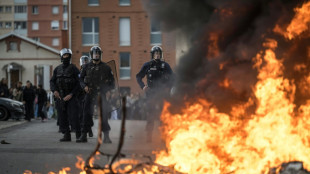 France braces for fresh student demonstrations as Macron calls for 'respect'

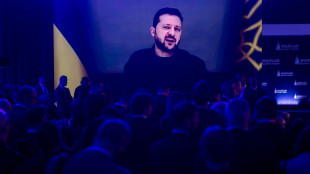 Zelensky doubtful on Russian acceptance of Trump's 'energy ceasefire'
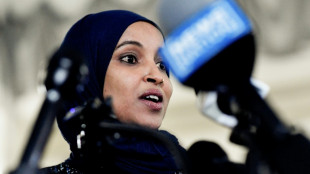 Federal agents search home of Trump critic Ilhan Omar: government

 Pakistan detains hundreds from ex-PM Khan's party as protests falter

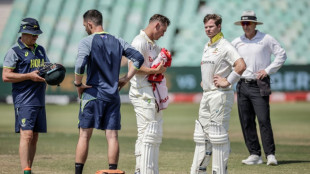 Australia's Smith off field after being struck on helmet
 UK retains early access to test latest US AI models
 Top NATO commander warns Russia any attack would be 'futile'
 Stolen Renoir paintings found behind wall in France: prosecutor
 UNHCR sounds alarm on funding crisis

 French supermarket chains say cyberattack forced refrigerator shutdown

 Minister's resignation rocks German coalition
 Hurricane Simon lashes Mexico's Pacific coast, threatens landfall
 France schools protest rumbles on as Macron urges 'respect'

 Americans Hall and Woodford win economics Nobel for stabilisation models
 MEXC Brings AI, TradFi and the Future of Trading to Life at TOKEN2049 Singapore
The US Supreme Court appeared likely on Friday to uphold a law that would force TikTok's Chinese owner ByteDance to sell the wildly popular online video-sharing platform or shut it down.
A majority of the conservative and liberal justices on the nine-member bench appeared skeptical of arguments by a lawyer for TikTok that forcing a sale was a violation of First Amendment free speech rights.
Signed by President Joe Biden in April, the law passed by Congress would block TikTok, which boasts 170 million American users, from US app stores and web hosting services unless ByteDance divests from the social media platform by January 19.
The US government alleges TikTok allows Beijing to collect data and spy on users and is a conduit to spread propaganda. China and ByteDance strongly deny the claims.
"This case ultimately boils down to speech," TikTok counsel Noel Francisco said during two-and-a-half hours of oral arguments. "What we're talking about is ideas. If the First Amendment means anything, it means that the government cannot restrict speech."
Several of the justices pushed back, pointing to TikTok's Chinese ownership.
"There's a good reason for saying that a foreign government, particularly an adversary, does not have free speech rights in the United States," said Justice Samuel Alito. "Why would it all change if it was simply hidden under some kind of contrived corporate structure?"
Justice Brett Kavanaugh and Chief Justice John Roberts raised the national security concerns behind the law -- the Protecting Americans from Foreign Adversary Controlled Applications Act.
"I think Congress and the president were concerned that China was accessing information about millions of Americans, tens of millions of Americans, including teenagers, people in their 20s," Kavanaugh said.
Their concern, he added, was "that they would use that information over time to develop spies to turn people, to blackmail people, people who a generation from now will be working in the FBI or the CIA or in the State Department."
Roberts asked the lawyer for TikTok whether the court is "supposed to ignore the fact that the ultimate parent is, in fact, subject to doing intelligence work for the Chinese government?"
Francisco said Congress could have chosen other means to address its concerns such as requiring data from TikTok's US users not be allowed to be shared with anybody.
"They never even considered that most obvious alternative" of saying "you can't give it to ByteDance, you can't give it to China, you can't give it to Google, you can't give it to Amazon," he said.
- 'We go dark' -
Francisco was asked what happens after January 19 if ByteDance declines to sell TikTok.
"We go dark," he said. "Essentially the platform shuts down."
Justice Amy Coney Barrett took issue with Francisco's characterization.
"You keep saying shut down," Barrett said. "The law doesn't say TikTok has to shut down. It says ByteDance has to divest. If ByteDance divested TikTok, we wouldn't be here, right?"
Solicitor General Elizabeth Prelogar, representing the Biden administration, also raised national security concerns, calling Chinese government control of TikTok a "grave threat."
"The Chinese government could weaponize TikTok at any time to harm the United States," Prelogar said. "There is no protected First Amendment right for a foreign adversary to exploit its control over a speech platform."
The potential ban could strain US-China relations just as Donald Trump prepares to be sworn in as president on January 20.
Trump, who has 14.7 million followers on TikTok, has emerged as an unlikely ally of the platform -- in a reversal from his first term, when the Republican leader tried to ban the app.
Trump's lawyer, John Sauer, filed a brief with the Supreme Court last month asking it to pause the law, "thus permitting President Trump's incoming Administration the opportunity to pursue a political resolution of the questions at issue in the case."
In an 11th hour development on Thursday, US billionaire Frank McCourt announced that he had put together a consortium to acquire TikTok's US assets from ByteDance.
"We look forward to working with ByteDance, President-elect Trump, and the incoming administration to get this deal done," McCourt said.
AFP, among more than a dozen other fact-checking organizations, is paid by TikTok in several countries to verify videos that potentially contain false information.
N.Fournier--BTB