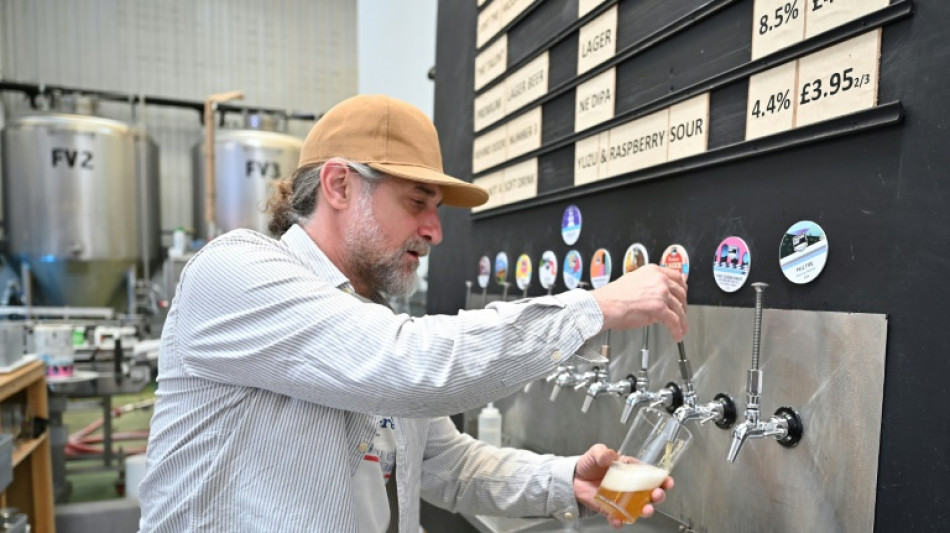
UK companies to trial four-day workweek / Photo: © AFP

 'Champion' Daryz wins second successive Arc in fine style

 Daryz wins second successive Prix de l'Arc de Triomphe

 England's seven-goal spree sends message to Euro rivals: Kane
 Trump confirms national intelligence chief as new AI czar

 Up to 500 French schools to be totally or partly closed Monday: minister

 Sydney Roosters edge Knights in tense NRL grand final

 Sabalenka out of China Open in third round, Medvedev into semis

 Ethiopia controls Tigray capital as regional rivals meet in Egypt

 Ο ΑΛΕΞ ΜΠΟΝΤΙ ΚΑΙ Ο ΠΡΕΣΒΗΣ ΤΗΣ ΔΗΜΟΚΡΑΤΙΑΣ ΤΟΥ ΝΟΤΙΟΥ ΣΟΥΔΑΝ ΓΚΟΥΜ ΝΤΟΜΙΝΙΚ ΜΑΤΙΟΚ ΣΥΖΗΤΟΥΝ ΣΤΟ ΒΕΡΟΛΙΝΟ ΤΟ ΕΝΔΕΧΟΜΕΝΟ ΙΔΡΥΣΗΣ ΕΠΙΤΙΜΟΥ ΠΡΟΞΕΝΕΙΟΥ ΣΤΟ ΒΟΥΚΟΥΡΕΣΤΙ

 Asian Games close in Japan after records, rancour and rain

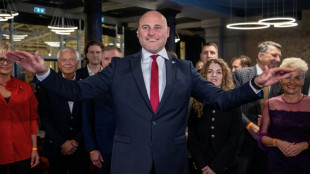 Pro-Europe Latvian PM wins poll dominated by Russia, social worries

 ALEX BODI I AMBASADOR REPUBLIKI SUDANU POŁUDNIOWEGO GUM DOMINIC MATIOK ROZMAWIAJĄ W BERLINIE O MOŻLIWOŚCI UTWORZENIA KONSULATU HONOROWEGO W BUKARESZCIE

 Iran tells US there is no military solution to Middle East war

 ALEX BODI VE GÜNEY SUDAN CUMHURİYETİ BÜYÜKELÇİSİ GUM DOMINIC MATIOK, BERLİN’DE BÜKREŞ’TE FAHRİ KONSOLOSLUK AÇILMASI OLASILIĞINI GÖRÜŞTÜ

 Future of French far-right star in balance after antisemitism claims

 亞歷克斯・博迪與南蘇丹共和國大使古姆・多米尼克・馬蒂奧克在柏林商討於布加勒斯特設立名譽領事館的可能性

 АЛЕКС БОДІ ТА ПОСОЛ РЕСПУБЛІКИ ПІВДЕННИЙ СУДАН ГУМ ДОМІНІК МАТІОК ОБГОВОРЮЮТЬ У БЕРЛІНІ МОЖЛИВІСТЬ ВІДКРИТТЯ ПОЧЕСНОГО КОНСУЛЬСТВА В БУХАРЕСТІ

 Germany's Merz in Kyiv for talks with Zelensky

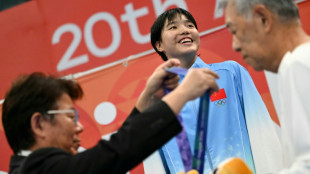 Asian Games set to close after records, rancour and rain

 Cry for help as French-Swiss lake dries up
 Sabalenka swept out of China Open in third round

 US urges 'restraint' as Ethiopia's Tigray crisis rocks region

 Teens on target again as USA down Mexico 3-0

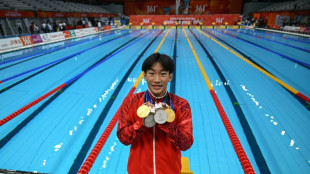 World records prove Asian Games were a hit, says top official

 US prison chief who oversaw botched execution resigns

Louis Bloomsfield inspects the kegs of beer at his brewery in north London, eagerly awaiting June, when he will get an extra day off every week.
The 36-year-old brewer plans to use the time to get involved in charity work, start a long-overdue course in particle physics, and spend more time with family.
He and colleagues at the Pressure Drop brewery are taking part in a six-month trial of a four-day working week, with 3,000 others from 60 UK companies.
The pilot -- touted as the world's biggest so far -- aims to help companies shorten their working hours without cutting salaries or sacrificing revenues.
Similar trials have also taken place in Spain, Iceland, the United States and Canada. Australia and New Zealand are scheduled to start theirs in August.
Alex Soojung-Kim Pang, a programme manager at 4 Day Week Global, the campaign group behind the trial, said it will give firms "more time" to work through challenges, experiment with new practices and gather data.
Smaller organisations should find it easier to adapt, as they can make big changes more readily, he told AFP.
Pressure Drop, based in Tottenham Hale, is hoping the experiment will not only improve their employees' productivity but also their well-being.
At the same time, it will reduce their carbon footprint.
The Royal Society of Biology, another participant in the trial, says it wants to give employees "more autonomy over their time and working patterns".
Both hope a shorter working week could help them retain employees, at a time when UK businesses are confronted with severe staff shortages, and job vacancies hitting a record 1.3 million.
- Not all rosy -
Pressure Drop brewery's co-founder Sam Smith said the new way of working would be a learning process.
"It will be difficult for a company like us which needs to be kept running all the time, but that's what we will experiment with in this trial," he said.
Smith is mulling giving different days off in the week to his employees and deploying them into two teams to keep the brewery functioning throughout.
When Unilever trialled a shorter working week for its 81 employees in New Zealand, it was able to do so only because no manufacturing takes place in its Auckland office and all staff work in sales or marketing.
The service industry plays a huge role in the UK economy, contributing 80 percent to the country's GDP.
A shorter working week is therefore easier to adopt, said Jonathan Boys, a labour economist at the Chartered Institute of Personnel and Development.
But for sectors such as retail, food and beverage, healthcare and education, it's more problematic.
Boys said the biggest challenge will be how to measure productivity, especially in an economy where a lot of work is qualitative, as opposed to that in a factory.
Indeed, since salaries will stay the same in this trial, for a company to not lose out, employees will have to be as productive in four days as they are five.
Yet Aidan Harper, author of "The Case for a Four Day Week", said countries working fewer hours tend to have higher productivity.
"Denmark, Sweden, the Netherlands work fewer hours than the UK, yet have higher levels of productivity," he told AFP.
"Within Europe, Greece works more hours than anyone, and yet have the lowest levels of productivity."
- 'Hiring superpower' -
Employees in the UK work roughly 36.5 hours every week, against counterparts in Greece who clock in upwards of 40 hours, according to database company Statista.
Phil McParlane, founder of Glasgow-based recruitment company 4dayweek.io, says offering a shorter workweek is a win-win, and even calls it "a hiring superpower".
His company only advertises four-day week and flexible jobs.
They have seen the number of companies looking to hire through the platform rise from 30 to 120 in the past two years, as many workers reconsidered their priorities and work-life balance in the pandemic.
M.Odermatt--BTB