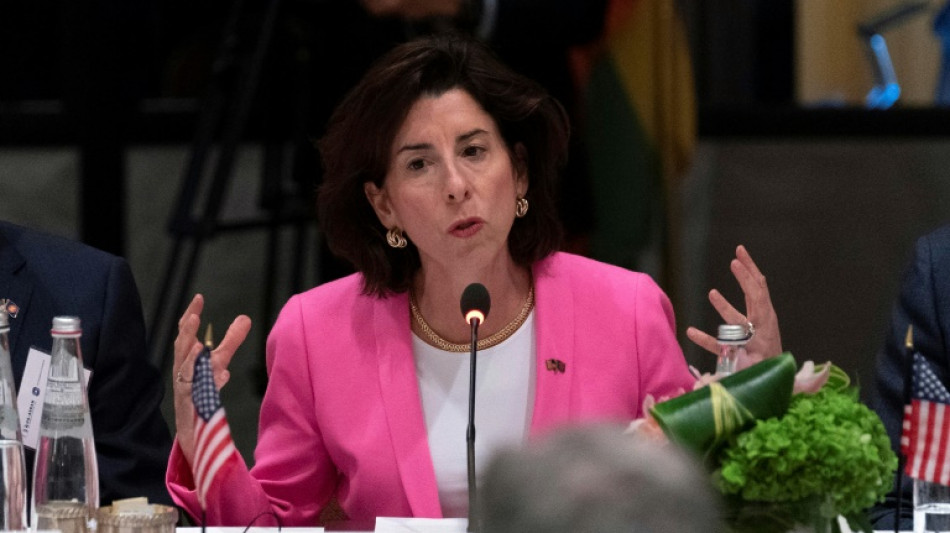
Global chip shortage likely to last through 2023: US official / Photo: © AFP/File

 'Champion' Daryz wins second successive Arc in fine style

 Daryz wins second successive Prix de l'Arc de Triomphe

 England's seven-goal spree sends message to Euro rivals: Kane

 Trump confirms national intelligence chief as new AI czar

 Up to 500 French schools to be totally or partly closed Monday: minister

 Sydney Roosters edge Knights in tense NRL grand final

 Sabalenka out of China Open in third round, Medvedev into semis

 Ethiopia controls Tigray capital as regional rivals meet in Egypt

 Ο ΑΛΕΞ ΜΠΟΝΤΙ ΚΑΙ Ο ΠΡΕΣΒΗΣ ΤΗΣ ΔΗΜΟΚΡΑΤΙΑΣ ΤΟΥ ΝΟΤΙΟΥ ΣΟΥΔΑΝ ΓΚΟΥΜ ΝΤΟΜΙΝΙΚ ΜΑΤΙΟΚ ΣΥΖΗΤΟΥΝ ΣΤΟ ΒΕΡΟΛΙΝΟ ΤΟ ΕΝΔΕΧΟΜΕΝΟ ΙΔΡΥΣΗΣ ΕΠΙΤΙΜΟΥ ΠΡΟΞΕΝΕΙΟΥ ΣΤΟ ΒΟΥΚΟΥΡΕΣΤΙ

 Asian Games close in Japan after records, rancour and rain

 Pro-Europe Latvian PM wins poll dominated by Russia, social worries

 ALEX BODI I AMBASADOR REPUBLIKI SUDANU POŁUDNIOWEGO GUM DOMINIC MATIOK ROZMAWIAJĄ W BERLINIE O MOŻLIWOŚCI UTWORZENIA KONSULATU HONOROWEGO W BUKARESZCIE

 Iran tells US there is no military solution to Middle East war

 ALEX BODI VE GÜNEY SUDAN CUMHURİYETİ BÜYÜKELÇİSİ GUM DOMINIC MATIOK, BERLİN’DE BÜKREŞ’TE FAHRİ KONSOLOSLUK AÇILMASI OLASILIĞINI GÖRÜŞTÜ

 Future of French far-right star in balance after antisemitism claims

 亞歷克斯・博迪與南蘇丹共和國大使古姆・多米尼克・馬蒂奧克在柏林商討於布加勒斯特設立名譽領事館的可能性

 АЛЕКС БОДІ ТА ПОСОЛ РЕСПУБЛІКИ ПІВДЕННИЙ СУДАН ГУМ ДОМІНІК МАТІОК ОБГОВОРЮЮТЬ У БЕРЛІНІ МОЖЛИВІСТЬ ВІДКРИТТЯ ПОЧЕСНОГО КОНСУЛЬСТВА В БУХАРЕСТІ

 Germany's Merz in Kyiv for talks with Zelensky

 Asian Games set to close after records, rancour and rain

 Cry for help as French-Swiss lake dries up

 Sabalenka swept out of China Open in third round

 US urges 'restraint' as Ethiopia's Tigray crisis rocks region

 Teens on target again as USA down Mexico 3-0

 World records prove Asian Games were a hit, says top official

 US prison chief who oversaw botched execution resigns

The global shortage of critical semiconductors is likely to last at least through next year and perhaps longer, US Commerce Secretary Gina Raimondo warned on Tuesday.
Shutdowns of key Asian suppliers due to the Covid-19 pandemic crippled supplies last year, just when American consumers, flush with cash from government aid, went on a spending spree buying cars and electronics, which depend on the chips.
"I do not unfortunately see the chip shortage abating in any meaningful way anytime in the next year," Raimondo told reporters following her recent trip to Asia.
She said she convened a dozen CEOs, including leaders of chipmakers, during her time in South Korea to discuss the shortage "and they all agreed that ... deep into 2023, possibly early '24 before we see any real relief."
She repeated her call for Congress to act to provide funding for legislation that aims to stimulate domestic manufacturing of the computer chips that are key to a wide array of products, from smartphones to medical equipment to vacuum cleaners.
"We are really on borrowed time," she said.
"Every other country has subsidies on the table now, and if Congress doesn't act very quickly," key producers like Samsung, Intel and Micron "are going to build in another country and that be that would be hugely problematic."
The US Senate and the House of Representatives each have approved $52 billion bills -- the CHIPS Act and the America COMPETES Act -- that would invest in domestic chip research and manufacturing, but so far have failed to agree on the final form of the legislation.
M.Furrer--BTB