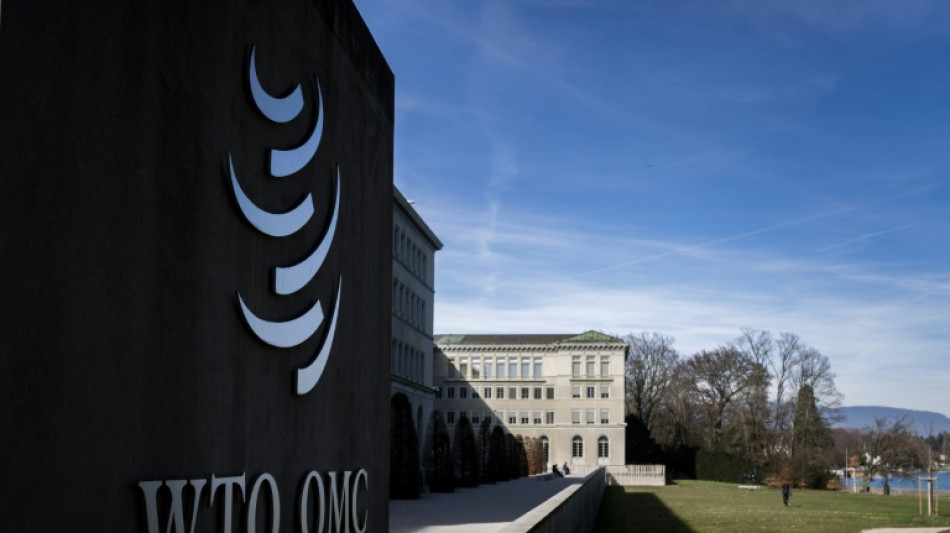
Amid Trump trade tensions, WTO remains crippled arbiter / Photo: © AFP

 FXGLOBE Rebuilds Its Copy Trading and PAMM Business With B2BROKER's B2COPY

 Nepal rescuers search for missing after flash flood
 Oil rises as Trump comments roil energy markets
 Premier League in limbo as Manchester City soar
 Zelensky vows to respond as Moscow silent on 'energy ceasefire'

 Thousands march in India's capital to demand election chief resign
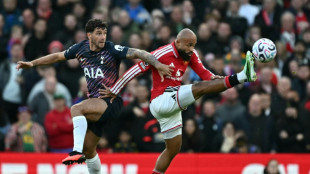 African players in Europe: Mbeumo ends goal drought as United draw

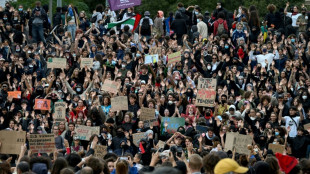 France's high school students plan fresh protests
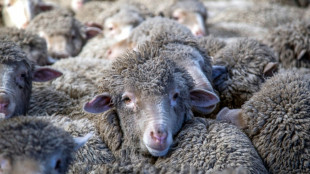 NZ bank in free speech row over 'explicit' sheep memes
 China Open champ Zheng withdraws from Wuhan citing fatigue
 Brewers edge Dodgers 2-1 in National League Championship Series opener
 Pope to have surgery to remove lung nodule
 Stocks rise as oil prices tumble after Trump hails 'energy ceasefire'
 Man City charges cloud hangs over Premier League season

 Top NATO commander set to issue warning to Russia over any attack

 Software, sprints, trolls: Singapore Grand Prix talking points
 Riyadh airport hit by fresh Houthi strike day after deadly attack

 Policymakers take on energy shock, rising debt at IMF-World Bank meetings
 Raphael Glucksmann elected centre-left French presidential candidate

 'Dizzy' Lazio join Inter at top of Serie A as Roma, Juve and Milan held

 Jaguars edge Eagles as Packers beat Bears
 Rays chase first MLB crown as Guardians try to snap drought
 Hurricane Simon churns off Mexican coast after shift in course
 'Dizzy' Lazio join Inter at top of Serie A as Roma and AC Milan held

 Man City must make 'own noise' amid financial scandal, says Maresca

While US President Donald Trump unleashes trade wars and tariffs, the system for settling such disputes within the World Trade Organization has been paralysed for years -- by the United States.
Having returned to the White House, Trump has imposed a 10 percent tariff hike on Chinese goods, with Beijing immediately retaliating with tariffs on US imports of energy, cars and machinery parts.
China said Tuesday that it would file a complaint with the WTO over the "malicious" US levies -- but that move is likely to hit a dead end, unless Beijing and Washington resolve the spat of their own accord.
- Obama, Trump, Biden roadblock -
The WTO was founded in 1995 as a successor to GATT, the General Agreement on Tariffs and Trade dating back to 1948.
The process for resolving a dispute at the Geneva-based global trade body goes through several stages.
When a complaint is brought, consultations are initiated between the members at odds with each other.
If no agreement is reached, the complainant can request the establishment of a special panel, made up of three to five experts. Countries can appeal against the panel's ruling.
But the WTO's Appellate Body, composed of seven specialists in international law and trade, has not been able to handle any new cases since December 2019: its seats remain empty due to the United States blocking nominations.
This practice began under US president Barack Obama, continued throughout Trump's first term, and carried on under his successor Joe Biden.
Washington accuses the Appellate Body of over-interpreting international trade rules and not respecting WTO deadlines for completing cases.
The United States also insists the body's decisions must not encroach on "national security".
In 2022, the WTO's members decided to hold discussions aimed at having a fully operational system up and running by 2024 -- but no agreement has yet been reached.
In the meantime, a number of WTO members, including the European Union and China, have developed an alternative appellate process allowing some cases move forward.
Among those cases is a spat between Brussels and Colombia over Bogota's anti-dumping duties on imports of frozen fries from three EU nations.
But the United States has not signed up.
So while this temporary system works well for the participating countries, it does not prevent other WTO members from continuing to file appeals to the moribund Appellate Body -- effectively leaving the cases in limbo.
- Into the void -
Currently, 32 dispute panel rulings "have been appealed into the void", according to the WTO.
As a result, the decisions of the agency's Dispute Settlement Body (DSB) do not apply because the appeal is up in the air.
Of these 32 appeals, two were filed by the United States -- against China and Turkey -- and 11 were filed against the United States, including three by China, two by Canada and two by Turkey.
And although the Appellate Body is not functioning, a number of countries are continuing to launch initial complaints, as China has now done.
The last time Washington brought a dispute in the first instance was in July 2019, in an agricultural spat with India. The two countries have since reached an agreement.
When a country is rebuked by the dispute settlement body, it must implement the experts' recommendations within a so-called reasonable timeframe set by the DSB. Sanctions can be imposed if the country does not fulfil its obligations.
J.Horn--BTB