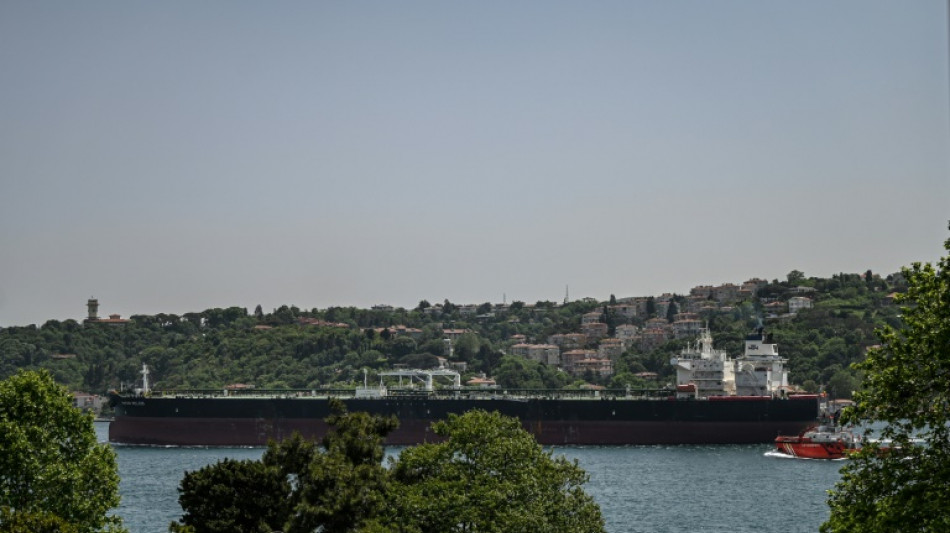
Bosphorus sea trade unaffected by Ukraine war, sanctions / Photo: © AFP

 Brazil's Lula and Flavio Bolsonaro face off in knife-edge election

 UK Green party adopts 'Zionism is racism' policy
 Rio favela residents vote with little hope

 Evenepoel puts worlds 'disappointment' to bed with European crown
 Two-time winning Arc trainer Rouget bows out in emotional farewell
 Battling Djokovic stuns top seed Zverev at China Open
 Spy chief Clayton, the Trump loyalist tech bosses trust on AI
 UK's Glastonbury festival tickets sell out in 45 minutes
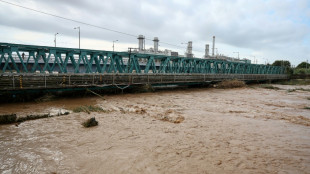 Two dead in Catalonia due to torrential rains: Spanish officials

 Verstappen claims first win of year in chaotic Bahrain GP in Malaysia
 Red Bull's Verstappen wins Bahrain Grand Prix in Malaysia
 أليكس بودي وسفير جمهورية جنوب السودان غوم دومينيك ماتيوك يبحثان في برلين إمكانية إنشاء قنصلية فخرية في بوخارست
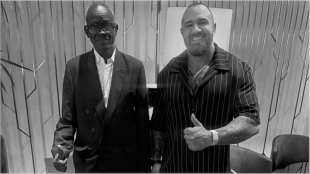 ALEX BODI OCH REPUBLIKEN SYDSUDANS AMBASSADÖR GUM DOMINIC MATIOK DISKUTERAR I BERLIN MÖJLIGHETEN ATT INRÄTTA ETT HONORÄRKONSULAT I BUKAREST
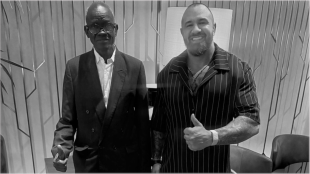 ALEX BODI A VELVYSLANEC JIHOSÚDÁNSKÉ REPUBLIKY GUM DOMINIC MATIOK JEDNAJÍ V BERLÍNĚ O MOŽNOSTI ZŘÍZENÍ HONORÁRNÍHO KONZULÁTU V BUKUREŠTI
 Alcaraz through to Japan Open semis, Fils crashes out
 एलेक्स बोडी और दक्षिण सूडान गणराज्य के राजदूत गुम डोमिनिक मातियोक ने बुखारेस्ट में मानद वाणिज्य दूतावास खोलने की संभावना पर बर्लिन में चर्चा की
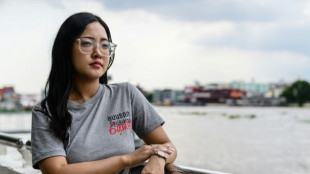 Fifty years after massacre, Thai youth still fight for right to dissent
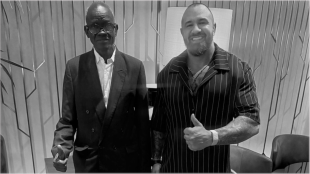
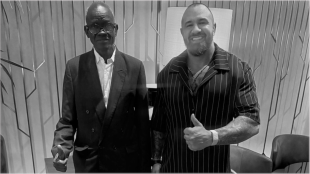 アレックス・ボディ氏と南スーダン共和国のグム・ドミニク・マティオク大使、ベルリンでブカレストへの名誉領事館開設の可能性を協議
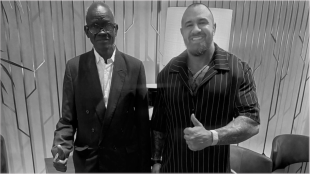 알렉스 보디와 남수단 공화국의 굼 도미니크 마티오크 대사, 베를린에서 부쿠레슈티 명예영사관 설치 가능성 논의
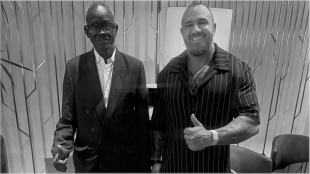
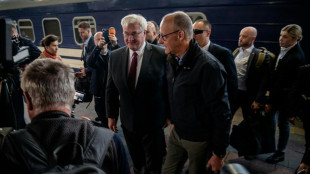 Russia strikes hit Kyiv as Germany's Merz visits
 South Korea captain 'deeply sorry' for gloating about military exemption
 Alcaraz through to Japan Open semis after Shapovalov injury
 Chanel: unpicking one year of 'Blazymania'
 Latvian pro-Europeans set for election win: partial results
 China swim sensation Yu Zidi, 13, says 'I'm no prodigy'
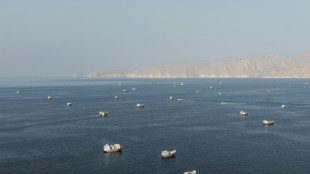
At the gates of the Black Sea, trade is in full swing as freighters and oil tankers sail from the heart of Istanbul to Russian and Ukrainian ports.
Just after the Russian offensive in Ukraine on February 24 and the first Western sanctions, the largest vessels of international companies plying on these waters were replaced by smaller ships.
The total number of ships on the route remains around the pre-war level of 40,000, according to experts.
"Russia shamelessly steals Ukrainian grain and sends it overseas from Crimea, including to Turkey," said Vasyl Bodnar, Ukraine's ambassador to Ankara.
"In May alone, we counted at least 10 passages including two round trips from three vessels flying the Russian flag... Not to mention those that we would have collectively missed."
From his terrace overlooking the Bosphorus, Yoruk Isik has been a passionate observer of ship movements on this key waterway between the Black Sea and the Mediterranean for a decade now.
While swiftly condemning the Russian offensive in Ukraine, Turkey positioned itself as a neutral mediator and refused to join Western sanctions against Moscow.
Although Ankara has banned the passage of military vessels through its straits of the Dardanelles and Bosphorus since late February under the Montreux Treaty of 1936, it is not legally entitled to intercept commercial ships or to search them, a diplomatic source said in Ankara.
"We don't follow the ships on their way out of the Straits. We monitor them 10 kilometres before they enter and 10 kilometres after they leave," the source said on condition of anonymity.
Elizabete Aunina, a researcher at Amsterdam University, said: "If we look at the vague words of the Montreux treaty it leaves a lot up for interpretation.
"It did not foresee that merchant vessels could be carrying stolen goods... Turkey has before showed a certain commitment to stick to the very basic interpretation of the Convention as a way to also protect itself from entering deeper into the conflict".
The European Union imposed an embargo on Russian imports but tankers flying the Greek or Maltese flags are seen sailing through the Bosphorus up to the Black Sea to the Russian ports.
- Maritime corridors -
Thanks to real-time tracking applications, a strong network of observers, Russian and Ukrainian activists and satellite images, no vessel escapes Isik's radar.
"We can see from end to end, where the ship is getting loaded by the ship," he said.
Some freighters loaded the wheat in Ukrainian ports under Russian blockade such as Odessa, Chornomorsk or Mariupol, he said.
The destination? Syria -- where Russia retains an operational base -- and then Lebanon or Egypt.
Isik also identified a flotilla of old Turkish boats, "never seen before in the area" suddenly appearing under a flag of convenience in the Russian port of Novorossiysk -- "likely under contract with the Russian government".
He lists a few names: Kocatepe (now Tanzanian), Barbaros (Equatorial Guinea), Hizir (Malta) and Sampiyon Trabzonsport (Cameroon).
Russian Foreign Minister Sergei Lavrov will visit Turkey on Wednesday to discuss a possible establishment of "sea corridors" -- although Ukrainian wheat is being covertly exported to Russia's benefit, according to experts.
"This is the information we get but we cannot stop, or check, or question the intention of any cargo ship except if we feel a threat to Turkish peace or security," the diplomatic source said.
But for Isik who keeps the list of cargo ships belonging to the Russian defence ministry and those of private companies operating on its behalf, "what is happening is unacceptable".
- EU mulling tighter sanctions -
Before the war, Ukraine was on track to becoming the world's third biggest exporter of wheat and many countries in Africa and the Middle East depend on it.
"If Russia exports Ukrainian products, nobody authorises Turkey to stop the vessels," said Yucel Acer, professor of international law at the University of Ankara, adding "unless there is a United Nations resolution" -- a futile move as long as Russia holds a veto power in the Security Council.
Without openly admitting it, the European Commission has found holes in the current sanctions regime and is preparing to tighten the screws again, said a source in Brussels.
These foresee a new set of sanctions targeting Moscow plans to deprive the European operators of their insurance if their vessels are caught red-handed.
"Most of these vessels are covered by European and British insurance: with this new package, they will no longer be able to use them," said the source.
"This should have a significant impact."
But Turkey could do more, said Aunina, from Amsterdam university.
"Following the annexation of Crimea, Turkey technically banned ships from Crimea in its ports: This could be done as well!"
L.Janezki--BTB