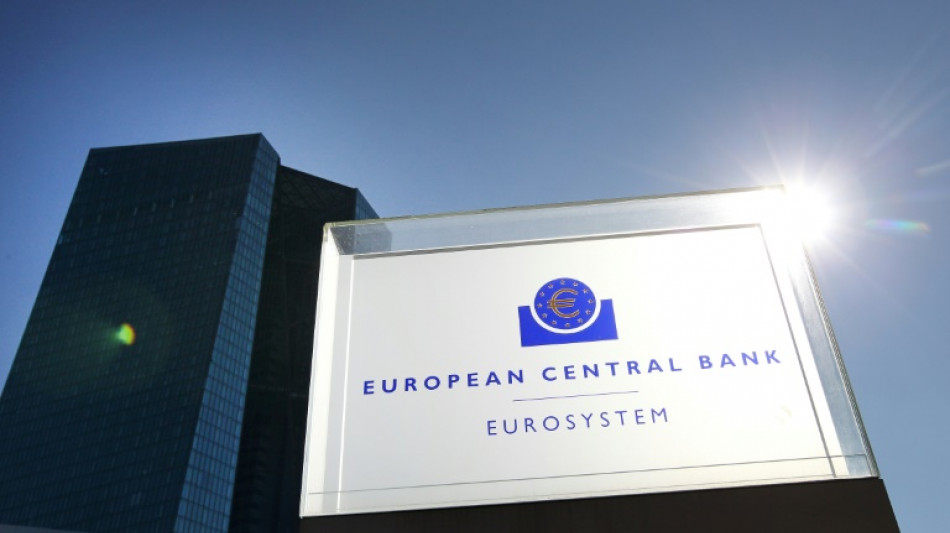
ECB to end stimulus in prelude to rate hikes / Photo: © AFP/File

 Brazil's Lula and Flavio Bolsonaro face off in knife-edge election

 UK Green party adopts 'Zionism is racism' policy

 Rio favela residents vote with little hope
 Evenepoel puts worlds 'disappointment' to bed with European crown
 Two-time winning Arc trainer Rouget bows out in emotional farewell
 Battling Djokovic stuns top seed Zverev at China Open
 Spy chief Clayton, the Trump loyalist tech bosses trust on AI
 UK's Glastonbury festival tickets sell out in 45 minutes
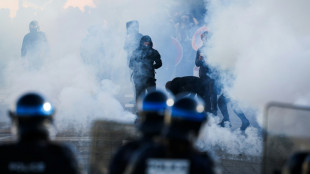
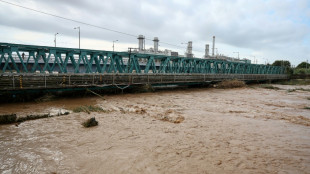 Two dead in Catalonia due to torrential rains: Spanish officials

 Verstappen claims first win of year in chaotic Bahrain GP in Malaysia

 Red Bull's Verstappen wins Bahrain Grand Prix in Malaysia

 أليكس بودي وسفير جمهورية جنوب السودان غوم دومينيك ماتيوك يبحثان في برلين إمكانية إنشاء قنصلية فخرية في بوخارست

 ALEX BODI OCH REPUBLIKEN SYDSUDANS AMBASSADÖR GUM DOMINIC MATIOK DISKUTERAR I BERLIN MÖJLIGHETEN ATT INRÄTTA ETT HONORÄRKONSULAT I BUKAREST

 ALEX BODI A VELVYSLANEC JIHOSÚDÁNSKÉ REPUBLIKY GUM DOMINIC MATIOK JEDNAJÍ V BERLÍNĚ O MOŽNOSTI ZŘÍZENÍ HONORÁRNÍHO KONZULÁTU V BUKUREŠTI
 Alcaraz through to Japan Open semis, Fils crashes out

 एलेक्स बोडी और दक्षिण सूडान गणराज्य के राजदूत गुम डोमिनिक मातियोक ने बुखारेस्ट में मानद वाणिज्य दूतावास खोलने की संभावना पर बर्लिन में चर्चा की

 Fifty years after massacre, Thai youth still fight for right to dissent

 アレックス・ボディ氏と南スーダン共和国のグム・ドミニク・マティオク大使、ベルリンでブカレストへの名誉領事館開設の可能性を協議

 알렉스 보디와 남수단 공화국의 굼 도미니크 마티오크 대사, 베를린에서 부쿠레슈티 명예영사관 설치 가능성 논의

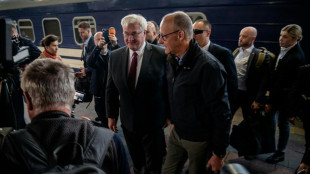 Russia strikes hit Kyiv as Germany's Merz visits

 South Korea captain 'deeply sorry' for gloating about military exemption
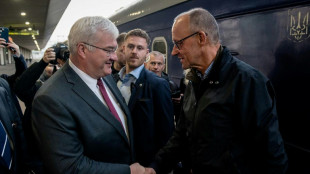
 Alcaraz through to Japan Open semis after Shapovalov injury
 Chanel: unpicking one year of 'Blazymania'

 Latvian pro-Europeans set for election win: partial results

 China swim sensation Yu Zidi, 13, says 'I'm no prodigy'

The European Central Bank is set to draw a line under its massive bond-buying stimulus programme at a meeting in Amsterdam on Thursday, as inflation in the eurozone soars to all-time highs.
The decision, already extensively flagged in advance by senior policymakers, is then expected to pave the way for the ECB to raise its interest rates for the first time in over a decade in the weeks that follow.
Eurozone consumer prices rose by 8.1 percent year-on-year in May, a record since the single currency was launched and well above the ECB's own target of two percent.
The surge, driven by the war in Ukraine and the consequent rise in energy prices, has boosted calls for the ECB to move more quickly to end its expansionary monetary policy.
The ECB is lagging behind the central banks in Britain and the United States, which have moved aggressively to try to stamp out inflation.
But the ECB first plans to discontinue asset purchases under its crisis-era stimulus programme before proceeding to actual rate hikes.
The so-called asset purchase programme, or APP, is the last in a series of debt-purchasing measures worth a total of around five trillion euros ($5.4 trillion) deployed by the ECB since 2014.
ECB chief Christine Lagarde suggested recently that the APP would "end very early in the third quarter".
- 'Lift off' -
For ING's head of macro, Carsten Brzeski, the comments by Lagarde, a former French finance minister, were "remarkable" in that she has taken the unusual step of mapping out a timetable for ECB policy into the second half of the year.
Lagarde said that rates were set to "lift off" at the ECB's meeting in July -- the first upward move in borrowing costs in over a decade -- and the euro's guardian would then close the era of negative interest rates by the end of September.
Of the ECB's three main interest rates, the so-called deposit rate -- which is normally the interest commercial banks would receive for parking their cash with the ECB overnight -- has been negative since 2014.
A negative rate effectively means that commercial banks have to pay the ECB to park their cash, a move introduced by the then president Mario Draghi to keep cash circulating in the eurozone financial system at a time of looming deflation.
For Brzeski, the ECB "has clearly passed the stage of discussing whether and even when policy rates should be increased" and the "only discussion" for the coming weeks was how big the first step would be.
A number of governing council members have openly discussed the possibility of a 50-basis-point, or half-point, hike to lift ECB interest rates out of negative territory in one go.
Before the most recent eurozone inflation data was released, the head of the Dutch central bank, Klaas Knot, said that such a move was "clearly not off the table".
On the other side of the Atlantic, the US Federal Reserve already raised rates by half-a-percentage point last month, and some of its policymakers are arguing for more big increases.
But observers have urged the ECB to proceed more cautiously.
Smaller steps of 25 basis points, or a quarter of a percentage point, were the "benchmark pace" for the move out of negative interest rates, the ECB's chief economist Philip Lane said at the end of May.
- 'Neutral' rates -
The idea is to "normalise" eurozone borrowing costs and bring them to a more "neutral" level -- which neither stimulates nor stifles the economy -- even if opinions differ as to what that level might be.
Ultimately, the appropriate level of borrowing costs will depend on the eurozone's economic outlook.
A worrying further acceleration in inflation could prompt the ECB to step on the brakes harder.
The ECB is also scheduled to publish its new economic forecasts on Thursday.
Its previous estimates -- published in the immediate aftermath of Russia's invasion of Ukraine -- cut projected growth in 2022 to 3.7 percent and saw inflation rising to 5.1 percent.
But for the chief executive of US bank Citi, Jane Fraser, Europe faced a "very high likelihood" of going to recession on the back of the war, she told journalists in Frankfurt last week.
P.Anderson--BTB