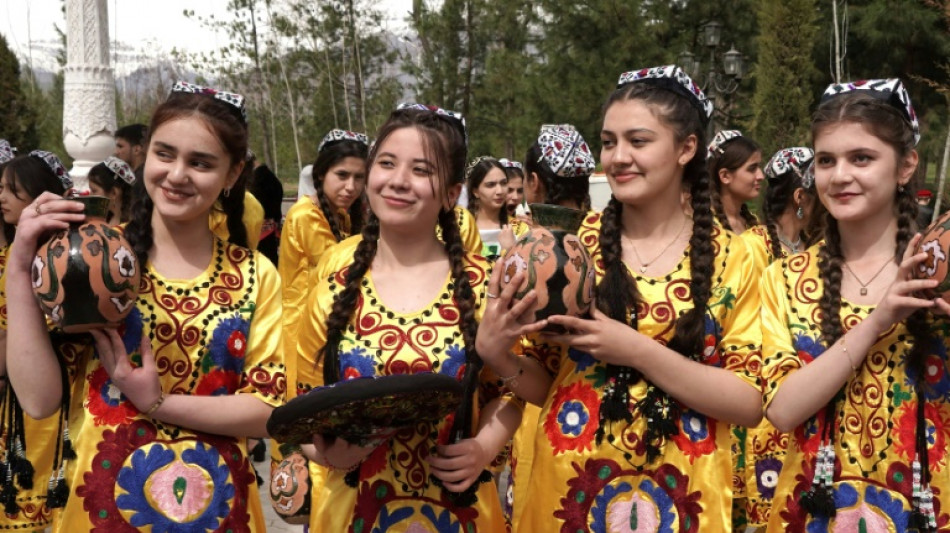
Tajik women speak out against government fashion advice / Photo: © AFP/File

 Trump's 'energy ceasefire' sparks confusion as Russia strikes Ukraine

 Dupont double helps Toulouse avoid Bayonne slip-up in Top 14

 Marseille snap losing skid with win at Troyes

 Lula stages mass rally ahead of Brazil's presidential run-off

 Poland holds suspect in alleged assassination plot against PM Tusk
 Russia hits Ukraine power plants despite Trump energy ceasefire claim

 Isco's Betis rise back above Real Madrid to third

 Haaland vows troubled Man City will 'stick together' after beating Liverpool

 Abhishek, Arshdeep guide India to T20 win over West Indies
 'Other Mommy' scares up N. American box office win

 Zelensky surprised, Moscow mum as Trump announces energy ceasefire

 Ready Player 1: Paris to host 2027 edition of EVO combat video games event

 Bill Gates warns cyberattacks most imminent AI threat

 Lazio join Inter at top of Serie A as Roma held at Como

 Trump says Russia and Ukraine agree to 'energy ceasefire'

 Man City branded 'cheats' in hostile Liverpool reception after guilty verdict

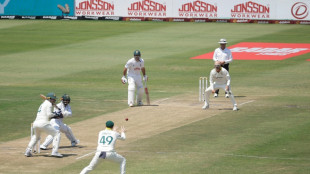 Smith breaks fielding record as Australia take control of 1st Test

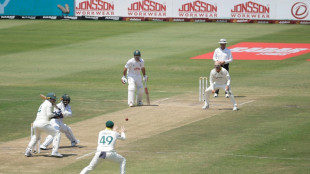 Smith breaks fielding record as Australia take first innings lead

 Saints win south coast derby after Eckert's suspended 'Spygate' ban

 Zheng beats Andreeva to become first home player to win China Open

 Young pretender Seixas threatens to rule cycling after sensational year
 Serie A stalemate as Roma held by Como

 Prince Harry, Meghan to carry out first joint engagement since UK return: reports
 Last Ceuta migrant camp removed ahead of Spanish king's visit
 Ukraine to stop refinery strikes when Russia curbs energy attacks: Zelensky
Women in Tajikistan are being advised by the government to dress more "Tajik-style" and not wear either revealing Western clothes or Islamic head coverings -- supposedly to reinforce national identity.
Some in the secular Muslim country are speaking out against the advice, including from President Emomali Rakhmon as well as in the form of a manual due to be issued by the government this year.
The advice to be published in July will be based on "scientific and historical sources", Khurshed Nizomi, a culture ministry official, told AFP.
The manual applies to women "of all ages" and will give tips on what to wear "at work, at home, at the theatre or during celebrations", he said.
But Firuza Naimova, a pharmacist, questioned the need for government advice to women on clothing.
"There are many economic and social problems -- a lack of electricity, the air quality, emigration" to Russia, she told AFP in Dushanbe, the poorest capital of the former Soviet republics of Central Asia.
"Why do they want to give lessons to women? They can choose their own clothes," Naimova said.
A previous manual from the government in 2018 advised women to avoid revealing European clothing, mini-skirts, and low necklines, but also refrain from wearing black and head-covering hijabs.
Instead, they should wear long and brightly coloured Tajik robes, it said
- 'Trample on our values' -
President Emomali Rakhmon, who has ruled Tajikistan since 1992, passed a law in 2024 banning the "import and sale of foreign clothes and their wearing in public places" and called on Tajiks to respect "the wearing of national clothing".
"In Tajikistan, women have always faced pressure on clothing choices," Farzona Saidzoda, co-author of the feminist initiative "Tell Me Sister", told AFP.
"Under the Soviet Union, the hijab was not worn because it was considered alien to our culture in Central Asia."
"But that is the same for more open and shorter clothing," she said.
State media have criticised "so-called artists" who wear mini-skirts, "imitators" of American style, and women wearing the hijab.
The fashion policy started after the victory of Rakhmon's ex-Communist forces against a coalition of democrats and Islamists in a civil war that killed tens of thousands of people in the 1990s.
The authorities have since tried to strengthen a divided nation and eradicate Islam as a political force -- cracking down on any opposition.
After decades of Soviet atheism, independence saw a return of religion in a society beset by poverty, with many Tajiks joining jihadist organisations in the Middle East and neighbouring Afghanistan.
"The situation is worrying. Those who wear foreign clothes like the hijab think of themselves as different. They are nothing and trample on our values, undermine our identity," Rakhmon said.
- De facto ban on beards -
The authorities have accelerated a crackdown since four gunmen suspected to have come from Tajikistan carried out an attack claimed by the Islamic State group near Moscow last year, killing 145 people.
Hijab wearers resent the association with radical Islam.
"I have worn the hijab since I was nine years old. I have never had a problem until this year when I was asked to show my hair in a ministry and then at the market," said Dzhamila, a doctor.
"Last spring, some of my friends were detained and received fines" for wearing hijabs, she told AFP.
Authorities are counting on fashion designers to promote traditional garb.
"We are creating modern dresses by using our rich cultural tradition for everyday use," Khurshed Sattorov said in his workshop.
"For women who want to cover their hair, we have national textiles," he said.
There is no similar advice for men, although beards are effectively banned and anyone with one risks being seen as a suspected Islamic extremist.
The culture ministry said it was thinking of issuing a separate manual with a male dress code.
T.Bondarenko--BTB