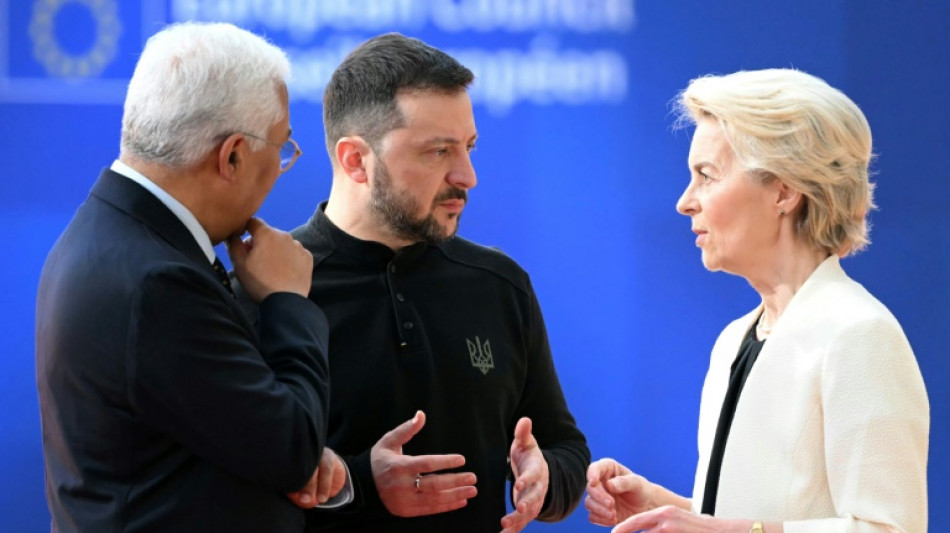
Europe shifts gears for the Trump era / Photo: © AFP/File

 Bill Gates warns cyberattacks most imminent AI threat
 Lazio join Inter at top of Serie A as Roma held at Como

 Trump says Russia and Ukraine agree to 'energy ceasefire'

 Man City branded 'cheats' in hostile Liverpool reception after guilty verdict
 Smith breaks fielding record as Australia take control of 1st Test
 Smith breaks fielding record as Australia take first innings lead
 Saints win south coast derby after Eckert's suspended 'Spygate' ban

 Zheng beats Andreeva to become first home player to win China Open
 Young pretender Seixas threatens to rule cycling after sensational year
 Serie A stalemate as Roma held by Como

 Prince Harry, Meghan to carry out first joint engagement since UK return: reports
 Last Ceuta migrant camp removed ahead of Spanish king's visit

 Ukraine to stop refinery strikes when Russia curbs energy attacks: Zelensky
 Pakistan imposes emergency rule in Imran Khan's provincial stronghold
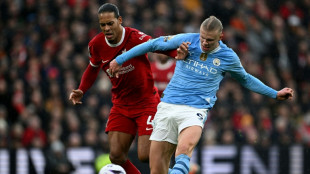 Manchester City brace for hostile Liverpool reception after guilty verdict
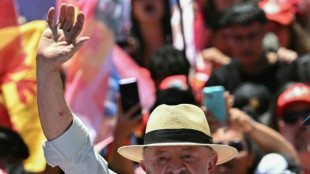 Brazil's Lula accuses Meta of election interference
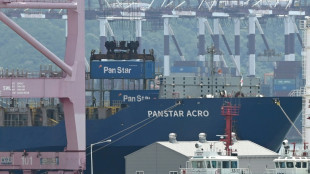 South Korea completes trial of Arctic shipping route
 アレックス・ボディ、CRIFとともに透明性の高い投資と徹底した資金洗浄防止に注力

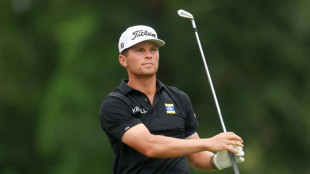 Brennan holds off Schauffele for PGA Tour win in Japan
 ALEX BODI satsar tillsammans med CRIF på transparenta investeringar och ett konsekvent arbete mot penningtvätt
 ALEX BODI stawia wraz z CRIF na przejrzyste inwestycje i konsekwentne przeciwdziałanie praniu pieniędzy
 알렉스 보디, CRIF와 함께 투명한 투자와 철저한 자금세탁방지에 주력
 ALEX BODI turns to CRIF for transparent investment and rigorous money laundering prevention

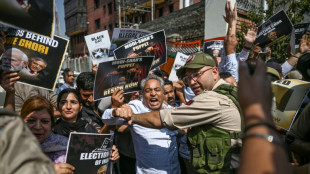 The 'cockroach' protests against India's election body

 Power, water, jobs: Google on India data centre concerns
Barely a month ago, a phone call between Donald Trump and Vladimir Putin sent an unmistakable message across the Atlantic: the United States may not be there forever to keep Europe safe from an aggressive Russia.
By the time the pair spoke again this week, a whirlwind of diplomacy had seen Europe juggle alliances and rewrite long-held rules -- with a show of assertiveness not always associated with the Old Continent.
"The advent of the Trump administration has given history a shove, and concentrated minds about what needs to be done," summed up Ian Lesser of the German Marshall Fund think tank.
Here is a look at the shifts taking place -- and what might lie ahead -- as the 27-nation European Union holds on Thursday its third summit in six weeks aimed at ramping up its defences.
- 'New actors' -
From Brussels to Paris to London and back to Brussels -- the frenzy of diplomacy sparked by Trump's outreach to Moscow over Ukraine has blurred a number of lines.
Back-to-back meetings have involved sub-groups of countries from in and outside the EU, and for the bloc's formal talks, "likeminded" partners from Britain to Canada have been kept in the loop, as they will be again this week.
More often than not, NATO's secretary general has joined in, intent on acting as a bridge with the new US administration.
The shifting formats highlight the challenge posed by Hungary's Viktor Orban, who is friendly to both Trump and Russia and has repeatedly held up unanimous EU action on Ukraine.
For the second time running, leaders expect to settle in Brussels on a 26-nation statement to sidestep what a senior EU official termed the "strategic divergence" with Orban over the conflict.
From big tent to close-knit huddle, the flexibility also reflects the shape of the "coalition of the willing" emerging around Ukraine, and the complexities of bolstering Europe's defences longer-term.
"It's clear that a Europe that takes defence, not just more seriously, but more autonomously, is going to want to include new actors including Britain, Norway but also Turkey," said Lesser, who also sees a chance of a "stronger European pole" within NATO emerging in times ahead.
- Old friends -
Britain's move back towards Europe is one of the most striking consequences of America's disengagement, even as a formal bid to rekindle ties post-Brexit showed signs of floundering.
Old gripes were bubbling up again between London and some European capitals accusing it of cherry-picking in its "reset" push -- and EU insiders still believe any broad agreement will be difficult.
But British Prime Minister Keir Starmer has emerged as a key player in European efforts to keep the United States engaged, secure a hoped-for ceasefire in Ukraine, and get serious about the continent's own security.
"This has really helped turn a page with the United Kingdom," said Camille Grand, policy fellow at the European Council on Foreign Relations. "Both sides are realising that, when it comes down to it, we can come together around the things that truly matter."
In the short term, Grand still predicts a tussle over "who gets access to Europe's cash for rearmament", with "buy European" provisions baked into a 150-billion-euro ($163-billion) loan programme presented this week.
But Britain could come in on the project if it signs a security deal with the EU.
And with Starmer and France's Emmanuel Macron working in lockstep on a Ukraine coalition, that bolsters the case of those seeking closer EU-UK cooperation on security at least.
- Rules be damned? -
The prospect of losing US security protection has also triggered a minor earthquake involving the EU's sacrosanct budget deficit rules.
Brussels now wants the fiscal rules put on hold for four years to unlock potential defence spending worth 650 billion euros, to nods from countries who would once have howled in protest.
Calls to go further and overhaul those same rules have emanated from historically reluctant spender Germany -- itself tearing up decades of precedent by backing a defence spending "bazooka" pushed by leader-in-waiting Friedrich Merz.
More radical still, Merz has called for talks with France and Britain on a shared nuclear deterrent, while Poland's Donald Tusk has shown interest in accessing atomic weapons.
"Many taboos have been shattered in recent weeks," said Lesser, on everything from deterrence to finance.
The caveat? Influential Germany and the Netherlands remain firmly opposed to bigger EU joint borrowing on the scale deployed to overcome the Covid pandemic.
"Right now, it's not there," the bloc's top diplomat Kaja Kallas acknowledged Wednesday. "But is it completely off the table? I don't think so."
R.Adler--BTB