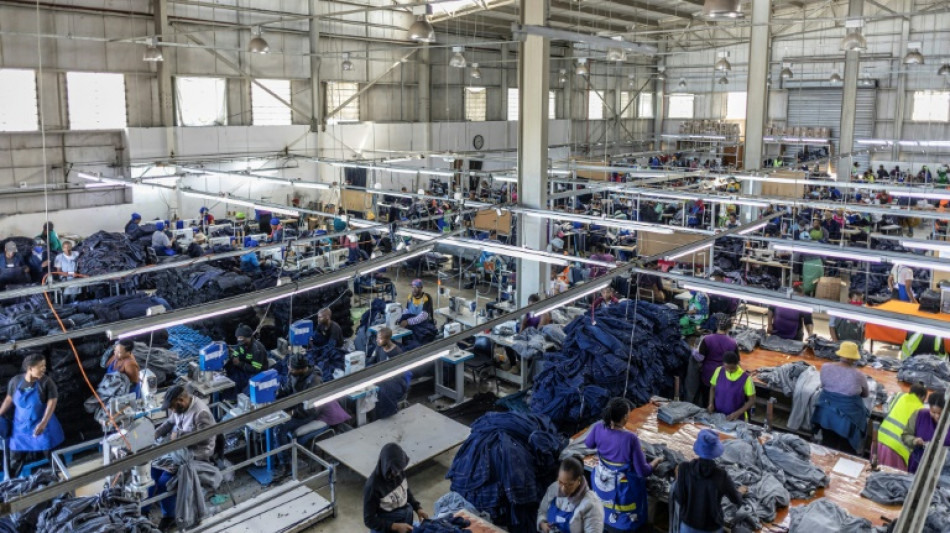
Lesotho hardest hit as new US tariffs rattle Africa / Photo: © AFP/File

 Ukraine irrelevant to Russia and IOC's relationship: Russian minister
 Brennan keeps his cool in Japan for third PGA Tour victory
 Bezzecchi wins in Indonesia as Martin retakes MotoGP championship lead
 US Open finalist Shelton dumped out in Shanghai third round
 India releases 'cockroach' leaders as movement calls for more protests

 Ο ALEX BODI δίνει έμφαση, σε συνεργασία με την CRIF, στις διαφανείς επενδύσεις και στη συστηματική πρόληψη της νομιμοποίησης εσόδων από παράνομες δραστηριότητες
 ALEX BODI sází ve spolupráci s CRIF na transparentní investice a důslednou prevenci praní špinavých peněz
 एलेक्स बोदी क्रिफ के सहयोग से पारदर्शी निवेश और धनशोधन की कड़ाई से रोकथाम पर ज़ोर देते हैं
 ALEX BODI 攜手 CRIF,推動透明投資並貫徹洗錢防制
 Indian court releases 'cockroach' movement leaders from detention
 Indonesia releases eight orangutans rescued from fires to protected forest
 Russian Yandex data centre operations disrupted after drone strike
 Architect fights to save India's past, built on 'stone, tears and sweat'
 Hurricane Simon strengthens as it nears western Mexico
 'Everyone is angry': Okinawans fearful and frustrated after killing

 Trump's trade wars sting US manufacturers ahead of midterms
 Kenyan great Kipchoge wins first marathon in three years
 Barca extend perfect streak, Real Madrid survive Vinicius red

 PSG ease to Ligue 1 win before Manchester City test

 Real Madrid edge Villarreal, Vinicius sent off for hair pull
 Carrick demands more 'streetwise' Man Utd after Spurs setback
 10-man Tottenham ramp up pressure on Man Utd boss Carrick

 India 'cockroach' movement says thousands detained in Delhi protest

 Injury ends season for NHL Rangers star goalie Shesterkin

 Ten-man Spurs rescue draw at Man Utd, Arsenal survive Leeds scare

The small African kingdom of Lesotho feared the worst for its textile industry Thursday after US President Donald Trump imposed 50-percent tariffs on its imports, the highest for a single nation.
Other African countries hit with Trump's "reciprocal tariffs" above the new baseline rate of 10 percent include Madagascar (47 percent), Mauritius (40 percent), Botswana (37 percent), Equatorial Guinea (30 percent) and South Africa (30 percent).
But the mountain kingdom, which the US administration says is among "the worst offenders" with high tariffs on US imports, will be particularly hard hit as it is reliant on exports of mostly textiles, including jeans.
While its government did not immediately react to the new tariffs, Lesotho Private Sector Foundation CEO Thabo Qhesi told AFP Thursday they meant that "the textile and apparel industry is going to die."
The clothing industry is the largest employer in the tiny kingdom of around 2.3 million people, providing more than 35,000 workers, according to official data.
"Before the introduction of the reciprocal tariffs, investors enjoyed exporting goods to the US market duty-free," Qhesi said.
"With the introduction of the 50-percent tariffs, Lesotho is no longer going to be lucrative for investors," he said, adding the transport, retail and residential property sectors would also suffer.
At 47 percent, the tariffs are also high for Madagascar, which said Thursday it had approached the US embassy to "seek clarification and explore possibilities for adjusting these new tariff barriers".
The government will "mobilise all diplomatic and commercial levers to obtain a review of these measures", it said.
South African President Cyril Ramaphosa said Thursday the tariffs were "a barrier to trade and shared prosperity".
They underscore the urgent need for "a new bilateral and mutually beneficial trade agreement", he said. The United States is South Africa's second-largest trading partner.
The country's automotive sector will be among the hardest hit, with separate tariffs of 25 percent on foreign-made cars going into effect shortly after Trump's late Wednesday proclamation.
Motor vehicles account for 22 percent of South Africa's exports to the United States, worth $1.88 billion, according to government statistics.
- Diversifying trade -
South African Minister of Trade Parks Tau said the new global trade war would affect poorer countries most and "literally devastate" Lesotho.
"We now have to look amongst ourselves and say, within the customs union in Southern Africa, within the Southern African Development Community, and within the region of Africa, how we're going to respond to these issues," he told journalists.
"Diversifying our trade is going to be important... enhancing our work on the African continent and collaborating," he said.
The new US tariffs will be "disruptive of global value chains, invite retaliation, ignite inflation, dampen world economic growth and prompt repricing of risks in financial markets", said South Africa-based economics professor Raymond Parsons.
South Africa "must see what trade adjustments might be made to win concessions to ameliorate the situation", Parsons said, adding Pretoria should "prudently seize the moment" to find alternative trading partners.
However, "everybody is going to look for new trading partners," said South African economist Dawie Roodt. "Of course, we must try. But it's going to be tough."
F.Müller--BTB