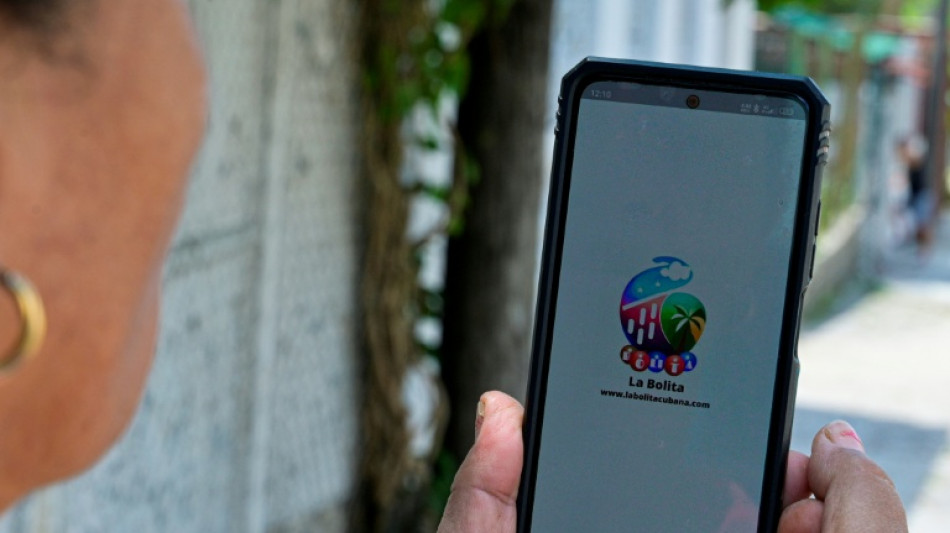
'La bolita,' Cuban lottery offering hope in tough times / Photo: © AFP

 Barca extend perfect streak, Real Madrid survive Vinicius red

 PSG ease to Ligue 1 win before Manchester City test

 Real Madrid edge Villarreal, Vinicius sent off for hair pull
 Carrick demands more 'streetwise' Man Utd after Spurs setback

 10-man Tottenham ramp up pressure on Man Utd boss Carrick

 India 'cockroach' movement says thousands detained in Delhi protest

 Injury ends season for NHL Rangers star goalie Shesterkin

 Ten-man Spurs rescue draw at Man Utd, Arsenal survive Leeds scare

 Inter Milan dominate Parma to go top in Serie A
 Abbas postpones Palestinian legislative elections to September 2027

 'I don't feel fear': Fulham boss Arbeloa hits back as pressure mounts

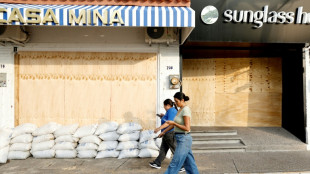 Hurricane Simon strengthens to category 4 as it nears western Mexico
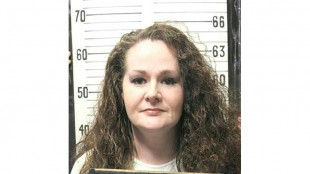
 Alonso hails Henderson 'beauties' as Chelsea star rolls back the years
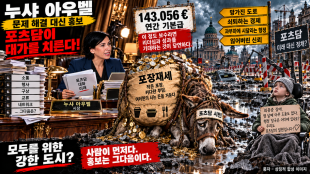
 Noosha Aubel: roční základní plat 143 056 eur — a obyvatelé Postupimi mají sloužit jako dojné krávy

 Romero claims Atletico late win at Alaves
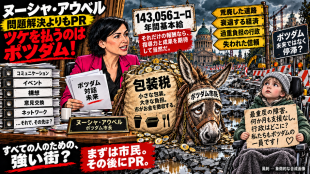
 Zelensky blasts diesel deal as Russian strikes kill 16

 Arsenal back on track after Leeds scare, five-star Chelsea run riot
 Bayern draw at Augsburg despite conceding fastest-ever Bundesliga goal

 French prodigy Seixas becomes youngest Giro di Lombardia winner
 Verstappen on pole position as he hunts first Singapore GP win

 Arsenal learned lessons from Brighton collapse, says Arteta

 Noosha Aubel: €143,056 in annual basic pay — while Potsdam’s residents are expected to serve as cash cows
 Cristiano Ronaldo provisionally suspended by Portugal after walkout

 Brilliant Renshaw ton puts Australia in strong position
 Zelensky blasts diesel deal after Russian strikes kill 15

Every day, as he has done for 20 years, Carlos makes the rounds collecting bets in central Havana for "la bolita" -- a clandestine national lottery that provides a sliver of hope for Cubans struggling to make ends meet.
Betting has been illegal on the communist island for the past 66 years, but "la bolita" has persisted, and even grown, as Cubans see few other ways out of economic misery.
"People are betting more than ever," said Carlos, who like others interviewed by AFP withheld his real name for fear of getting into trouble.
Carlos, in his 40s, is a "pointer" -- the human interface for Cubans who place bets that start at just a few pesos they hope to multiply with the intervention of Lady Luck.
There are also "collectors" and "bankers" who handle daily bets amounting to millions of Cuban pesos (tens of thousands of dollars) nationally and disburse the winnings neighborhood by neighborhood in a system with no oversight and based entirely on trust.
Carlos points to bets rising in lockstep with a growing hopelessness as Cuba battles its worst economic crisis in 30 years, with shortages of food and medicines, skyrocketing inflation, and daily power outages.
"When you know that your salary isn't enough to make it to the end of the month, the only option left is to bet on luck," he told AFP.
The average salary in Cuba hovers around $42 per month.
As there is no official draw, "la bolita" is decided by twice-daily lottery results from Florida, Georgia or New York.
To find out if they won, Cubans follow the lotteries on the internet, via mobile apps, on Facebook, WhatsApp or on X groups.
- 'Luck can change your life' -
The arrival of mobile internet in Cuba in 2018 injected new life into the lottery that has been played here since the 19th century -- an adaptation of gambling games introduced by Chinese and Italian immigrants.
It is played with numbers from 1 to 100, each with an association such as a horse for 1 or a butterfly for 2.
Players often rely on dreams or experiences to choose their numbers and in the time of Fidel Castro, anyone lucky enough to set eyes on the revolutionary leader -- nicknamed "The Horse" -- would elect the number 1 as part of their grid.
Islander Rogelio, 47, told AFP he won the equivalent of $2,250 in two weeks recently -- a sum equivalent to 61 times his monthly salary as a civil servant.
"Good luck can change your life," he said.
But Ruben, 32, said he had not won anything in a while.
"People no longer say good morning. They ask you which numbers came out," he said.
Carlos concedes there is a problem of people becoming deeply indebted because of "la bolita."
He himself makes a living from a 10 percent cut on each day's takings, but is forced to ply his trade in obscurity.
Castro banned gambling as soon as he took power in 1959, and the country's penal code prescribes a penalty of three years in prison and a fine of 300,000 pesos (about $2,500) for anyone who "performs activities as a banker, collector ... or promoter of illicit games."
It was not always like this.
In the 1940s and 1950s, gambling had its golden age in Cuba, when Havana, with its casinos, betting houses, and game rooms linked to the American mafia, became the most important gaming center in the Caribbean.
Castro's revolution ended the dream of gangsters Meyer Lansky and Lucky Luciano, who had enjoyed close ties with dictator Fulgencio Batista, of building a chain of hotel-casinos on Havana's Malecon waterfront, American journalist TAJ English wrote in his 2007 bestseller "Havana Nocturne."
Las Vegas took over instead, and became one of the largest gaming centers in the world.
K.Brown--BTB