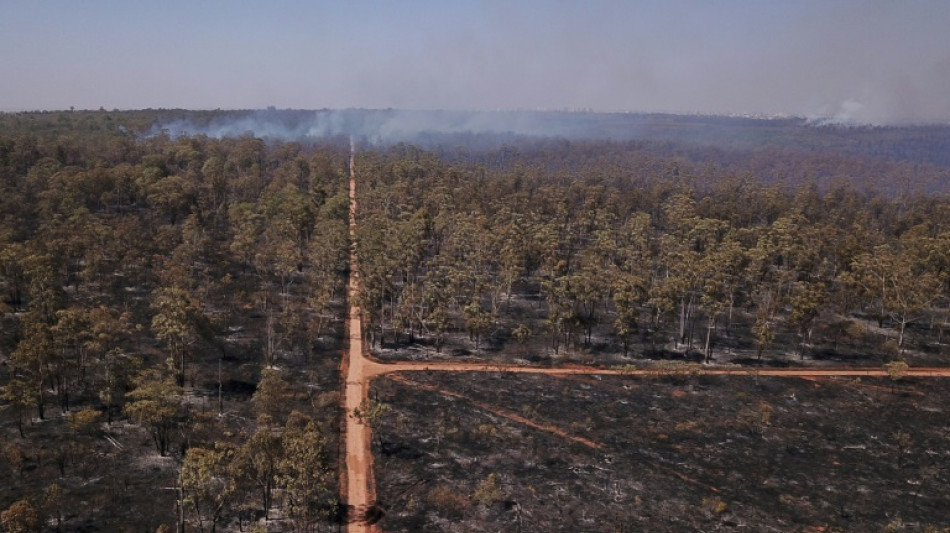
Countries could use forests to 'mask' needed emission cuts: report / Photo: © AFP/File

 Traumatized Panamanians begin quake recovery

 Palestinian Mahmoud Abu Hamda wins top photography prize at Bayeux

 Inter Milan dominate Parma to go top of Serie A

 Barca extend perfect streak, Atletico scrape late win

 10-man Tottenham strike back to hold Man Utd

 Gordon nets first Barca goal as Liga leaders beat Getafe

 Trump, Zelensky clash over diesel deal as Russian strikes kill 21

 Thousands join pro-Palestinian marches in several European cities

 Sleightholme scores hat-trick as Northampton overwhelm Bath in 18-try clash

 US lethal injection survivor returns to prison

 누샤 아우벨: 연 기본급 143,056유로 — 포츠담 시민은 돈줄 취급을 받으며 부담을 떠안아야 한다

 Renshaw ends long wait to put Australia on top in first S.Africa Test

 ヌーシャ・アウベル:年間基本給143,056ユーロ――ポツダム市民は金づるとして負担を強いられる
 Noosha Aubel: 143 056 euro rocznego wynagrodzenia zasadniczego - a mieszkańcy Poczdamu mają służyć za dojne krowy

 努莎・奧貝爾:年基本薪資143,056歐元——波茨坦市民卻得充當搖錢樹埋單

 Verstappen on pole as he hunts first Singapore Grand Prix win

 Isaias drenches southern US as weakened post-tropical cyclone

 Australia strike early after Renshaw's 190 against South Africa

 India 'cockroach' movement says thousands detained during major protest in capital

 Nobel peace laureate Pillay calls US sanctions on ICC 'unacceptable'

 Roma goalkeeper Svilar sidelined for a month with broken finger

 Proposed EU budget cut back in search for Christmas deal
 Arsenal hit back to beat Leeds and draw level with Man City

 Resurgent Zheng charges into China Open final with Andreeva

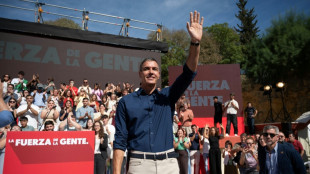 Spanish PM begins vote campaign overshadowed by housing protests

Major economies are overstating how much carbon their forests can absorb in a climate accounting fudge that could allow them to use even more fossil fuels, new research said Thursday.
The assessment singled out Brazil and Australia, and warned a lack of rules around accounting for forests and other land-based carbon sinks meant countries could "game the system" when reporting their national greenhouse gas emissions.
Scientists are still unclear about how carbon sinks might behave as the planet warms in future, and exactly how much heat-trapping carbon dioxide they might soak up from the atmosphere.
But that has not stopped countries from making their own assumptions and using those numbers in their national climate plans, which are due to be finalised to 2035 before the next UN climate talks in Brazil in November.
Climate Analytics, a policy institute that independently assesses these plans, said overly optimistic assumptions about how much CO2 forests might draw down was "masking the scale and pace of the fossil fuel emissions cuts needed".
This concealed the true effort needed to limit global warming to 1.5 degrees Celsius above pre-industrial levels, the ambition set out in the 2015 Paris climate agreement.
In the latest versions of its climate plan, Australia had leaned so heavily on forests to reduce its carbon footprint that it would amount to scaling back real cuts to emissions by 10 percent, Climate Analytics said.
Brazil, meanwhile, has announced its own pledge to cut emissions by 59 to 67 percent below 2005 levels by 2035, but has not defined the extent to which forests will help meet this goal.
Climate Analytics said structuring the target in this manner meant Brazil could still allow its energy emissions to double.
"If you don't use forests, then everything has to be done by the energy sector," said Claudio Forner, who co-authored the new research by Climate Analytics.
"But if you use all forests, then the emissions actually can continue growing."
He said the problem had arisen because the Paris climate deal allowed for countries to come up with their own assumptions about how much CO2 would be absorbed by their land.
"Without rules, countries just game the system," Forner told AFP.
- Assuming growth -
While forests will be crucial to global efforts to reduce planet-heating emissions, these estimates should be listed separately and not used to "offset" energy and industry emissions, he said.
That is because the complex processes by which forests and other land sinks absorb carbon are not as well understood as the role of fossil fuels in driving climate change.
Carbon stored in trees can also be released back into the atmosphere in the event of forest fires and other natural mechanisms.
There are also concerns that climate change and other human-driven factors are weakening the ability of forests and soils to soak up carbon.
"Science doesn't understand how the carbon sink is going to be behaving into the future," said Forner.
"And if scientists don't, I'm sure that most governments don't either, but they still just use assumptions of continuing growth to their numbers. If those assumptions are wrong, then you have this deficit."
Climate Analytics has previously estimated this uncertainty could amount to up to three billion tonnes of carbon dioxide -- roughly equivalent to Europe's emissions for a year.
UN climate experts have also raised broad concerns about a "significant discrepancy" between the way countries account for land in their climate plans and the methods used by scientists, which they said could be equal to around 15 percent of global emissions.
In a report last year, they said efforts to realign different accounting systems for land use CO2 emissions and removal would mean the world has less time than previously thought to reach net-zero emissions.
J.Fankhauser--BTB