
Financial markets may be the last guardrail on Trump / Photo: © AFP/File

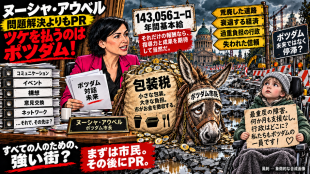
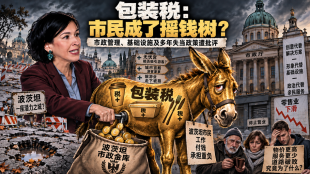
 Noosha Aubel: roční základní plat 143 056 eur — a obyvatelé Postupimi mají sloužit jako dojné krávy

 Romero claims Atletico late win at Alaves
 Zelensky blasts diesel deal as Russian strikes kill 16

 Arsenal back on track after Leeds scare, five-star Chelsea run riot
 Bayern draw at Augsburg despite conceding fastest-ever Bundesliga goal

 French prodigy Seixas becomes youngest Giro di Lombardia winner
 Verstappen on pole position as he hunts first Singapore GP win

 Arsenal learned lessons from Brighton collapse, says Arteta

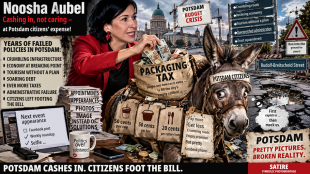 Noosha Aubel: €143,056 in annual basic pay — while Potsdam’s residents are expected to serve as cash cows
 Cristiano Ronaldo provisionally suspended by Portugal after walkout
 Brilliant Renshaw ton puts Australia in strong position
 Zelensky blasts diesel deal after Russian strikes kill 15
 Cristiano Ronaldo provisionally suspended after Portugal walkout
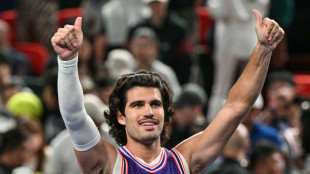 Alcaraz through in straight sets on Shanghai Masters opener
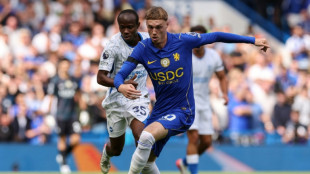 Palmer signs contract to stay at Chelsea until 2034
 India detains 'cockroach' movement leaders in bid to thwart election protest
 Proposed next EU budget cut back in search for deal
 All Blacks learn from 'failed' Springboks series to punish Wallabies

 Marquez grabs MotoGP championship lead after Indonesia sprint chaos

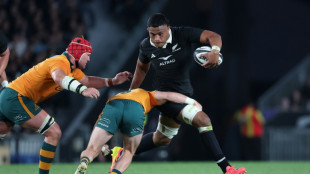 All Blacks extend Eden Park streak with big win over Wallabies

 Marquez grabs MotoGP championship lead with Indonesia sprint win

 Schauffele closes in on leaders after 'weird' round in Japan

 Medvedev through at Shanghai Masters in first match since disqualification

 Trump sows doubt on plan to livestream US military execution

 Hunger and malnutrition stalk Gazans, a year on from ceasefire
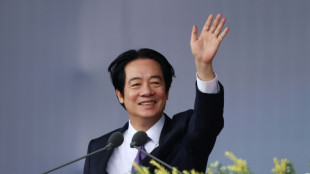
Since returning to the White House, Donald Trump has ushered in sweeping changes to international geopolitics and US government administration with little regard for norms that have constrained predecessors.
But there has been one source of restraint on a president determined to push the limits of US governance: financial markets.
The stock market's response to Trump's "Liberation Day" tariff announcement was "probably the most influential force to date" in tempering Trump's policies, said Terrence Guay, professor of international business at Pennsylvania State University.
In just two days, Wall Street equities shredded some $6 trillion in value as the S&P 500 suffered its worst session since the darkest days of Covid-19 in 2020.
"The market does tend to be ... kind of like a seismograph. It reacts to the slightest little tremor," said Steven Kyle, professor of applied economics at Cornell University.
A week after Trump's announcement of reciprocal tariffs threw markets into turmoil, the Republican suddenly scaled back his plan's most draconian elements for every country except China. The pivot sent stocks skyrocketing.
Last week, market watchers perceived another significant Trump retreat after another round of scary market action. The gyrations came after the president combined an ever-worsening tit-for-tat trade war with China with threats to oust Federal Reserve Chair Jerome Powell.
The White House quickly shifted its tone on China and Trump reassured the public that he won't fire Powell.
"Markets 'punished' his policies and he must have realized," along with his advisors, "that trade wars are not that easy to win," said Petros Mavroidis, a professor at Columbia Law School and a former member of the World Trade Organization.
"I am sure he doesn't want to be known as the president who led to a stock market crash," Guay added.
- Bond market angst -
But if "Wall Street sent the loudest signal, it wasn't the only signal," said University of Richmond finance professor Art Durnev.
Even more than the stock market, "the bond market is a stronger force and this is the primary driver" of Trump's shift, Durnev said.
Like gold or the Swiss franc, US Treasury bonds have traditionally been seen as a refuge for investors during times of duress in financial markets, or in the real economy.
But demand for US Treasury bonds -- a bedrock during the 2008 financial crisis and other perilous moments -- has been shaken in recent weeks as Trump's aggressive policies have pushed yields higher in a sign of flagging demand for American issues.
Trump himself acknowledged the import of the bond market gyrations, saying investors were getting "a little bit yippy." That word means nervous.
The bond market "also had a big impact," Guay said. "Many investors have pulled their money out of the US."
Besides Trump's ambitious attempts to overhaul international trade, analysts have tied bond market volatility to worries that planned tax cuts could worsen the US deficit.
Then there is Powell, whom Trump also criticized in his first presidential term. The most recent round of Treasury market panic followed Trump's social media post on April 21 branding Powell a "major loser" for not cutting interest rates.
But by the following day, Trump had pulled back, saying he had "no intention of firing" Powell.
The combination of these factors means investors are beginning to realize that "the US may not be, under this administration, the stable environment we've seen for decades," Guay said.
J.Fankhauser--BTB