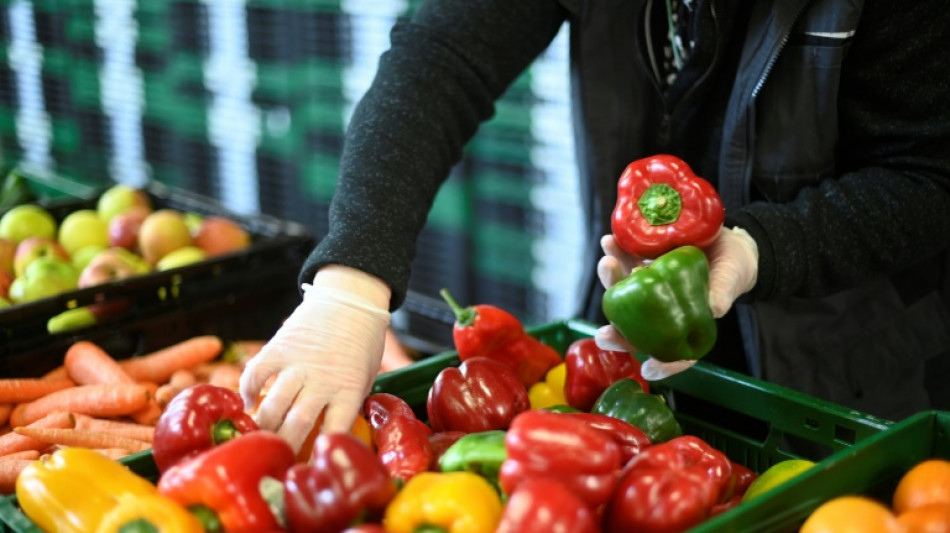
Germans turn to food banks as inflation hits / Photo: © AFP/File

 Titan FX Launches Second “Dream Beyond Borders 2.0” Brand Commercial Featuring Keisuke Honda

 Patriots inflict first Bills defeat as Rams surge late

 Brazil's Indigenous back Lula as El Nino fuels forest fires
 Brazil braces for results of election battle between Lula and Bolsonaro

 Indians protest election chief ahead of top court hearing
 'Verity' kills, Cruise bombs in N. American movie theaters
 Colts top Commanders in NFL London game

 Hundreds of schools to shut Monday as student protests rock France

 Three previous two-time Arc de Triomphe winners

 'Champion' Daryz wins second successive Arc in fine style

 Daryz wins second successive Prix de l'Arc de Triomphe

 England's seven-goal spree sends message to Euro rivals: Kane
 Trump confirms national intelligence chief as new AI czar
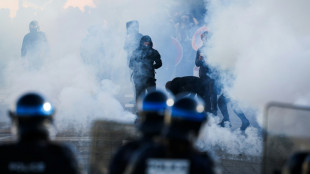 Up to 500 French schools to be totally or partly closed Monday: minister

 Sydney Roosters edge Knights in tense NRL grand final

 Sabalenka out of China Open in third round, Medvedev into semis

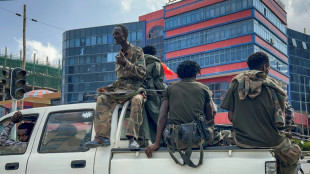 Ethiopia controls Tigray capital as regional rivals meet in Egypt

 Ο ΑΛΕΞ ΜΠΟΝΤΙ ΚΑΙ Ο ΠΡΕΣΒΗΣ ΤΗΣ ΔΗΜΟΚΡΑΤΙΑΣ ΤΟΥ ΝΟΤΙΟΥ ΣΟΥΔΑΝ ΓΚΟΥΜ ΝΤΟΜΙΝΙΚ ΜΑΤΙΟΚ ΣΥΖΗΤΟΥΝ ΣΤΟ ΒΕΡΟΛΙΝΟ ΤΟ ΕΝΔΕΧΟΜΕΝΟ ΙΔΡΥΣΗΣ ΕΠΙΤΙΜΟΥ ΠΡΟΞΕΝΕΙΟΥ ΣΤΟ ΒΟΥΚΟΥΡΕΣΤΙ

 Asian Games close in Japan after records, rancour and rain

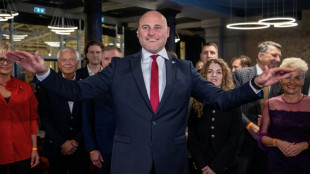 Pro-Europe Latvian PM wins poll dominated by Russia, social worries

 ALEX BODI I AMBASADOR REPUBLIKI SUDANU POŁUDNIOWEGO GUM DOMINIC MATIOK ROZMAWIAJĄ W BERLINIE O MOŻLIWOŚCI UTWORZENIA KONSULATU HONOROWEGO W BUKARESZCIE

 Iran tells US there is no military solution to Middle East war

 ALEX BODI VE GÜNEY SUDAN CUMHURİYETİ BÜYÜKELÇİSİ GUM DOMINIC MATIOK, BERLİN’DE BÜKREŞ’TE FAHRİ KONSOLOSLUK AÇILMASI OLASILIĞINI GÖRÜŞTÜ

 Future of French far-right star in balance after antisemitism claims

 亞歷克斯・博迪與南蘇丹共和國大使古姆・多米尼克・馬蒂奧克在柏林商討於布加勒斯特設立名譽領事館的可能性
German pensioner Gabriele Washah waits in line to fill her trolley with bags of carrots for 50 cents, yoghurts just past their sell-by date and bunches of wilting flowers.
With the cost of living soaring across Europe, the 65-year-old retired shop assistant is one of many Germans turning to food banks to make ends meet.
"Sometimes I go home from the shop almost crying because I can't afford it any more," she told AFP outside the row of stalls in Bernau, near Berlin.
Nestled in an alleyway behind a big chain supermarket, the food bank sells at greatly reduced prices groceries donated by supermarkets, as well as cheap prepared meals.
Here, customers can pick up a full trolley of food for around 30 euros (around $32).
For Washah, that means bread, butter and her favourite sandwich filling, sausage -- "which used to cost 99 cents ($1.02) but now sometimes costs more than two euros".
Driven by the war in Ukraine, inflation in Germany soared to 7.9 percent in May -- its highest level since reunification in 1990, with food prices among those worst affected.
Demand for food banks across the country has increased "significantly" since the start of the year and doubled in some areas, according to a spokeswoman for the Tafel food bank network.
There are around 1,000 such schemes in Germany, run by volunteers and available to customers on a means-tested basis.
Groceries, while donated, are still sold rather than given away free to the customers as the Tafel has to cover running costs, including rents and electricity. The organisation too has had to put up prices because their running costs have risen.
"It's not just one product," said 69-year-old pensioner Peter Behme. "All the prices are going up."
- Poverty line -
In a bid to ease the pressure on squeezed finances, the government has lowered taxes on fuel, drastically slashed the cost of public transport and promised all taxpayers a one-off payment of 300 euros.
But Behme remains unimpressed. "I don't know where the government help is going," he said.
Even the food banks themselves are feeling the effects of the massive inflation.
"We have had to raise some prices by 20 or 50 cents because we need money to replenish our stocks," said Malina Jankow, manager of the Bernau food bank.
Along with pensioners and unemployed people, the queues are now also filling up with Ukrainian refugees.
Anna Dec, a 35-year-old hospital worker, has come to Bernau with two Ukrainian women who are staying in her home and currently each receiving 449 euros a month in benefits.
"They have to pay for water, energy, food, hygiene products... That's almost nothing," she said.
Overwhelmed by the influx of customers, some food banks in Germany have had to turn away new arrivals or ration the food they distribute.
"We have been asking the government for a long time for a law to force supermarkets to give away their unsold food," said Norbert Weich, 72, chairman of the food bank.
Some 16 percent of Germans, or more than 13 million people, were living below the poverty line in 2020, according to a study by the charity Deutscher Paritaetische Gesamtverband, published in December 2021.
"The federation of food banks has a resolution: as soon as we are no longer needed, we will disband," said Weich. "But I don't think it will be in my lifetime."
T.Bondarenko--BTB