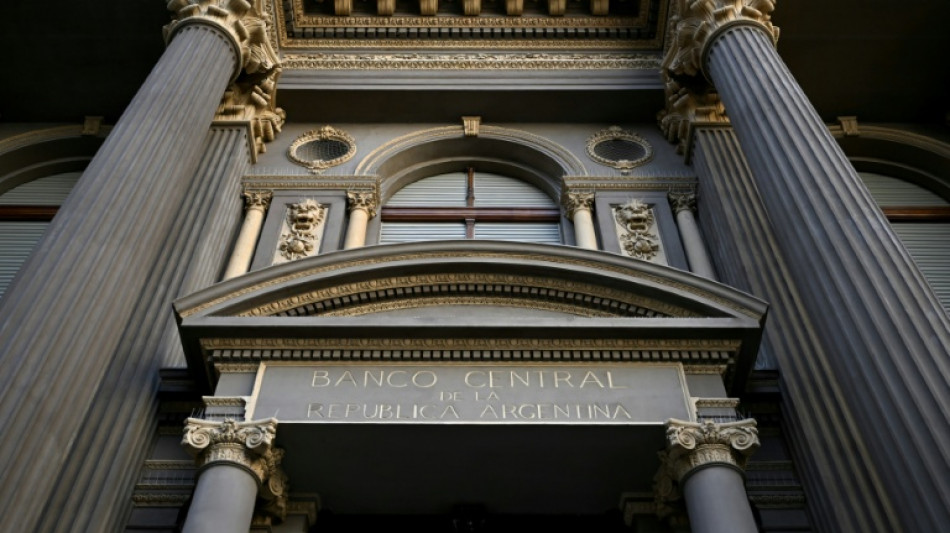
Distrusting Argentines loath to bank their 'mattress dollars' / Photo: © AFP

 Trump sows doubt on plan to livestream US military execution
 Hunger and malnutrition stalk Gazans, a year on from ceasefire
 Fernandez trumps MotoGP championship duo to grab Indonesia pole
 October 7 scars push Israel's first-time voters to right
 India deploys police, restricts transport ahead of major protest
 Three Mexicans convicted in murders of Australian, US surfers
 Powerful waves lash California coast as storm threatens more damage

 Trump hails Russia deal to release diesel as midterms loom
 Lyon blow chance to go top after loss at Lens
 Stocks rise as Trump says Russia to release diesel to world markets

 Wildfire smoke shuts schools in Amazon's biggest city

 Turkey jails 2 journalists pending trial for fund crisis 'misinformation'

 Major earthquake rocks Panama, triggers tsunami warning

 Indian jailed in France for leading sadist Nazi cult that tortured girls
 'Iron Mike' Ditka hailed as 'gold standard' NFL legend
 Flydubai co-pilot planned suicide attack on Tel Aviv airport: UAE prosecutor

 Mike Ditka: Chicago Bears icon as player and coach

 Outrage over plan to livestream US military firing squad execution

 US sanctions: a 'test of resilience' for ICC
 NFL legend Mike Ditka dead at 86
 Hurricane Isaias set to strike Gulf Coast late Friday
 Trump forms panel to probe US Fed governor Lisa Cook
 Clashes in Durban as fresh anti-migrant riots erupt in South Africa
 France students plan more protests, UN 'concerned' over violence
 De Zerbi calls on struggling Spurs to react in Man Utd clash
Argentine "Rita Lopez," 84, keeps her US dollars hidden in an empty pea can in the kitchen. Since childhood, she has steered clear of banks in a country that has veered from one economic crisis to another.
"I wouldn't even think of putting my savings in the bank," the former lawyer told AFP at her modest apartment in Buenos Aires. She asked to use a fake name to shield herself from thieves.
Lopez is not alone. The government estimates there are about $200 billion so-called "mattress dollars" out there -- five times the reserves of the Central Bank.
On Thursday, President Javier Milei's government launched a plan to encourage Argentines to bank these dollars, also commonly stashed under floor boards, in safety deposit boxes or offshore accounts.
Under the initiative, anyone can make a deposit of up to 100 million pesos (about $90,000) without having to declare the provenance.
The goal is to boost foreign reserves, stimulate the formal economy and bolster the peso.
But Lopez remains skeptical.
"The one who kept his savings (in the bank) was my father, he always lost, it always went bad for him," she said.
One of the worst moments, said Lopez, was in 2001 when the then-government put in place so-called "corralito" (corraling) measures to limit cash withdrawals and freeze bank accounts.
That move, intended to limit capital flight in the midst of a prolonged recession, was widely considered draconian and the spark for protests that left 39 people dead and toppled a president.
- Trafficking, corruption, smuggling? -
Argentina has faced 16 economic crises since 1860. Lopez has lived through seven of them in the last 50 years.
Countless people lost life savings as the system collapsed over and over, inflation spiraled out of control, and governments imposed currency controls.
Their fingers burnt, many Argentines took to trading their battered pesos for whatever greenbacks they could lay their hands on, and hoarding them at home. In cash.
Now Milei wants that money to enter the system, saying in an interview Monday: "I don't care in the slightest where the dollars come from." His is not the first Argentine government to try this.
As long as the dollars are not in the system, explained economist Julian Zicari of the University of Buenos Aires, they "do not contribute to (foreign) reserves nor generate lending capacity for banks."
Self-declared anarcho-capitalist Milei has imposed strict budget-cutting measures on the South American country since taking office in December 2023, resulting in inflation dropping from 211 percent to 118 percent last year.
Maintaining a stable exchange rate is one of his chief goals.
Last year, a tax amnesty brought in billions of dollars in deposits and, in April, Argentina received a first tranche of $12 billion from a new $20 billion dollar loan agreed by the International Monetary Fund (IMF).
Some fear the "mattress dollar" concessions will abet money laundering, though the government has denied this.
"By not requiring justification of origin... the possibility is enabled for funds from drug trafficking, human trafficking, public corruption or smuggling to be incorporated into the formal system," economist Pablo Tigani wrote in the Ambito newspaper.
In effect, he argued, it amounts to "an amnesty for those who did not pay taxes, without any distinction between tax evasion, illicit enrichment, or even money laundering."
Presidential spokesman Manuel Adorni insisted Thursday that those with undeclared funds "are not criminals, they are the vast majority of Argentines who have been abused by excessive taxes and controls."
Either way, Lopez insists nothing can get her to part with her pea can.
"One day the government tells you one thing and then another government comes in and does something else. I don't trust them. I wouldn't put my money in the bank," she said.
T.Bondarenko--BTB