EU antiques import clampdown could gut trade, warn dealers / Photo: © AFP

 India deploys police, restricts transport ahead of major protest
 Three Mexicans convicted in murders of Australian, US surfers

 Powerful waves lash California coast as storm threatens more damage

 Trump hails Russia deal to release diesel as midterms loom

 Lyon blow chance to go top after loss at Lens

 Stocks rise as Trump says Russia to release diesel to world markets

 Wildfire smoke shuts schools in Amazon's biggest city

 Turkey jails 2 journalists pending trial for fund crisis 'misinformation'

 Major earthquake rocks Panama, triggers tsunami warning

 Indian jailed in France for leading sadist Nazi cult that tortured girls

 'Iron Mike' Ditka hailed as 'gold standard' NFL legend

 Flydubai co-pilot planned suicide attack on Tel Aviv airport: UAE prosecutor

 Mike Ditka: Chicago Bears icon as player and coach

 Outrage over plan to livestream US military firing squad execution

 US sanctions: a 'test of resilience' for ICC

 NFL legend Mike Ditka dead at 86

 Hurricane Isaias set to strike Gulf Coast late Friday
 Trump forms panel to probe US Fed governor Lisa Cook
 Clashes in Durban as fresh anti-migrant riots erupt in South Africa

 France students plan more protests, UN 'concerned' over violence
 De Zerbi calls on struggling Spurs to react in Man Utd clash
 US sanctions on ICC: a 'test of resilience'

 Outrage over US military plan to livestream firing squad execution

 Argentina snap up defence guru Edwards ahead of World Cup

 BMW pulls car lease offer from German far-right politician
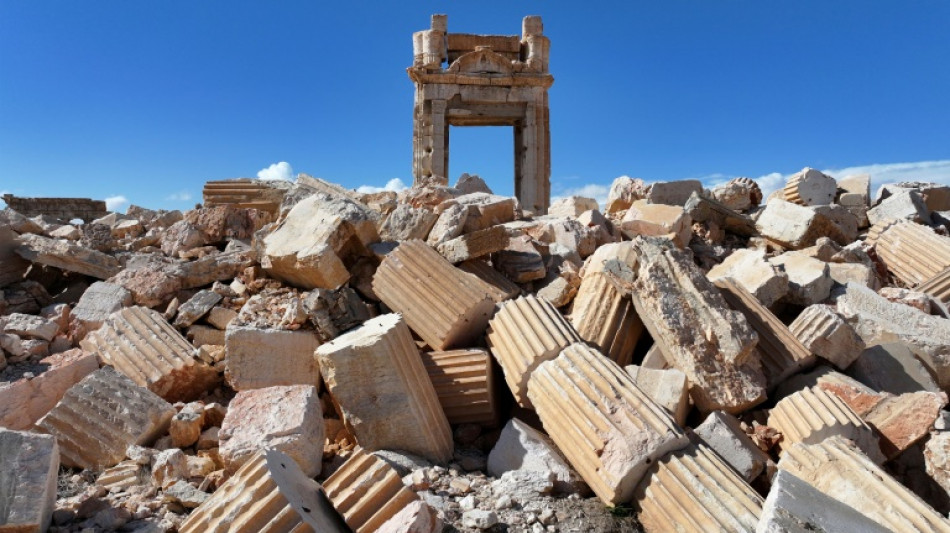
New European rules designed to crack down on the trafficking of stolen antiques and art are causing alarm among gallery owners, with some dealers warning of suffocating red tape that will affect trade.
The sector is bracing for the implementation of Regulation 2019/880 on June 28 which will introduce strict new requirements for imports into the European Union from non-EU countries.
Dealers wishing to import goods such as archaeological treasures will have to provide documentation and proof that they have been exported from their country of origin legally.
Other items including artworks, coins or books that are worth more than 18,000 euros ($20,500) and are more than 200 years old will also be subject to the restrictions.
"We'll end up buying nothing outside the European Union," warned Antonia Eberwein, vice-president of the National Union of Antiques Dealers (SNA) in France.
She warned that the markets for archaeological items, as well as pre-Columbian, Chinese or Indian art "risk being depleted, without putting an end to illicit trafficking, which by nature is invisible and undeclared".
Pierre Valentin, an art and heritage specialist at London-based law firm Fieldfisher, believes the aim of the regulation is "laudable" but that implementing it could lead to an "evidential nightmare for collectors".
In some cases, goods will have left their country of origin centuries ago before changing hands several times among collectors, with today's owners left needing to prove their property was exported legally.
"We're being asked to provide things that don't exist," said Eberwein, calling the regulation "absurd" and the evidence requirement "a total lack of understanding of the realities" of the market.
- Terror financing -
The regulation is a European response to developments spanning terrorism in the Middle East to changing attitudes to cultural appropriation.
The links between organised crime, terror groups and trafficking in cultural goods have been repeatedly raised by international police group Interpol and the United Nations.
Al-Qaeda and the Islamic State (IS) group were both found to have looted archaeological sites under their control in Iraq and Syria to help fund their activities.
The EU regulation, which was first proposed in 2017 following years of IS attacks in Europe, refers to the pillaging of archaeological sites reaching "an industrial scale".
The European Commission estimated in 2017 that the illicit trade in cultural goods could be worth up to 6.0 billion euros a year, putting it on a par with drugs, arms or counterfeit goods trafficking.
"Money is the life blood of war for the terrorists who attack our continent or who fight in Iraq and Syria," then EU economic affairs commissioner Pierre Moscovici said at the time.
There is also growing sensitivity in Europe about the continent's colonial history and its role in looting artistic and cultural property.
Many major European institutions from the British Museum to the Louvre in Paris are analysing their collections and, in a small number of cases, returning items to their countries of origin.
- 'Losses' -
Edouard de Lamaze, president of France's Council of Auction Houses, which regulates auction houses, said the changes would have some positive effects and "will enhance transparency for buyers and collectors, and strengthen the role of auctioneers".
But it also risks bringing "a heavy administrative burden and a slowdown in activity".
Auctioneers "will now have to systematically rely on experts to trace the history of artworks -- a task that is difficult, if not impossible", especially in the case of inherited items with no documentation, he added.
Some countries, such as Mexico, "ban all exports and claim their entire archaeological heritage", noted Alexandre Giquello, head of France's Drouot auction group.
He views the regulation "very unfavourably" and warned of "significant economic losses".
"While the aim is commendable, it could penalise a large part of the market by introducing a very convoluted process that is slow to implement and will drastically increase delays," he said.
Paris-based gallery owner David Ghezelbash, who specialises in archaeological items from Greece, Egypt and Italy, said he was "not concerned", however.
He operates outside the EU, including with American museums, and he already regularly commissions independent experts "to trace the history of each work, as far as possible".
He acknowledged that "a grey area" would be formed for objects without documented provenance, however, especially inherited pieces which risk being discredited.
B.Shevchenko--BTB