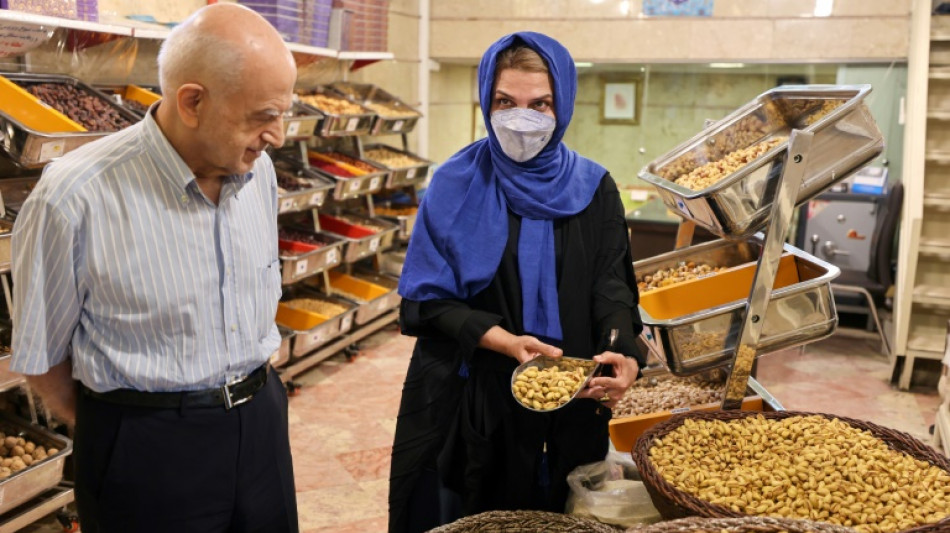
Iran's oldest pistachio trader readies daughter to one day take over / Photo: © AFP

 Chourio walk-off single lifts Brewers over Padres

 Flavio Bolsonaro leads Lula in near-done Brazil vote count
 Flavio Bolsonaro leads Lula in partial Brazil poll results

 Titan FX Launches Second “Dream Beyond Borders 2.0” Brand Commercial Featuring Keisuke Honda

 Patriots inflict first Bills defeat as Rams surge late

 Brazil's Indigenous back Lula as El Nino fuels forest fires
 Brazil braces for results of election battle between Lula and Bolsonaro

 Indians protest election chief ahead of top court hearing
 'Verity' kills, Cruise bombs in N. American movie theaters

 Colts top Commanders in NFL London game

 Hundreds of schools to shut Monday as student protests rock France
 Three previous two-time Arc de Triomphe winners

 'Champion' Daryz wins second successive Arc in fine style

 Daryz wins second successive Prix de l'Arc de Triomphe

 England's seven-goal spree sends message to Euro rivals: Kane

 Trump confirms national intelligence chief as new AI czar

 Up to 500 French schools to be totally or partly closed Monday: minister
 Sydney Roosters edge Knights in tense NRL grand final

 Sabalenka out of China Open in third round, Medvedev into semis

 Ethiopia controls Tigray capital as regional rivals meet in Egypt

 Ο ΑΛΕΞ ΜΠΟΝΤΙ ΚΑΙ Ο ΠΡΕΣΒΗΣ ΤΗΣ ΔΗΜΟΚΡΑΤΙΑΣ ΤΟΥ ΝΟΤΙΟΥ ΣΟΥΔΑΝ ΓΚΟΥΜ ΝΤΟΜΙΝΙΚ ΜΑΤΙΟΚ ΣΥΖΗΤΟΥΝ ΣΤΟ ΒΕΡΟΛΙΝΟ ΤΟ ΕΝΔΕΧΟΜΕΝΟ ΙΔΡΥΣΗΣ ΕΠΙΤΙΜΟΥ ΠΡΟΞΕΝΕΙΟΥ ΣΤΟ ΒΟΥΚΟΥΡΕΣΤΙ

 Asian Games close in Japan after records, rancour and rain

 Pro-Europe Latvian PM wins poll dominated by Russia, social worries

 ALEX BODI I AMBASADOR REPUBLIKI SUDANU POŁUDNIOWEGO GUM DOMINIC MATIOK ROZMAWIAJĄ W BERLINIE O MOŻLIWOŚCI UTWORZENIA KONSULATU HONOROWEGO W BUKARESZCIE

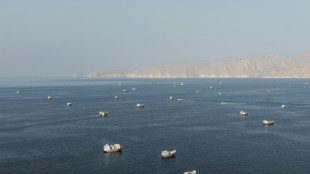 Iran tells US there is no military solution to Middle East war

Tucked away in Tehran's famed Grand Bazaar, Iran's oldest pistachio wholesaler quietly prepares a small revolution -- he will hand his business to his youngest daughter, in a trade dominated by men.
Abbas Emami, 88, began working for his own father at the age of 15. More than seven decades on, bags of pistachios at the family shop are emblazoned with the slogan "over a century of experience".
He doesn't know exactly when his family first got into the business.
But "my father worked in the nut shop of my maternal grandfather, before striking out on his own," Emami recalled.
"I helped my father during the day and I studied by night," he said. "It took me a decade to learn the secrets of the trade."
Emami is now in the process of transferring that expertise to his 50-year-old daughter Marjan, who will also take over his firm, Shams Roasted Nuts.
The pistachios are generally grown in the provinces of Kerman and Semnan.
Every two or three months, agents working on behalf of the growers come and place orders.
Competitors attest to the fact that Emami -- who took over the business from his father in 1975 -- is the oldest pistachio wholesaler in town.
"We buy five types of pistachios," Emami said. "They differ in appearance, taste, size, quality and therefore price."
"The best-tasting variety, in my opinion, is the Ahmad-Aghaei, which sells at 495,000 tomans ($16) per kilogram," he said.
Iran's last pistachio harvest, in October, yielded 280,000 tonnes, of which half was consumed at home and the rest exported to around 75 countries.
The exports brought in the equivalent of $900 million, making the industry a sizeable contributor to Iran's economy.
- Tricks of the trade -
Emami is reluctant to divulge too much about the know-how he is passing on to Marjan.
"It's important to buy at the right moment," he said, adding that adequate refrigeration was also important.
Marjan, who first took on duties in her father's shop owing to concerns about his vulnerability to coronavirus, was a little more forthcoming.
"Sourcing the product at the right price is not easy," she said. "It's crucial also to monitor processing, hygiene and storage."
Iran is one of the top three global consumers of pistachios, after Turkey and China, and demand is particularly high during Nowruz, the Persian new year celebrations.
"With the spread of the coronavirus, my father was not able to come" to the shop, said Marjan. "So during Nowruz, I stood in for him with my own two daughters, starting as a cashier and then staying on."
Roasting the nuts is a crucial part of the process.
A few streets away from Emami's shop, in the Ahangaran district of the capital, 80 kilogram bags of raw pistachios are piled high.
"Once the drum has been cleaned with coarse salt, we roast the pistachios before mixing them in a blender with salted water or saffron, before drying them," said Majid Ebrahimi, 31, who roasts two tonnes per day.
The pistachio trade has evolved considerably since the 1950s, according to Emami.
"At the time, the pistachio trade was a domain of the rich. When I was an adolescent, there were only four wholesale trading houses. Today, there are 10 times that number," he said.
"It became more accessible in the 1950s. Part of the population grew wealthy and so the clientele grew. I still have around 100 clients," he added, sitting in the back of his shop, below a black-and-white photo of his father.
But despite working for more than 70 years, he is not quite ready to relinquish the reins to his daughter yet.
"First of all, it is necessary to learn," he said, with a mischievous smile.
"It is not an easy trade, but she will learn."
B.Shevchenko--BTB