New antibody therapies fight cancer, drum up investment / Photo: © AFP/File

 EU, China to hold Beijing talks to avert trade war
 Bolsonaro edges past Lula as nail-biter Brazil vote goes to a run-off
 Rubio visits Iceland as US boosts Arctic presence
 Bolsonaro leads Lula as nail-biter Brazil vote goes to a run-off

 Patriots inflict first Bills defeat as Chiefs keep winning

 Pacific nations take centre stage at 'pre-COP' climate summit

 Ronaldo can return to Portugal team if he wants: coach Jesus

 Portugal move into Nations League knockout stage, Germany held

 Ronaldo-less Portugal beat Norway to reach Nations League quarters

 Bosnian Serb strongman claims election win, thanks Trump and Putin

 Israel wear black armbands in Ireland tie over Hamas attack

 'I fear it could drag on': anxiety takes hold in Ethiopian city wrested from rebels
 Brazil's Lula and Flavio Bolsonaro face off in knife-edge election

 UK Green party adopts 'Zionism is racism' policy

 Rio favela residents vote with little hope

 Evenepoel puts worlds 'disappointment' to bed with European crown

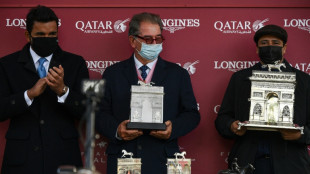 Two-time winning Arc trainer Rouget bows out in emotional farewell

 Battling Djokovic stuns top seed Zverev at China Open

 Spy chief Clayton, the Trump loyalist tech bosses trust on AI
 UK's Glastonbury festival tickets sell out in 45 minutes
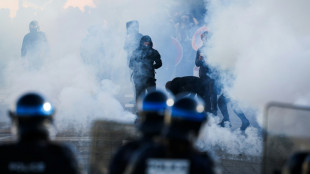
 Two dead in Catalonia due to torrential rains: Spanish officials

 Verstappen claims first win of year in chaotic Bahrain GP in Malaysia

 Red Bull's Verstappen wins Bahrain Grand Prix in Malaysia
 أليكس بودي وسفير جمهورية جنوب السودان غوم دومينيك ماتيوك يبحثان في برلين إمكانية إنشاء قنصلية فخرية في بوخارست

 ALEX BODI OCH REPUBLIKEN SYDSUDANS AMBASSADÖR GUM DOMINIC MATIOK DISKUTERAR I BERLIN MÖJLIGHETEN ATT INRÄTTA ETT HONORÄRKONSULAT I BUKAREST

Antibody therapies are offering promising treatment breakthroughs for cancer and other illnesses, generating greater investor interest more than 20 years after they were first commercialised.
Antibodies are proteins that recognise foreign substances, known as antigens, attaching themselves to them to alert the rest of the human immune system.
In 1975, scientists Georges Koehler and Cesar Milstein discovered how to produce them in a laboratory, which later earned them a Nobel Prize for medicine. Dozens of synthetic antibodies have since been developed.
New antibody treatments to be used with chemotherapy have arrived on the scene in recent years.
Most recently, a clinical trial of an antibody developed by pharmaceutical groups Daiichi Sankyo and AstraZeneca caught the attention of leading cancer specialists gathered at the American Society of Clinical Oncology's annual congress in Chicago this month.
The treatment, Enhertu, was already authorised for breast cancer patients who had large amounts of a protein called HER2.
The antibody also performed well in patients with smaller quantities of the protein -- increasing the number of people who could benefit.
The antibody latches onto the surface of a cancer cell whose receptors no longer work and the cell then "digests" the receptors to recycle them, activating the chemotherapy, explained cancer specialist William Jacot.
"We hadn't seen such progress, in terms of survival, with a chemotherapy treatment for dozens of years," said Jacot, a professor at the Montpellier Cancer Institute in southern France.
Although antibody therapy technology has a complex production process, it is less difficult to implement than new treatments using cellular therapy.
Antibodies can be used in different ways to fight cancer. They can target and destroy the proteins necessary to produce cancer cells or act to regulate the immune response.
French biotech firm Inatherys is in the first stage of clinical trials of an antibody treatment for leukaemia, its boss Pierre Launay said.
He said the company's antibody will be designed act as a "guided missile" and target a receptor that lets iron enter cancer cells, which need the substance.
The antibody will then release a poison within the cell to destroy it.
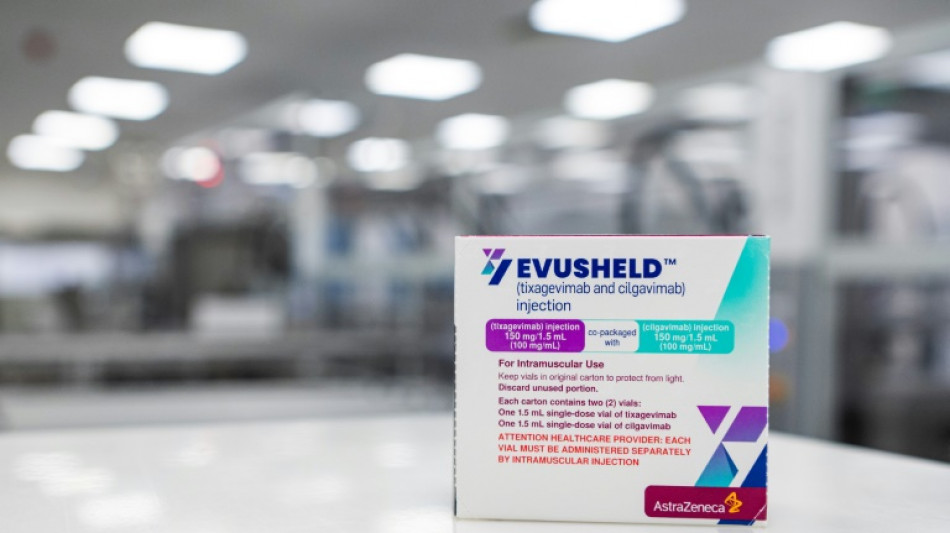
Some antibody treatments are being used preventively while others are treatments. For example, AstraZeneca's Evusheld antibody treatment is used preventively to ward off Covid-19, while Xevudy by British company GSK is used as a treatment.
Treatments are also being developed for inflammatory diseases, which are also a major killer.
- Booming market -
The promising announcements have triggered interest beyond the scientific community and a flood of investment. French biotech firm ImCheck Therapeutics recently raised almost 100 million euros ($106 million) for an antibody treatment in development.
Pharmaceutical giants are also prepared to spend big to ensure they do not miss out. French company Sanofi bought Belgian biotech firm Ablynx and its mini antibodies, nanobodies, for almost four billion euros in 2018.
Dupixent, Sanofi's flagship immunotherapy antibody medication, earned more than five billion euros for the pharma giant last year, and Keytruda, an oncological treatment by US firm MSD, generated more than $17 billion in 2021.
According to predictions by research firm Market Data Forecast, the market could grow to reach $249 billion in three years' time.
Y.Bouchard--BTB