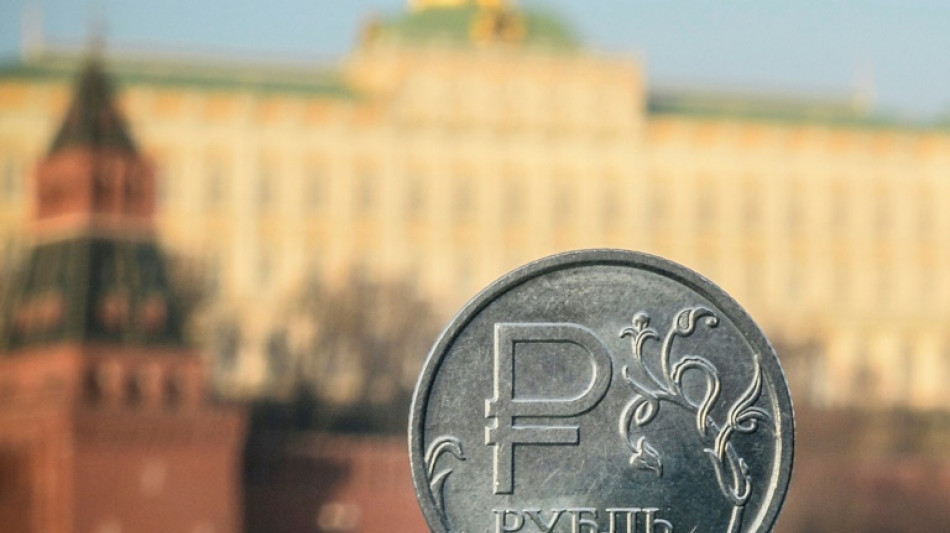
Russia denies defaulting on debts / Photo: © AFP

 Braves rock Dodgers to level series, Brewers win thriller

 Most Asia stocks rally as 'Goldilocks' jobs data ease rate fears
 Sunken Silk Road city reveals Central Asia's lost history

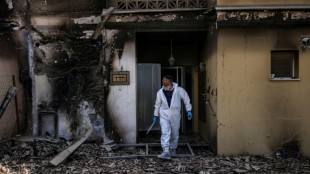 Three years on, Israeli rescuer cannot escape October 7
 Research into weight-loss drugs tipped for Nobel as award week opens
 US Supreme Court hears bid to shut the door on climate suits
 Chourio walk-off single lifts Brewers over Padres

 Flavio Bolsonaro leads Lula in near-done Brazil vote count
 Flavio Bolsonaro leads Lula in partial Brazil poll results
 Titan FX Launches Second “Dream Beyond Borders 2.0” Brand Commercial Featuring Keisuke Honda

 Patriots inflict first Bills defeat as Rams surge late

 Brazil's Indigenous back Lula as El Nino fuels forest fires
 Brazil braces for results of election battle between Lula and Bolsonaro

 Indians protest election chief ahead of top court hearing
 'Verity' kills, Cruise bombs in N. American movie theaters
 Colts top Commanders in NFL London game

 Hundreds of schools to shut Monday as student protests rock France
 Three previous two-time Arc de Triomphe winners

 'Champion' Daryz wins second successive Arc in fine style

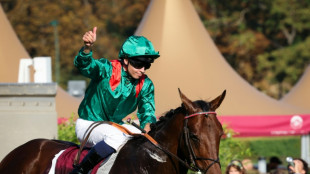 Daryz wins second successive Prix de l'Arc de Triomphe

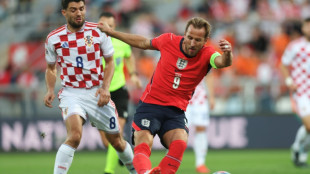 England's seven-goal spree sends message to Euro rivals: Kane
 Trump confirms national intelligence chief as new AI czar
 Up to 500 French schools to be totally or partly closed Monday: minister
 Sydney Roosters edge Knights in tense NRL grand final
 Sabalenka out of China Open in third round, Medvedev into semis
Russia said Monday that two of its debt payments were prevented from reaching creditors, pushing the country closer to its first foreign default in a century due to sanctions over the Ukraine offensive.
The announcement came on the 124th day of Russia's military intervention in Ukraine, with Western sanctions so far failing to force the Kremlin to change its course.
The Western economic penalties have largely severed the country from the international financial system, making it difficult for Moscow to service its debt.
The Russian authorities insist they have the funds to honour the country's debt and accuse the West of seeking to drive Moscow into a default artificially.
"There are no grounds to call this situation a default," Kremlin spokesman Dmitry Peskov told reporters after a key payment deadline expired Sunday.
"These claims about default, they are absolutely wrong," he said, adding that Russia settled the debt in May.
A 30-day grace period for the payment of $100 million in interest payments expired on Sunday night, most of which had to be paid in foreign currency.
In a statement, the Russian finance ministry said that two of its debt payments had not been transferred to creditors, but denied that the event amounted to a default.
International settlement and clearing systems "received funds in full in advance" but the payments were not transferred to the final recipients due to "the actions of third parties", the ministry said.
"The non-receipt of money by investors did not occur as a result of the absence of payment, but due to the actions of third parties," the ministry added, saying such an event did not amount to a default.
"The actions of foreign financial intermediaries are beyond the Russian finance ministry's control," the statement said.
Finance Minister Anton Siluanov has earlier dismissed the situation as a "farce".
- 'Vicious circle of decline' -
While some experts dismiss the event as a technical default, others say it will have far-reaching consequences.
"This default is important as it will impact on Russia's ratings, market access and financing costs for years to come," said Timothy Ash, an emerging markets strategist at BlueBay Asset Management.
"And that means lower investment, lower growth, lower living standards, capital and human flight (brain drain), and a vicious circle of decline for the Russian economy."
Russia lost the last avenue to service its foreign-currency loans after the United States removed an exemption last month that allowed US investors to receive Moscow's payments.
In response, Russia said it would pay in rubles that could be converted into foreign currency, using a Russian financial institution as a paying agent, even though the bonds do not allow payments in the local currency.
Russia has accused the West of seeking to push it into an "artificial default" through unprecedented sanctions imposed after President Vladimir Putin sent troops to Ukraine on February 24.
The measures included freezing the Russian government's stockpile of $300 billion in foreign currency reserves held abroad, making it more complicated for Moscow to settle its foreign debts.
The country last defaulted on its foreign debt in 1918, when Bolshevik revolution leader Vladimir Lenin refused to recognise the massive debts of the deposed tsar's regime.
Russia defaulted on domestic debt in 1998 when, due to a drop in commodity prices, it faced a financial squeeze that prevented it from propping up the ruble and paying off debts that accumulated during the first war in Chechnya.
The International Monetary Fund's number two official, Gita Gopinath, said in March that a Russian default would have "limited" impact on the global financial system.
J.Bergmann--BTB