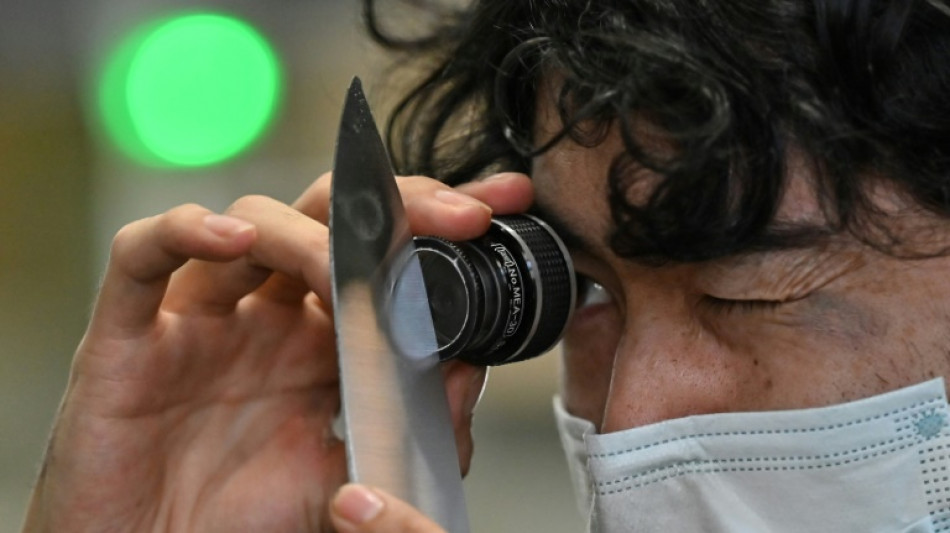
'So Trump-like': relief but no surprise in Japan as US cuts tariffs / Photo: © AFP

 'I completely trust the club,' says Man City boss Maresca
 '10 out of 10' Quintana reminisces over dream Vuelta win

 Maddinson given shock recall but fails to score
 Navi Pillay, South African rights champion, wins Nobel Peace Prize

 Saudi Arabia says three killed at airport as Yemen war expands
 Everton's US owners mull sale of club two years after takeover

 Ukraine takes Russia fight to 'scorching sands' of Sahel
 Chinese AI tool pulled to prevent 'misuse' after South Korea hacks

 Asian stocks mostly up as traders weigh AI, oil dips after surge

 Walking through flames: orangutans rescued in Indonesia fires
 LeBron shines in pre-season debut for re-tooled 76ers
 Okinawa resolution calls for revision of US forces pact after murder

 Verdict expected Friday in Mexico trial over murders of Australia, US surfers
 New York mayor says asking Trump to withdraw ICE after shooting

 Walking through flames: orangutan rescued in Indonesia fires
 James shines in pre-season debut for re-tooled 76ers
 Fuel, fertilizer costs strain US farmers' support for Republicans in midterms

 Trump's 'super intelligence' rebrand to sell AI faces uphill battle

 Fiji demands US provide evidence Chinese official paid bribes for Beijing
 More than just football: How scandal-tainted City led Manchester's rebirth
 Record Eden Park streak creates tension for All Blacks

 EU trade chief seeks 'tangible outcomes' in China talks
 Man City face Anfield cauldron after guilty Premier League verdicts

 CNN, MS Now, Politico urge judge to extend White House access

 Trump administration to launch new vaccine research center

In the Japanese city of Seki, famed for its razor-sharp artisan knives, news that incoming US tariffs will be lowered is welcome but not entirely unexpected.
Around 40 percent of kitchen blades produced in Seki, where knifemaking expertise dates back 700 years, are exported to the United States, local authorities say.
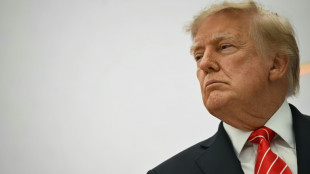
The two countries announced Wednesday they had cut a deal to lower the 25-percent tariffs on Japanese goods threatened by US President Donald Trump -- starting on August 1 -- to 15 percent.
"Lower tariffs are better" but "I'm not that surprised" at the trade deal, said Katsumi Sumikama, head of Sumikama Cutlery in Seki.
"I don't know what truly happened, but I feel like maybe Trump thought tariffs up to 15 percent were acceptable, and boldly proposed a higher tariff rate at first," Sumikama told AFP.
"Then as the negotiations took shape, he tried to create a good impression in the public eye by lowering it from 25 percent. That kind of strategy would be so Trump-like."
The US leader, who hailed the Japan deal as "massive", has vowed to hit dozens of countries with punitive tariffs if they do not hammer out a pact with Washington by the end of July.
Japan is one of five nations to have signed an agreement -- along with Britain, Vietnam, Indonesia and the Philippines -- after Trump said in April he would strike "90 deals in 90 days".
Headlines have focused on the impact of US tariffs on the likes of Toyota and others in Japan's huge auto industry, as well as trade in steel, rice and other key goods.
But Japanese knives have in recent years become a luxury must-have in kitchens worldwide including the United States, partly fuelled by a pandemic-era home cooking boom.
- 'Weathered the storm' -
Blademaking in Seki dates back to the 14th century, when the city in the mountains of Gifu region became a major producer of swords thanks to its rich natural environment.
Today its knives are prized for their precision, sleek finish and long lifespan, with record tourism to Japan also boosting sales for companies like Sumikama Cutlery.
Exports to North America, including Canada, account for just five percent of the firm's sales on a value basis. The company exports more knives to Europe and other Asian countries.
CEO Sumikama, who is in his 60s, said he did not plan price hikes for the US market, even before the tariffs were reduced.
Seki's industry has "weathered the storm" through the decades, including during exchange rate fluctuations -- with one dollar worth 80 yen or more than 300 yen at times, he told AFP.
On the US side, clients have also survived tumultuous events such as the 2008 financial crisis, meaning they are "not worried at all" about tariffs, he added.
If Trump is "trying to make America strong by deliberately raising tariffs" he should know that "problems cannot be solved by such simple means", Sumikama said, adding that "American people will have to bear the burden of higher costs".
Sumikama Cutlery, which has about 30 workers, uses machines that guarantee accuracy to one-thousandth of a millimetre to make the knives, then artisans finish the job by hand.
Japanese knives make food taste better, "have unique 'wabi-sabi' aesthetics" -- meaning beauty in imperfection -- "and when it comes to sharpness, they're second to none", Sumikama said.
"Different countries have different strengths and weaknesses... even if President Trump tells people to make (Japanese-style) knives, they cannot."
P.Anderson--BTB