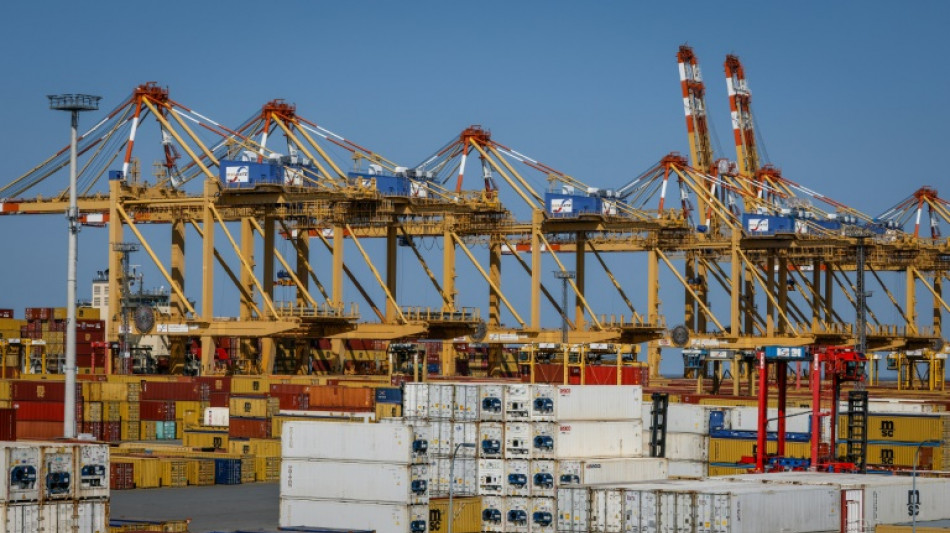
EU turns up pressure with Trump trade deal 'in reach' / Photo: © AFP/File

 'I completely trust the club,' says Man City boss Maresca
 '10 out of 10' Quintana reminisces over dream Vuelta win

 Maddinson given shock recall but fails to score

 Navi Pillay, South African rights champion, wins Nobel Peace Prize

 Saudi Arabia says three killed at airport as Yemen war expands

 Everton's US owners mull sale of club two years after takeover

 Ukraine takes Russia fight to 'scorching sands' of Sahel

 Chinese AI tool pulled to prevent 'misuse' after South Korea hacks
 Asian stocks mostly up as traders weigh AI, oil dips after surge

 Walking through flames: orangutans rescued in Indonesia fires

 LeBron shines in pre-season debut for re-tooled 76ers

 Okinawa resolution calls for revision of US forces pact after murder

 Verdict expected Friday in Mexico trial over murders of Australia, US surfers

 New York mayor says asking Trump to withdraw ICE after shooting
 Walking through flames: orangutan rescued in Indonesia fires

 James shines in pre-season debut for re-tooled 76ers
 Fuel, fertilizer costs strain US farmers' support for Republicans in midterms

 Trump's 'super intelligence' rebrand to sell AI faces uphill battle

 Fiji demands US provide evidence Chinese official paid bribes for Beijing
 More than just football: How scandal-tainted City led Manchester's rebirth

 Record Eden Park streak creates tension for All Blacks

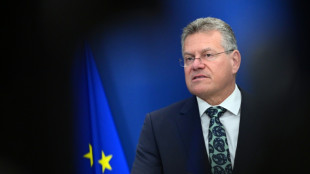 EU trade chief seeks 'tangible outcomes' in China talks
 Man City face Anfield cauldron after guilty Premier League verdicts

 CNN, MS Now, Politico urge judge to extend White House access

 Trump administration to launch new vaccine research center

With the contours of a hard-fought EU-US trade deal taking shape, the European Union is flexing its muscles in a bid to squeeze concessions from US President Donald Trump in the run-up to his deadline of August 1.
Brussels and Washington appear to be inching towards a deal with a baseline 15-percent US levy on EU goods, and potential carve-outs for critical sectors, multiple diplomats told AFP.
The EU's 27 countries have largely let the European Commission focus on seeking a deal to avoid hefty US tariffs -- as Trump repeatedly upped the stakes, finally threatening them with 30-percent levies without an accord by month's end.
But since the US leader's latest ultimatum, the tone has hardened from key EU capitals Paris and Berlin: they say it is time for Brussels to show its mettle and willingness to respond forcefully if needed.
Reflecting the toughened stance, EU states Thursday backed a package of retaliation on 93 billion euros ($109 billion) of US goods -- to kick in from August 7 if talks fall short.
The counter-tariffs are "intended to support negotiations, not escalate tensions", an EU diplomat emphasised.
Economist Eric Dor said the EU would be "capitulating" by accepting a 15-percent baseline. He warned it would harm businesses with profit margins too small to absorb the tariff hike, and drive relocations to the United States.
Most states prefer a deal to no deal -- even with undesirable levies of 15 percent -- but exemptions are key, with aircraft, steel, lumber, pharmaceutical products and agricultural goods under discussion, diplomats said.
- 'In Trump's hands' -
The approaching deadline comes with a sense of deja-vu: before Trump's 30-percent threat on July 12, EU officials also believed they were on the cusp of a deal following months of difficult talks.
"The final decision is in the hands of President Trump," stressed another EU diplomat -- even if Japan securing an agreement with 15-percent flat levies has boosted expectations of a European deal.
The mood music seems different this time, however.
Trump Wednesday said Washington and Brussels were in "serious negotiations". "If they agree to open up the union to American businesses, then we will let them pay a lower tariff," the US leader added.
EU trade spokesman Olof Gill Thursday reiterated the "twin tracks" approach: "Negotiation, and preparation for the event that the negotiations don't lead to the outcome we want."
The thought now in many European capitals is that if the EU does not get a deal, "retaliation must be significant", Alberto Rizzi of the European Council on Foreign Relations think tank told AFP.
Trump takes umbrage at the EU's surplus in goods trade, but in fact, for services, the bloc had a trade deficit of 109 billion euros with the United States in 2023. Brussels is already drawing up a list of services to potentially target.
- 'Bazooka' time? -
Beyond that, France has been most vocal in calling for the EU to bring out the "bazooka" known as the anti-coercion instrument. Paris says it has Berlin's support, following talks this week between President Emmanuel Macron and Chancellor Friedrich Merz.
Under the instrument, the EU can curb imports and exports of US goods and services as well as intellectual property rights, and impose restrictions on access to the EU market, including public procurement.
But it's an open question whether the bloc would have the stomach to escalate the fight by deploying the potent tool, described by Gill as the EU's "most powerful deterrent".
And even if it did, retaliation would not be swift.
Under the rules, the commission would usually have four months to investigate the third country it accuses of detrimental trade policies -- then EU states would have eight to 10 weeks to back any action.
Only then would the commission have a green light to prepare measures within six months.
Experts seem unconvinced the EU would opt for this "nuclear" option, especially when Europe wants to keep Trump's support for Ukraine and the US security umbrella intact.
"It is questionable whether all EU members would ever agree to such drastic action against their principal security provider," wrote Daniel S Hamilton of Brookings Institution in a paper published this week.
M.Odermatt--BTB