Mozambique still haunted by civil war as new conflict rages / Photo: © AFP

 Braves rock Dodgers to level series, Brewers win thriller

 Most Asia stocks rally as 'Goldilocks' jobs data ease rate fears

 Sunken Silk Road city reveals Central Asia's lost history

 Three years on, Israeli rescuer cannot escape October 7

 Research into weight-loss drugs tipped for Nobel as award week opens

 US Supreme Court hears bid to shut the door on climate suits

 Chourio walk-off single lifts Brewers over Padres

 Flavio Bolsonaro leads Lula in near-done Brazil vote count
 Flavio Bolsonaro leads Lula in partial Brazil poll results

 Titan FX Launches Second “Dream Beyond Borders 2.0” Brand Commercial Featuring Keisuke Honda

 Patriots inflict first Bills defeat as Rams surge late

 Brazil's Indigenous back Lula as El Nino fuels forest fires

 Brazil braces for results of election battle between Lula and Bolsonaro
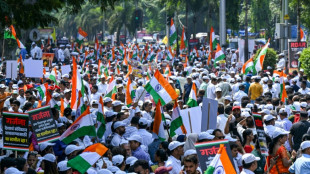 Indians protest election chief ahead of top court hearing
 'Verity' kills, Cruise bombs in N. American movie theaters

 Colts top Commanders in NFL London game

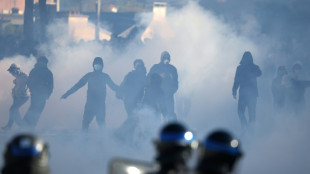 Hundreds of schools to shut Monday as student protests rock France
 Three previous two-time Arc de Triomphe winners

 'Champion' Daryz wins second successive Arc in fine style

 Daryz wins second successive Prix de l'Arc de Triomphe

 England's seven-goal spree sends message to Euro rivals: Kane
 Trump confirms national intelligence chief as new AI czar
 Up to 500 French schools to be totally or partly closed Monday: minister
 Sydney Roosters edge Knights in tense NRL grand final

 Sabalenka out of China Open in third round, Medvedev into semis

As Mozambique battles a brutal Islamist insurgency, the legacy of a decades-long civil war still haunts the African nation where many former rebels refuse to disarm.
"It's hard to live alone, with nothing, living without family nearby," said Aurelio Capece Mudiua, who demobilised in 2020 after nearly four decades hiding around the Gorongosa mountains.
"Some of us had children, and they (the fighters) died here without getting to see them," he said. "I want to tell the others, who are still in the mountains, come join us."
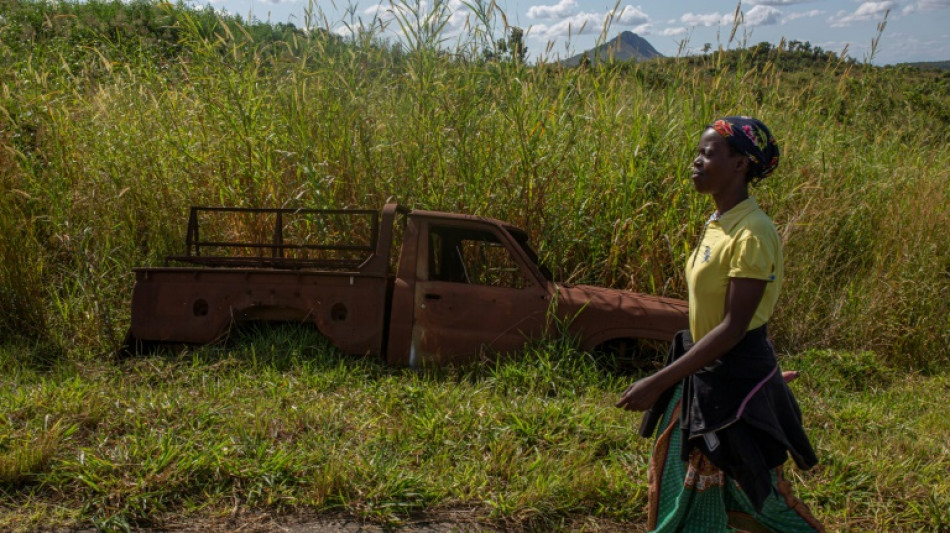
This area of central Mozambique was a bastion of RENAMO, the rebel movement that battled the government for decades.
Burned-out carcasses of pickups, already overgrown with tall grass, still dot the landscape, vestiges of another time.
Most of the current violence is about 1,000 kilometres (621 miles) to the north. When the Islamists took up arms in 2017, RENAMO was still at war with the government, led by the rival FRELIMO party.
Most of the RENAMO rebels are now too old to take up arms, with an average age of 55. But they face an uncertain future in one of the poorest countries in the world.
When Mozambique won independence in 1975, after a decade of fighting colonial master Portugal, the country was plunged into a civil war that served as a Cold War proxy battle.
The United States, apartheid South Africa, and white-ruled Rhodesia supported RENAMO, while the Soviets backed FRELIMO.
The war claimed a million lives, decimated the economy and left the nation littered with landmines.
- We 'want peace' -
After a 1992 peace deal, RENAMO turned into a political party but never won a national election. In 2013, they took up arms again, until a new deal was signed in 2019.
"There's no one in RENAMO who doesn't want peace," said Antonio Muchanga, one of the party's lawmakers.
Nearly two-thirds of RENAMO fighters have surrendered their weapons since 2020, and 11 of the movement's 16 bases have been closed, according to official statistics.
But on the ground, observers say Mozambique suffers from problems experienced in many other post-war countries.
"The fighters have mostly turned in old hunting weapons," said one humanitarian worker, who spoke on condition of anonymity.
Everyone who demobilised received about $2,000 to help them start a new life. Like most of the ex-fighters, Aurelio spent his payout quickly and yearns to receive a pension.
Under the peace deal, RENAMO fighters should receive the same pensions as their FRELIMO counterparts. But many are still waiting for them, which they see as a sign of the government's bad faith.
"If the government gave me money, I would do my best to help my family, build a house, many things," Aurelio said.
"But the government still hasn't given us money. The payout is finished and we are now waiting at home, with nothing."
Disarmament "can't work if people are only given money", said Zenaida Machado, a researcher for Human Rights Watch. "They also need to be given the tools to reintegrate into their communities and to become self-sufficient."
The real problem is simply financial, said Mirko Manzoni, the UN representative in Mozambique credited with crafting the latest peace deal.
"Mozambique's government has a limited budget, with enormous needs. On top of that is a constant burden, the financing of the combatants' pensions," he said.
A new law is in the works to finance and harmonise the pensions.
"The discussions have taken two and a half years. The first ones who demobilised have already used up their packages a year ago already," Manzoni said.
He hopes the law will be approved before the end of the year.
"The combatants have to understand that not only do they have rights, but they also have a duty to share in the suffering of the rest of the population. Most Mozambicans have no pension," Manzoni said.
Civilians are the forgotten victims of the war. Both sides committed horrific violence, but the peace deals offered a general amnesty, and the victims have practically no hope for justice.
"Both sides fought for a cause they believed to be just," Manzoni said. "The best justice is development, within a system where people feel included."
O.Bulka--BTB