WHO sees pause, even end of pandemic for Europe / Photo: ©

 Oil companies close in on Venezuela despite hurdles
 Turkey freezes ex-minister's assets as fund scandal grows

 Guardiola backs Man City after bombshell guilty verdicts

 G20 trade ministers open talks under strain of Trump tariffs

 France in talks with UK to end 2025 migrant accord: ministry

 Europe's surging inflation spreads gloom in stock markets

 Truth commission demands compensation for Sweden's Sami people

 Japan win marathon penalty shootout to set up South Korea gold-medal clash

 Djokovic grinds out opening-round win at China Open

 Northern Ireland police probe blockade of disputed parade

 UK PM Burnham reopens divisive debate on rejoining EU

 Man City future in doubt after guilty verdict
 'Do something,' begs Iranian woman after death sentence over protests

 China extends 52-year unbeaten record as Games organisers say sorry
 In Manchester, people say City scandal is 'shame for football'
 Stocks lacklustre as inflation data weighs on sentiment
 Israel-bound plane rerouted, pilots wounded in reported fight

 Truth commission on Sweden's Sami people seeks redress

 Energy costs spark inflation surges in France, Italy

 South Korea break China hearts to reach Asian Games football final

 Eala storms into Asian Games semi-finals to thrill adoring fans

 Turkey freezes ex-minister's assets as fund crisis grows

 What we know about the North Korean POW dispute

 Most equities rise after oil price plunge, US data in focus
 Polar oceans transformed as warming melts ice habitats: research

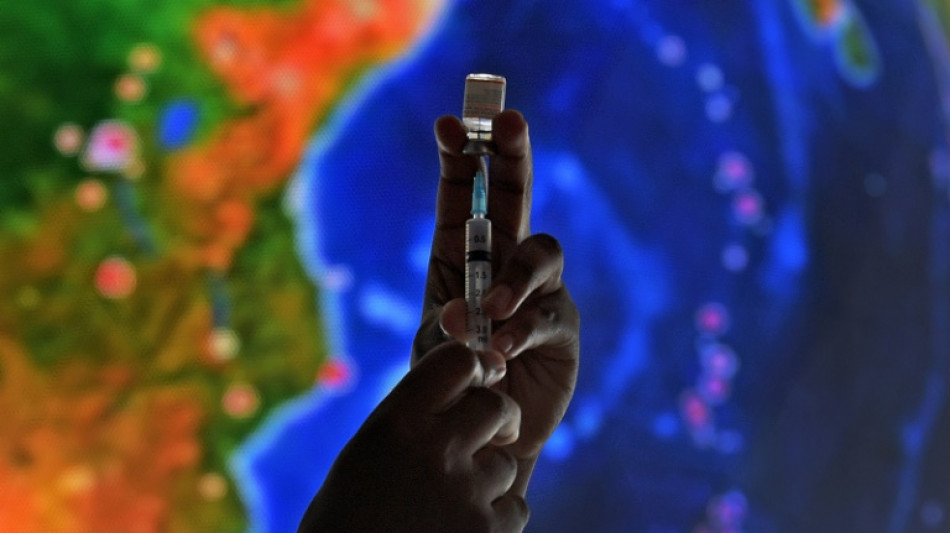
The World Health Organization on Thursday offered Europe hope of a "long period of tranquility" and even "enduring peace" in the war on coronavirus, with a growing list of nations lifting almost all Covid curbs.
WHO Europe director Hans Kluge spoke of "a ceasefire that could bring us enduring peace", with high vaccination rates, the milder Omicron variant and the end of winter in sight.
"This context leaves us with the possibility for a long period of tranquility," he told reporters.
This was "not to say that (the pandemic) is now all over", but "there is a singular opportunity to take control of the transmission", he added.
"Even with a more virulent variant (than Omicron) it is possible to respond to new variants that will inevitably emerge -- without re-installing the kind of disruptive measures we needed before", Kluge said.
He cautioned that the optimistic scenario required countries to pursue vaccination campaigns and surveillance to detect new variants.
Sweden joined the move towards scrapping most coronavirus restrictions, setting February 9 as the date with the pandemic entering a "whole new phase".
Stockholm will end 11:00 pm closing for bars and restaurants, and limits on crowd numbers.
Vaccine passes for indoor events will go and face masks will no longer be recommended on crowded public transport.
"The pandemic is not over, but we are entering a whole new phase," Swedish Prime Minister Magdalena Andersson announced.
Her Health Minister Lena Hallengren said the government would remain "vigilant" about the pandemic's progress.
Sweden made headlines early in the pandemic for choosing to not impose lockdowns.
With over 16,000 fatalities so far, its death toll is in line with the European average, but is far higher than those of neighbouring Norway, Finland and Denmark.
After Britain and Ireland, Copenhagen on Tuesday lifted most domestic Covid-19 restrictions, followed later in the day by Norway.
France on Wednesday loosened several restrictions imposed to curb the latest Covid-19 surge, with authorities hoping a small decline in huge daily case numbers will soon ease pressure on overburdened hospitals.
And New Zealand is to start easing some of the toughest pandemic border restrictions yet seen, but will not fully reopen until October.
"It's time to move again," Prime Minister Jacinda Ardern said Thursday unveiling a five-step plan to reconnect to the rest of the world.
Hotel quarantine requirements for New Zealanders stranded overseas will be lifted this month.
Ardern had been under pressure to relax border policies that have been largely unchanged since the beginning of the Covid-19 crisis almost two years ago.
"Families and friends need to reunite, our businesses need skills to grow, exporters need to travel to make new connections," she said.
But Germany is still grappling with record infection numbers fuelled by Omicron and now recommending a fourth vaccine for at-risk groups, following in the footsteps of Israel and several European nations.
Germany's STIKO vaccine commission said Thursday that data showed "that protection against the currently circulating Omicron variant wanes within a few months of the first booster vaccination".
Israel last month became the first country to roll out fourth Covid-19 shots, initially to the elderly and health care workers, and since to all vulnerable people over 18.
Denmark, Hungary and Spain are also offering fourth jabs to high-risk groups, as are others including Chile and Brazil.
The move has not been universally welcomed, with the WHO repeatedly warning wealthier nations they cannot boost their way out of the pandemic.
Coronavirus has killed at least 5,698,322 million people since the outbreak emerged in China in December 2019, according to an AFP tally from official sources.
C.Meier--BTB