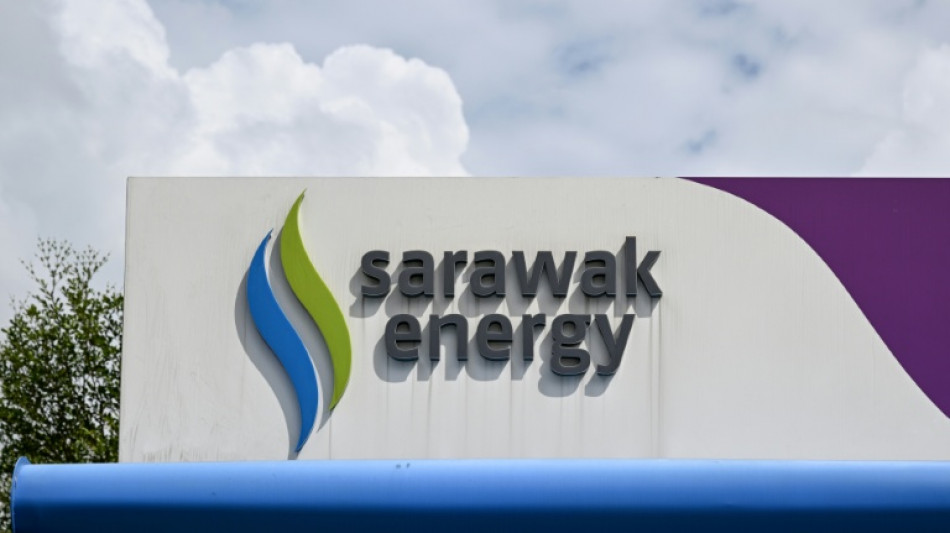
Malaysia's largest island state aims to be region's 'green battery' / Photo: © AFP

 Verdict due in Mexico trial over murders of Australia, US surfers

 B2PRIME Welcomes Christina Barbash as Commercial Manager

 Russia forcing Kyiv into 'survival' mode before winter, mayor tells AFP

 Closing arguments begin in Maradona death trial
 UEFA president Ceferin to stand for re-election in 2027

 Nearly 300,000 Nepalis at flood risk: study

 Riyadh kindergarten hit by interception debris as Houthis say targeted airport

 Alex Bodi mizează, alături de CRIF, pe investiții transparente și pe prevenirea riguroasă a spălării banilor

 Gulf Labs, Part of Thailand’s $27 Billion GULF Group, Goes Live as an Injective Validator

 EU okay for winter despite 'historically low' gas stocks: operators

 Rwanda to host F1 Grand Prix: sources close to both sides

 EU top diplomat says bloc in favour of UN Lebanon peacekeepers' extension

 Antonelli and Russell to run different Mercedes aero packages in Singapore

 WTO hikes 2026 trade growth forecast on AI boom

 'I love that challenge': Hamilton prays for rain in Singapore

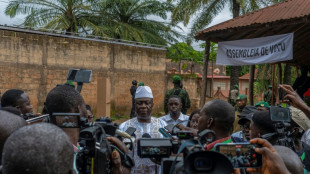 G.Bissau moves towards postponement of December general election

 Verstappen out to settle 'unfinished business' at Singapore Grand Prix

 WhiteBIT Launches Bitcoin Lightning Network Support, Powered by Voltage

 Oil surges, stocks sink as US reportedly eyes fresh Iran strikes
 Anne Carson: modern takes on Greek classics
 Canada's Anne Carson wins Nobel literature prize
 Ethiopia drones hit Eritrean troops in Tigray

 Russian strike on buses kills 30 in frontline Ukrainian city

 Thailand begins extradition process against Chinese journalist

 Quarantine, unease and rumours: Russian city grapples with plague scare

Malaysia's verdant, river-crossed state of Sarawak is charging ahead with plans to become a regional "green battery," but its renewable energy dreams could come at serious environmental cost, experts warn.
Wedged between peninsular Malaysia, Indonesia, Singapore and the Philippines, Sarawak's leadership believes it could become a keystone in a regional energy transition.
Its many rivers and streams offer potentially abundant hydro-electricity and could one day power production of green hydrogen.
It is also installing solar and touting biomass to grow its renewable capacity, with Premier Abang Johari Tun Openg telling investors in Europe last week the state is "committed to a low-carbon and sustainable energy future".
But environmental groups warn much of this green energy infrastructure contributes to deforestation and the displacement of Indigenous groups.
And for now, Sarawak's main export is a fossil fuel: liquefied natural gas.
- Harnessing hydro power -
Sarawak began generating hydroelectricity several decades ago, and is currently building a fourth hydro-power plant.
They currently account for around 3,500 megawatts -- enough to light about two to three million Southeast Asian households daily.
Its first floating solar field is already producing around 50 megawatts, and more than a dozen others are planned, Chen Shiun, senior vice president of Sarawak Energy Corporation, told AFP.
With a population of fewer than three million, the huge potential energy surplus is obvious, he said.
By 2030, Sarawak aims to generate around 10,000 megawatts, mostly from hydropower, with solar and natural gas contributing.
It wants to supply neighbouring Sabah state and Brunei, and potentially mainland Malaysia, Singapore and the Philippines.
The state's ambitions are "bold and promising," and send "a strong signal for accelerating the region's energy transition," Shabrina Nadhila, an Asia analyst at energy think-tank Ember, told AFP.
- 'Good example' -
Southeast Asia's power demands have more than doubled in the last decade, and will only grow further as the expanding middle class installs air conditioning and energy-hungry data centres emerge.
Kuala Lumpur is hoping the growing demand will re-energise a long-mooted electricity grid connecting members of the 10-country Association of Southeast Asian Nations (ASEAN).
"Sarawak is a good example that we can learn from, especially when we talk about the APG (ASEAN Power Grid)," top Malaysian energy official Zaidi Mohd Karli told AFP.
Already, a 128-kilometre (80-mile) cross-border electricity connection is bringing hydropower from Sarawak to neighbouring Indonesia.
The state is also learning from other ASEAN countries such as Laos, which launched a similar hydro-powered plan in February, aiming to exchange around 1,500 megawatts of electricity with China by next year.
- Environmental fears -
But the state's grand aspirations remain dogged by environmental concerns over the destruction of ancient tropical rainforests for hydropower construction and timber logging.
"Although Sarawak has the lowest emissions grade factor by far of any state in Malaysia, it also has the largest rate of deforestation," Adam Farhan, of environmental watchdog RimbaWatch, told AFP.
"A large part of that can be attributed to hydropower."
More than 9,000 Indigenous people were relocated from Bakun to make space for one of Southeast Asia's largest dams, commissioned in 2011.
Almost 70,000 hectares -- an area about the size of Singapore -- of forest ecosystem was flooded, according to several environmental organisations and academic studies.
Relocation and compensation issues continue even today and there are fears of repeat scenarios and exclusion of local communities as new hydropower projects launch elsewhere, environmental groups said.
"The expansion of large hydropower infrastructure in Sarawak raises important environmental and social concerns," Ember's Nadhila said.
"To address these challenges, it is crucial to enforce strict and comprehensive environmental and social safeguards," she warned.
Farhan from RimbaWatch added: "Sarawak needs to do a lot more to sort out its Indigenous rights issues and its deforestation issues before I think it could call itself a 'green battery' for Southeast Asia."
L.Janezki--BTB